



🌺 Main Takeaway
Everyone knows Nyepi, Bali’s Day of Silence, when the whole island switches off (this year on 19 March). But Balinese Hindus have another festival that rarely makes headlines, and it may be the more personal one: Pagerwesi.
Translating literally to ‘iron fence’, Pagerwesi is not about building a defence against the outside world. It is a reminder to construct an internal fortress—guarding thoughts, controlling behaviour, and steadfastly upholding goodness.
And you don’t need to be Balinese to get it. From Laos to Vietnam to Java, Southeast Asia has long believed that a person can be protected, and that part of the protection is up to you.
📅 Why It’s in Our Radar
Pagerwesi follows the 210-day Pawukon calendar and always falls on Buda Kliwon (Wednesday Kliwon) of Wuku Sinta.
Because the cycle is 210 days rather than 365, Pagerwesi comes around twice a year in the Gregorian calendar. In 2026 it fell on 8 April and again on 4 November.
The 4 November date closed a five-day run that began with Saraswati, the day of knowledge:
Saraswati (31 Oct): Honouring knowledge and wisdom.
Banyupinaruh (1 Nov): Cleansing body and mind with water.
Soma Ribek (2 Nov): Giving thanks for food and the earth’s sustenance.
Sabuh Mas (3 Nov): Reflecting on wealth, and on knowledge as the real kind.
Pagerwesi (4 Nov): The finale. Knowledge gets locked in with protection and a steadier faith.
Pagerwesi always falls four days after Saraswati. Think of it as learning first, then guarding what you’ve learned.
🛕 The Meaning of ‘Pagerwesi’
‘Pagerwesi’ is derived from two words: ‘pager’, meaning a fence or protector, and ‘wesi’, meaning iron. The combination of these two words symbolises strong and sturdy protection.
In Balinese Hindu thought, this fence works in both the physical (sekala) and unseen (niskala) worlds. Its main enemy is awidya, the spiritual ignorance that clouds the truth. The festival is really about building inner strength through knowledge, wisdom and awareness.
For Indonesian readers outside Bali, the calendar may feel familiar. Java uses the same Pawukon system, with the same wuku names (Sinta included) and the same pasaran days like Kliwon. It’s the basis of the Javanese weton. Bali and Java share the framework but celebrate it very differently.
🙏 The Spiritual Meaning and Self-Control
During the Pagerwesi celebrations, Hindus worship Ida Sang Hyang Widhi Wasa in His manifestation as Sang Hyang Pramesti Guru, known as the supreme guru and spiritual guide.
During Pagerwesi, devotees worship the supreme guru, Sang Hyang Pramesti Guru, seeking the wisdom to conquer the Sad Ripu (the six negative human traits): Kama (desire), Lobha (greed), Krodha (anger), Mada (intoxication), Moha (delusion), Matsarya (envy).
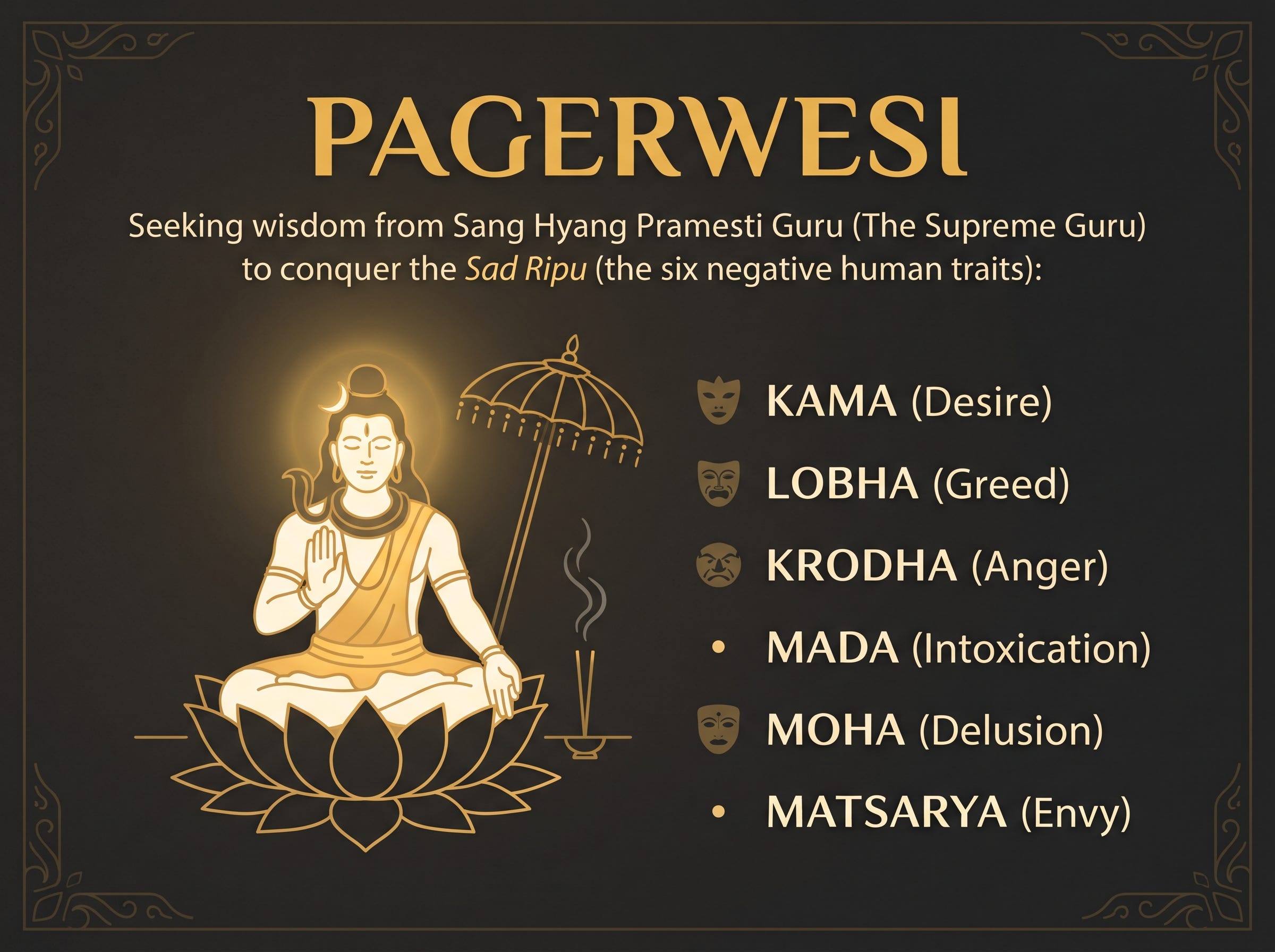
Through prayers and spiritual reflection, Hindus are encouraged to control these negative traits in order to strengthen their faith and instil values of goodness into their daily lives.
🌺 How is Pagerwesi Celebrated?
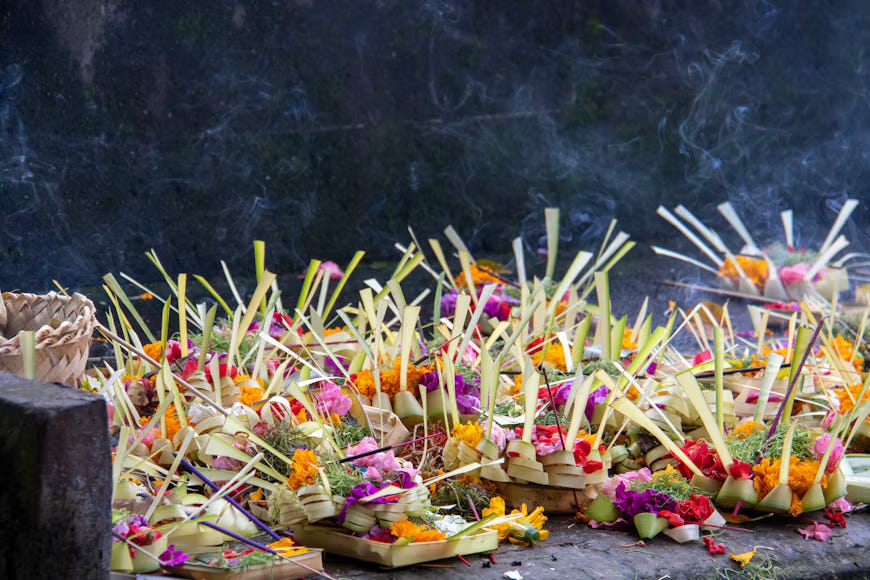
Across Bali, Pagerwesi manifests through family rituals and communal worship. Devotees present banten or sesajen (sacred offerings) at sanggah and merajan (family shrines) before performing prayers at village temples.
Yet, observance varies across the island. Guided by the principle of desa, kala, patra—adapting custom to place, time, and local circumstance—each community brings its own rhythm to the holy day.
🌼 The Festive Side of Pagerwesi in Buleleng
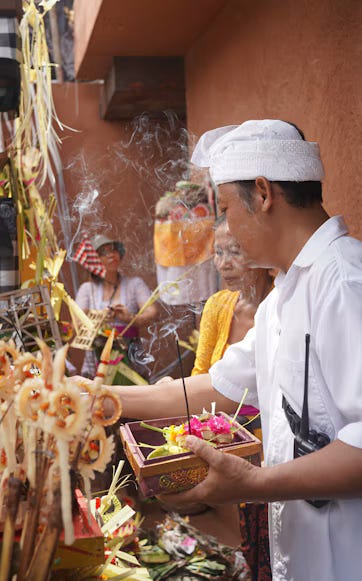
For the people of Buleleng, Pagerwesi holds a special place in religious life and local traditions. In this Regency, Pagerwesi takes on an extraordinary scale. Dubbed the “Galungan of North Bali” (and affectionately pronounced Pegorsi by locals), the festival reaches its peak in Singaraja. The historical resonance is distinct: Singaraja’s legacy as the colonial capital of the Lesser Sunda Islands helped shape a unique, proud regional identity.
Buleleng’s signature traditions include:
The Munjung Ritual: Families gather at the graves of uncremated relatives to present punjung (food offerings). Local Hindu leaders highlight this graveside honouring of ancestors as a tradition unique to the Buleleng area.
The Regional Homecoming: From village shrines to Pura Jagatnatha Singaraja, the spiritual pull is so intense that diaspora workers across Indonesia return home to pray alongside family.
🌏 Spiritual Fortresses: Echoes Across Southeast Asia
The ritual pursuit of spiritual fortification extends well beyond Bali. Pagerwesi shares deep cultural DNA with protective rites across the region:
🇱🇦 🇹🇭 Laos & Northern Thailand (Baci / Su Khwan): Village elders call back the 32 khwan (guardian spirits) and tie white cotton threads around wrists to anchor them. Though performed for life milestones rather than a fixed calendar date, the core purpose mirrors Pagerwesi: binding spiritual resilience to the individual.
🇹🇭 Thailand (Wai Khru at Wat Bang Phra): Every March, devotees of sak yant (sacred tattoos) gather to honour their masters and “recharge” their protective ink. Believers maintain that tattoo power holds only if the wearer upholds strict moral rules—echoing Pagerwesi’s rule that knowledge protects only when paired with virtue.
🇻🇳 Vietnam (Tết Đoan Ngọ): On the fifth day of the fifth lunar month, families consume fermented glutinous rice and hang herbs over doorways to ward off illness and evil spirits. It frames spiritual protection as a deliberate, calendar-driven act of purification.
🇮🇩 Java, Sunda & Madura (Rebo Wekasan): Observed on the final Wednesday of Safar, Muslims perform tolak bala (prayers and alms to ward off misfortune). Though a folk tradition distinct from official Islamic holidays, it shares Pagerwesi’s focus on mid-week spiritual warding.
💭 Beyond the Ritual
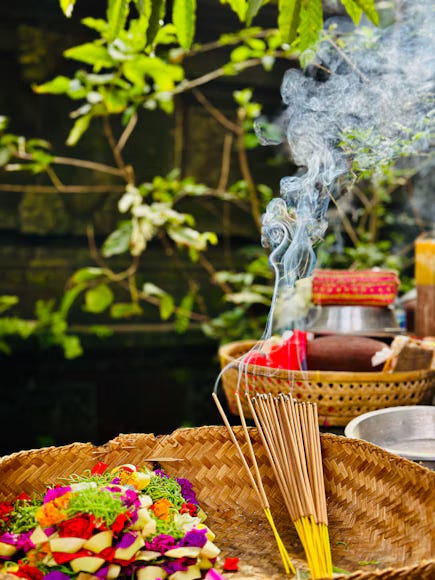
🧠 Knowledge Demands Wisdom: Raw intellect without moral guidance is volatile. Pagerwesi insists that knowledge must be tempered by wisdom to serve a constructive purpose.
⚖️ Mindful Cause and Effect: Spiritual maturity requires anticipating the consequences of every action before stepping forward.
🌱 Internal Alignment: Harnessing inner discipline directly mirrors Tri Hita Karana—maintaining harmony between humanity, the divine, and the environment.
✨ The Bottom Line
Pagerwesi is far more than an ancient ritual—it is a recurring 210-day reminder to cultivate resilience from within. The symbolic ‘iron fence’ is forged not from physical barriers, but from knowledge, wisdom, and the self-control required to keep them aligned.
And you don’t need to be Balinese to grasp its resonance. From Laos and Vietnam to Java, Southeast Asian cultures have long shared the core belief that spiritual protection is an active personal choice.
True wisdom isn’t measured by the sheer volume of knowledge you possess, but by how responsibly you exercise it, how fiercely you guard your mind, and how carefully you consider the consequences of every action. ✨
Pagerwesi reminds us that being wise is not merely about the amount of knowledge one possesses, but rather how one uses it, exercises self-control, and considers the consequences of every action. ✨
🔍 Need More Angle?
Buleleng Regency Goverment “Memikirkan Sebab-Akibat adalah Awal Menjadi Bijak: Makna Filosofis Hari Raya Pagerwesi sebagai Pagar Kebijaksanaan dan Kesadaran Diri”
Buleleng Regency Goverment Esensi Hari Suci Pagerwesi "Sadar Hati, Pagar Diri yang Sejati"
Buleleng Regency Goverment Sad Ripu
Detik Pagerwesi 2026 Jatuh 4 November, Kenapa Perayaan di Buleleng Semeriah Galungan?
How to Bali Pagerwesi 2026
(DHM/ZIL/ARS)