



From AI governance and digital public services to local-language models and media trust, the Global Digital Forum showed a world seeking greater technological autonomy without giving up cross-border cooperation.
🎯 The Main Takeaway
The emerging digital order is being shaped by a paradox: countries want greater control over their data, infrastructure and technologies, but few can build a digital future alone.
That tension ran through the 2nd Global Digital Forum, held in Moscow from 8–10 October 2026, where governments, technology companies, researchers, media professionals and international organisations debated artificial intelligence, digital sovereignty, public infrastructure, cybersecurity and the future of global technology governance.
According to the forum’s final tally, more than 1,300 participants, including 730 experts from 111 countries, attended more than 60 sessions.
Organisers also reported more than 200 bilateral meetings and 150 agreements and memorandums signed on the sidelines.
But the more consequential story was not the number of meetings.
It was a recurring idea across very different discussions:
Digital sovereignty does not necessarily have to mean digital isolation.
For Southeast Asia, that proposition deserves attention.
The region is trying to integrate its digital economy, develop homegrown AI capabilities, improve cross-border payments and data flows, strengthen cyber resilience, and preserve individual states' ability to make their own regulatory choices.
The question is therefore no longer whether Southeast Asia should cooperate internationally on technology.
It is how to cooperate without replacing one form of technological dependence with another.
🔎 Why It’s on Our Radar
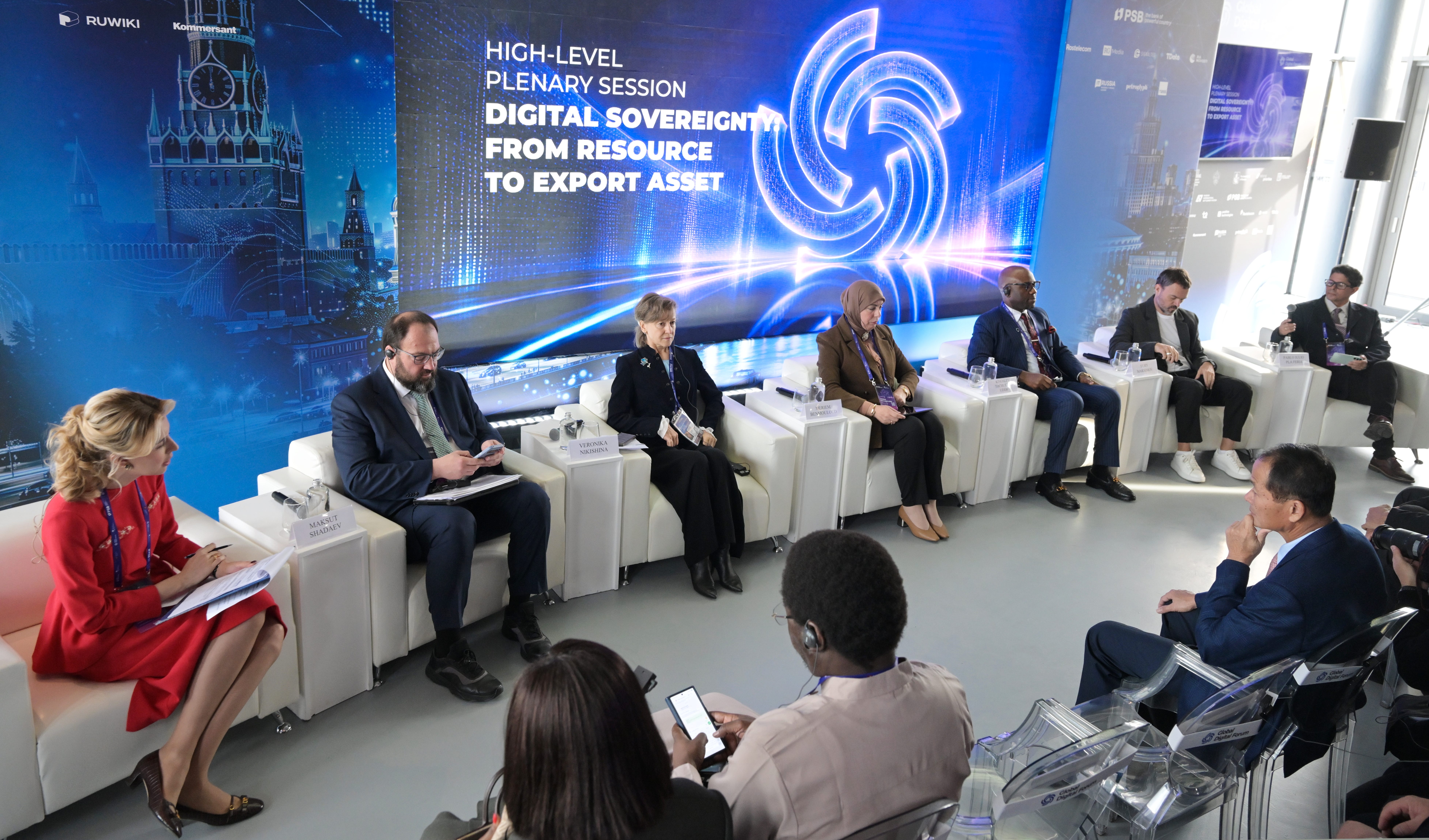
The Russian government, its Ministry of Digital Development and Foreign Ministry, organised the Global Digital Forum, and much of the programme naturally showcased Russian experience and technological capabilities.
Its claims about Russia’s digital position should therefore be understood within that institutional context rather than treated as neutral assessments.
Still, the forum was broader than a technology showcase.
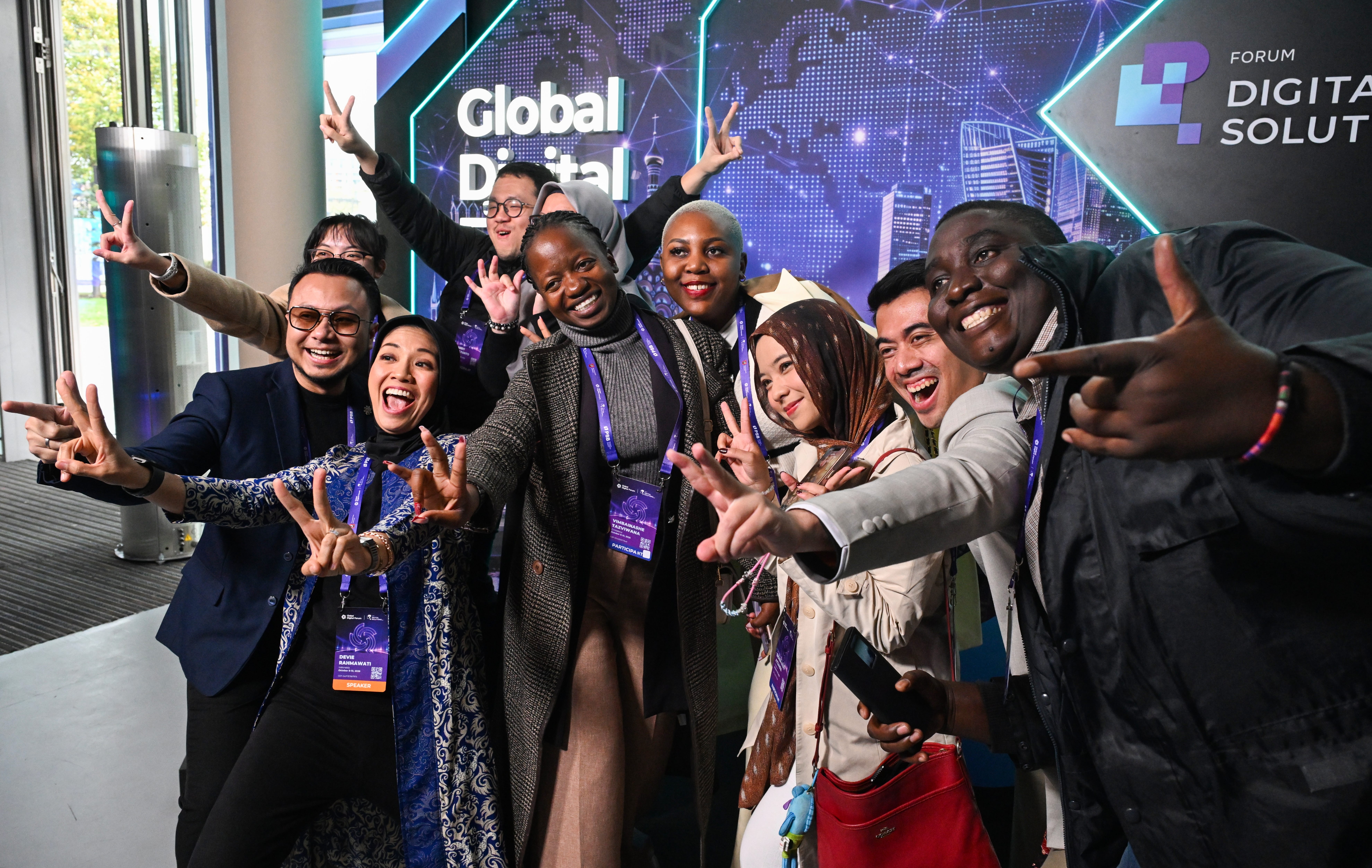
Participants came from Africa, Asia, Latin America, Europe and the Gulf, while discussions repeatedly returned to problems that increasingly transcend national boundaries:
🤖 How should AI be governed when models operate across jurisdictions?
🔐 Who should control national data and critical digital infrastructure?
🏛️ How can governments digitise public services without weakening privacy or public trust?
🌐 Can countries pursue technological autonomy while keeping the internet interoperable?
🗣️ How can languages poorly represented online survive the AI transition?
📰 How can media use AI without destroying the credibility on which journalism depends?
These are not uniquely Russian questions.
They are increasingly Global South questions and Southeast Asian questions.
🌐 Digital Sovereignty—Without Digital Isolation?
One of the forum’s most prominent concepts was digital sovereignty.
Russian officials presented it as a country’s capacity to control critical infrastructure, data, and technological systems.
At one plenary, Russian official Sergey Kirienko said Russia was prepared to share its digital experience with other countries; another discussion considered whether national sovereignty and global internet connectivity could coexist rather than produce increasingly separated technological blocs.
The distinction matters.
There are at least two possible versions of digital sovereignty.
One is defensive:
🔒 domestic control
🗄️ local data infrastructure
🛡️ resilience against external disruption
💻 reduced dependence on foreign providers
The other is developmental:
🧑💻 building domestic expertise
🌐 diversifying technological partners
🧠 developing local AI ecosystems
🤝 participating in international standards
📊 retaining bargaining power over data and platforms
The first can easily drift towards technological fragmentation.
The second can potentially expand a country’s strategic choices.
For Southeast Asia, the latter may be more useful.
Most ASEAN states are unlikely to reproduce every layer of the digital stack independently—from semiconductor manufacturing and cloud infrastructure to frontier AI models, satellites and operating systems.
Strategic autonomy therefore does not require technological self-sufficiency.
Instead, it may require enough domestic capacity, interoperability, and supplier diversity to prevent excessive dependence on any one external ecosystem.
🌏 Southeast Asia is Already Building Its Own Digital Architecture
This is important because Southeast Asia is not entering this debate empty-handed.
ASEAN concluded negotiations on its Digital Economy Framework Agreement (DEFA) in May 2026. ASEAN estimates that successful implementation could help the region’s digital economy reach as much as US$2 trillion by 2030.
The bloc also has an ASEAN Digital Masterplan 2030, an ASEAN Responsible AI Roadmap 2025–2030, and regional guidelines on AI governance, designed in part to improve interoperability among different national approaches.
That makes Southeast Asia an interesting partner precisely because it is neither technologically homogeneous nor institutionally centralised.
Singapore’s capabilities differ substantially from Laos’.
Indonesia’s priorities differ from Vietnam’s.
The Philippines, Thailand, Malaysia and others are building their own combinations of digital identity, payments, e-government systems, data rules and AI strategies.
ASEAN’s challenge, therefore, is not to create eleven identical digital systems. It is to make increasingly different systems capable of working together.
That experience has relevance beyond Southeast Asia.
🤝 From Technology Transfer to Knowledge Exchange
One of the most directly Southeast Asia-focused discussions in Moscow was the roundtable “Russia–Southeast Asia: E-Governance Knowledge Sharing.”
Significantly, the session focused not on transferring a ready-made Russian model to Southeast Asia, but on mutual exchange.
The programme highlighted Russian experience in digital public services, digital identification, electronic documents and platform-based government.
But it also identified areas where Southeast Asia could offer lessons to Russia:
💳 Cross-border payments
🔗 Infrastructure interoperability
📊 Regional data exchange
🤝 Cross-border digital trust
🧑🤝🧑 Inclusive public services
🗣 Adapting systems across different linguistic and cultural environments
The proposed next step was also revealing: move beyond presentations toward training programmes, expert exchanges, joint research, government-to-government exchanges and pilot projects.
That is potentially a healthier model of international digital cooperation.
Not:
“We have the technology; you adopt it.”
But:
“We have different experiences; what can we learn from each other?”
Whether future cooperation actually follows that principle, of course, will depend on how projects are designed.
🏛️ GovTech Shows Why Southeast Asia Has Something to Bring
Another forum discussion compared Russia’s Gosuslugi public-service platform with the Philippines’.
According to figures presented by organisers, eGovPH had reached 60 million downloads, more than 900 million transactions and 1,323 integrated government systems.
The session examined not merely adoption figures, but the much harder questions surrounding legacy systems, inter-agency data sharing, cybersecurity and public trust.
This comparison matters because debates over technological cooperation are sometimes framed as though emerging economies are primarily recipients of expertise.
That framing increasingly looks outdated.
Southeast Asia is becoming a laboratory for:
📲 Mobile-first public services
💳 Instant and interoperable payment systems
🏦 Digital financial inclusion
🪪 Digital identity
🚚 Platform economies
🏙 Smart-city experimentation
The region therefore has knowledge to export and gaps to address.
Global digital cooperation becomes more credible when expertise can travel in both directions.
🤖 AI Could Be Where Cooperation Becomes Hardest
Artificial intelligence exposes the central contradiction even more clearly.
Russian Deputy Prime Minister Dmitry Grigorenko argued at the forum that national regulation alone is insufficient because AI technologies cross borders, calling for greater international coordination.
Yet governments around the world are simultaneously pursuing:
🗄️ National data control
🧠 Domestic foundation models
💾 Sovereign computing infrastructure
🛡️ National AI-security standards
📜 Different regulatory regimes
There is therefore broad agreement that cooperation is necessary, but much less agreement on whose rules, standards and technological architectures should prevail.
ASEAN has taken a comparatively interoperability-oriented approach.
Its AI governance guidance encourages alignment while leaving room for different national circumstances, and its Responsible AI Roadmap explicitly calls for greater cross-border and international collaboration.
That flexibility could become an advantage.
Instead of choosing exclusively between American, Chinese, European, Russian, or other technological ecosystems, ASEAN can develop rules that allow engagement across several.
But maintaining that position will require genuine domestic capability.
Strategic neutrality without technological capacity can quickly become strategic dependence.
🧠 The Rise of Regional AI
One particularly relevant forum discussion concerned open AI models.
Participants pointed to a new generation of regionally adapted ecosystems, including SEA-LION in Southeast Asia, LatamGPT in Latin America, AI4Bharat in India, and national language-model initiatives elsewhere.
The argument was that AI competitiveness may increasingly depend not simply on building the largest model, but on:
📚 High-quality local datasets
🗣 Local languages
📏 Locally meaningful benchmarks
🧑💻 Developer communities
🖥 Infrastructure capable of deploying models locally
Open models can lower participation costs because countries don't necessarily need to train frontier systems from scratch. But they also raise questions about licensing, provenance, cybersecurity, and model safety.
For Southeast Asia, this could become one of the most important dimensions of digital sovereignty.
A model may be technically powerful yet poorly understood:
🇮🇩 Indonesian cultural context
🇹🇭 Thai linguistic nuance
🇻🇳 Vietnamese institutions
🇵🇭 Filipino code-switching
🇲🇾 Malaysian social realities
🇰🇭 Khmer-language information
The regional AI race may therefore be less about building an ASEAN equivalent of the world’s largest model than about ensuring that global AI actually understands Southeast Asia.
🗣️ Language Is Infrastructure Too
That issue became particularly visible during a workshop on AI for low-resource languages.
Speakers from Ethiopia, Madagascar, Russia, and Indonesia discussed how archives, universities, broadcasters, and native speakers could contribute the data needed to make local languages usable for modern AI systems.
An important point came from Indonesian participants.
Firlie Hanggodo Ganinduto of the Indonesian Chamber of Commerce and Industry warned that simply making an AI system speak a local language does not mean its output will be equally safe or reliable. Fraud detection and content moderation may work less effectively in languages with fewer digital resources.
Universitas Indonesia lecturer Devi Bahara Rachmawati similarly stressed the importance of cultural context alongside computing power.
This has major implications for Southeast Asia.
The region’s linguistic diversity is usually discussed as cultural heritage.
In the AI era, it is also becoming digital infrastructure.
A language inadequately represented in training datasets risks being underrepresented in digital services, education, search, moderation, and automated decision-making.
Digitising regional languages is therefore no longer just preservation.
It is participation.
📰 And the Media Faces the Same Trust Problem
The forum’s journalism sessions raised another contradiction familiar to newsrooms everywhere.
AI is dramatically lowering the cost and time required to produce content.
It can transcribe interviews, translate material, edit video, restore archives and assist with research. Media professionals from several countries described how these tools can help smaller organisations do work that previously required far more resources.
But as the cost of producing content falls, another resource becomes more valuable:
Trust.
Participants noted that audiences increasingly encounter information through recommendation systems, chatbots, and AI-generated answers rather than by visiting original publishers directly. That creates an uncomfortable question for journalism:
If an AI assistant can summarise the story, why should readers still visit the newsroom that reported it?
One forum discussion identified reconciling technological development with audience trust as one of the media industry’s central challenges.
For Southeast Asian newsrooms—many already operating with limited resources—the temptation to use AI aggressively will be significant.
But speed cannot become the only competitive advantage.
If synthetic content becomes abundant, verification, original reporting, attribution and regional expertise may become journalism’s scarce assets.
⚖️ What’s at Stake
The language of global digital cooperation sounds attractive.
But collaboration is not automatically equitable.
A government platform can improve access while concentrating enormous quantities of personal data.
An open AI model can reduce dependency while introducing new security risks.
A foreign technology partnership can provide infrastructure while creating long-term vendor dependence.
Digital sovereignty can protect strategic autonomy—or become an argument for greater state control over information.
And international standards can improve interoperability—or become another arena where powerful actors export their regulatory preferences.
That means the relevant question for Southeast Asia is not simply:
Who is offering technology?
It is also:
Who controls the infrastructure?
Where is the data stored?
Who sets the standards?
Can systems interoperate with competitors?
Can local firms build on them?
Are local languages supported?
Can governments switch providers?
Who is accountable when systems fail?
And ultimately, does cooperation increase Southeast Asia’s choices or reduce them?
🌐 The Regional Stakes
Southeast Asia occupies an unusually important position in this emerging digital order.
The region has relationships with the United States, China, Japan, South Korea, the European Union, India, Russia, and, increasingly, other technology partners across the Global South.
That plurality gives ASEAN options.
It also creates pressure.
Every external partner arrives with different:
📜 Regulatory philosophies
🖥 Technology ecosystems
🗄️ Data-governance models
🔐 Cybersecurity assumptions
💰 Financing arrangements
🌐 Geopolitical interests
ASEAN therefore has an interest in maintaining interoperability rather than technological bloc formation.
Its strongest position may not be choosing one digital ecosystem.
It may be building enough regional coherence that multiple ecosystems must adapt to ASEAN.
DEFA's conclusion, the development of regional AI governance, and growing interoperability in payments and data rules point in that direction.
But declarations of openness will mean little without investments in infrastructure, skills, cybersecurity, research and local technology industries.
Open strategic space has to be built, not merely declared.
❤️ Why This Hits Home
Digital geopolitics can sound remote.
Its consequences are increasingly ordinary.
They determine:
📱 Which apps citizens rely on
💳 Whether payments work across borders
🏛️ How people access public services
🪪 How identities are verified
🗣️ Whether local languages survive online
📰 How trustworthy information reaches people
🤖 Which AI systems students and workers use
🔐 Who ultimately holds their data
The debate over digital sovereignty is therefore not just about servers and semiconductor supply chains.
It concerns the relationship between people, governments and technology.
The best digital infrastructure is not necessarily the most sophisticated.
It is the infrastructure people can trust, countries can govern, societies can understand, and partners can connect to without surrendering their autonomy.
📌 The Bottom Line
The Global Digital Forum in Moscow offered one possible reading of the technological future: a more multipolar digital world in which countries seek greater sovereignty while building new forms of cooperation across regions.
That vision is appealing, but inherently difficult.
The forum itself demonstrated the contradiction.
Countries want their own infrastructure, data, AI capabilities and regulatory autonomy.
At the same time, they want common standards, international markets, interoperable systems and access to global knowledge.
For Southeast Asia, that tension doesn't require choosing between sovereignty and cooperation.
The more useful objective is cooperative autonomy: enough domestic and regional capability to choose partners freely, while remaining connected to a global digital system.
Moscow’s conversations on e-government, regional AI, local languages and international governance showed that Southeast Asia is not merely a market waiting for other powers’ technologies.
It increasingly has experiences worth sharing, standards worth shaping and digital models of its own.
The next phase of international technology cooperation should recognise that.
Not technology transferred from centre to periphery, but knowledge moving in multiple directions.
Not sovereignty through isolation, but resilience through diversified cooperation.
And for Southeast Asia, perhaps most importantly:
Not choosing whose digital future to join, but gaining the capacity to help design its own.
🔎 Need More Angles?
ASEAN Responsible AI Roadmap 2025–2030 ASEAN Responsible AI Roadmap 2025–2030
ASEAN Guide on AI Governance and Ethics ASEAN Guide on AI Governance and Ethics
Global Digital Forum 2026 Global Digital Forum 2026 programme
#GlobalDigitalForum #GDF2026 #DigitalSovereignty #SoutheastAsia #ASEAN #ArtificialIntelligence #AIGovernance #DigitalTransformation #DigitalDiplomacy #GlobalSouth #TechPolicy #TheSoutheastAsiaDesk
(QOB/ELS)