



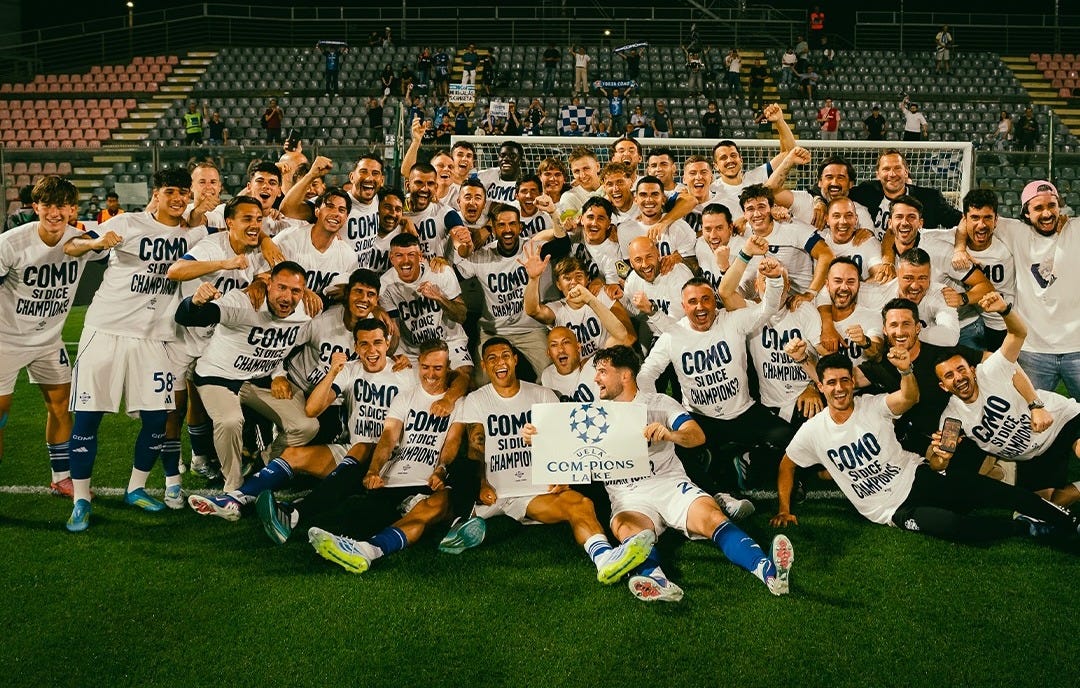
🎯 The Main Takeaway
Como 1907, the Italian club owned by Indonesian billionaires Robert Budi Hartono and the late Michael Bambang Hartono (Djarum Group), qualified for the Champions League for the first time in its 119-year history on the final day of the Serie A season. A 4-1 victory over Cremonese, combined with AC Milan’s 2-1 defeat to Cagliari, secured fourth place for Cesc Fàbregas’s side.
Just days earlier, Leicester City — the Thai-owned club that completed one of sport’s greatest fairytales by winning the Premier League in 2016 — suffered a second consecutive relegation, dropping to English football’s third tier for only the second time in its 142-year history. A 2-2 draw with Hull City sealed their fate, leaving them 23rd in the Championship standings.
Two clubs. Two Southeast Asian ownership stories. Two vastly different trajectories.
📡 Why It’s on Our Radar
Southeast Asian businessmen have been acquiring European football clubs for nearly two decades, but the results have been wildly inconsistent. Como’s meteoric rise offers a blueprint for patient, well-funded success, while Leicester’s collapse serves as a cautionary tale of what happens when financial discipline falters.
The contrast is particularly striking given the timing. Como — a club that declared bankruptcy twice in the 21st century — has climbed from Serie D (fourth division) to the Champions League in just seven years under Indonesian ownership. Leicester, owned by Thailand’s King Power Group since 2010, went from Premier League champions to League One in a single decade.
The Asian Football Confederation (AFC) has noted the increasing trend of Southeast Asian investment in European football, viewing it as both an opportunity for technical knowledge transfer and a potential drain on domestic league development. The contrasting fortunes of these two clubs will likely shape how ASEAN nations approach such investments in the future.
Loved this? Explore Southeast Asia's top Michelin food cities and Eurovision's historic expansion to Asia.
📜 The Original Precedent: Thaksin Shinawatra and Manchester City
Before Como or Leicester, another Southeast Asian tycoon made headlines. In July 2007, former Thai Prime Minister Thaksin Shinawatra bought Manchester City for £81.6 million.
He promised a £50 million war chest and hired Sven-Göran Eriksson. But Thaksin had been ousted in a 2006 coup, faced corruption charges, and had over $1.5 billion in assets frozen. Analysts called the takeover a PR move: “He wants his job back, and he’s using football to maintain his profile.”
Within 14 months, Thaksin fled Britain after his visa was canceled. He sold City to Abu Dhabi in September 2008 — a deal that transformed the club into a global powerhouse. By February 2009, his honorary role had been terminated.
Thaksin made a £120 million profit. His chaotic reign became the first cautionary tale of Southeast Asian football ownership: political baggage rarely stays off the pitch.
📊 How Southeast Asian Owners Stack Up
🇮🇩 Indonesia
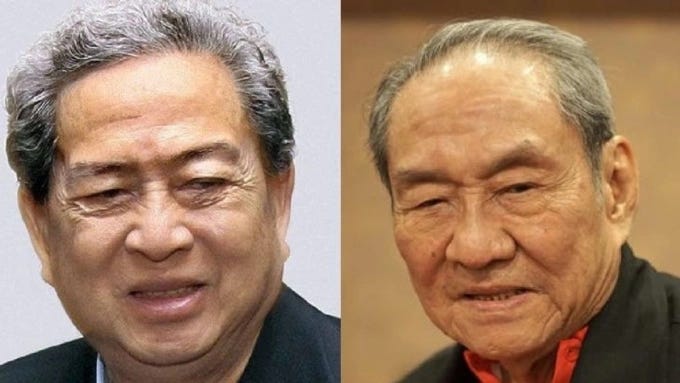
Hartono brothers (Djarum Group) – Own Como 1907 (Serie A, Italy). Purchased in 2019. Current status: Champions League qualifiers – rose from Serie D to Europe’s elite in seven years.
Erick Thohir & Anindya Bakrie – Own Oxford United (Championship, England). Acquired majority shares in 2022. Mid-table club; developing Indonesian talent pipeline (Marselino Ferdinand, Ole Romeny placed there).
Erick Thohir (former) – Former owner of Inter Milan (Serie A, Italy). Owned 70% from 2013 to 2019. Sold; the club returned to European contention after his tenure.
Bakrie Group – Owns Brisbane Roar (A-League, Australia). Bought 70% in 2011, now owns 100%. Consistent finals appearances.
Sihar Sitorus – Owns Verbroedering Denber FC (Belgian Third Division). Pre-2019 acquisition. Lower-league development club.
Santini Group (Wanandi family) – Holds minority stake in Tranmere Rovers (League Two, England). Investment since 2019. Lower-league stability.
🇹🇭 Thailand
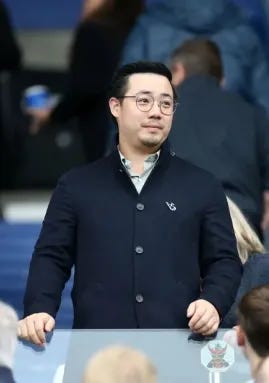
King Power (Srivaddhanaprabha family) – Owns Leicester City (League One, England). Purchased in 2010. Current status: Relegated twice – from Premier League champions (2016) to third tier in a decade; financial struggles.
Thaksin Shinawatra (former) – Former owner of Manchester City (Premier League, England). Owned from 2007 to 2008. After 14 months, the owner became a convicted fugitive; the club was later transformed under Abu Dhabi ownership.
Various Thai investors – Own stakes in clubs, including Sheffield United. Mixed results; none have matched Leicester’s peak or avoided its decline.
🇸🇬 Singapore
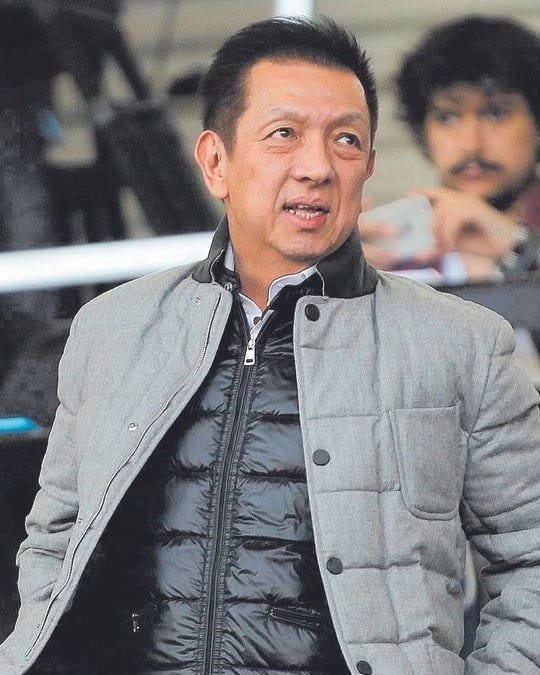
Peter Lim – Owns Valencia (La Liga, Spain). Purchased in 2014. The club has struggled; it has been inconsistent in European qualification.
🇲🇾 Malaysia
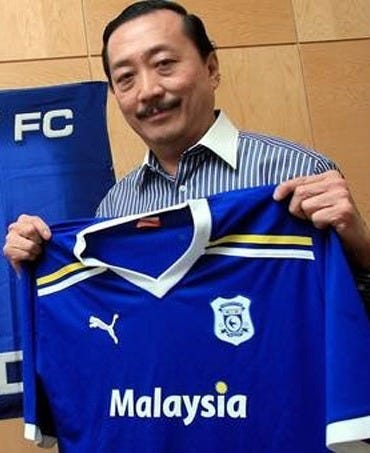
Tan Sri Vincent Tan – Owns Cardiff City (Championship, England). Purchased in 2010. Promoted to Premier League once; now mid-table Championship.
Tony Fernandes – Former owner of Queens Park Rangers (Championship, England). No longer involved; club has since stabilised without his ownership.
🇻🇳 Vietnam
No major European club investments to date. Focus remains on domestic league development and national team progression.
🚀 Como’s Ascent: The Blueprint
When the Hartono brothers purchased Como in 2019, the club was in Serie D — Italy’s fourth-tier semi-professional league — and had just emerged from its second bankruptcy. The acquisition cost less than €1 million. Today, the club is worth exponentially more and will rub shoulders with Europe’s elite next season.
Key moves that worked:
Patient capital: The Hartonos invested gradually, focusing on infrastructure and squad building rather than splashy marquee signings (unlike Thaksin’s short-lived spending spree at City)
Football expertise: Appointed Cesc Fàbregas as head coach — the former Arsenal, Barcelona, and Chelsea midfielder brought tactical acumen and instant credibility
Strategic shareholding: Brought in Thierry Henry and Dennis Wise as minority shareholders, adding invaluable footballing intelligence
Smart recruitment: Built a squad of promising young players (most under 23) rather than expensive veterans
Infrastructure planning: Investing in training facilities and stadium upgrades to meet UEFA standards
“It’s up there with all my achievements for how it was done and with whom we did it, because we did it with very young players, almost all of them are under 23 years old. That’s amazing.”
— Cesc Fàbregas, Como head coach
Como finished the season with 71 points, leapfrogging both AC Milan (70) and Juventus (69). They took 13 points from a possible 15 in the final five games — championship-winning form when it mattered most.
The club’s rise has been so rapid that it now faces infrastructure challenges: its home ground, the Stadio Giuseppe Sinigaglia, does not currently meet UEFA standards for Champions League matches. The club is exploring options, including temporarily relocating to the Mapei Stadium in Sassuolo.
📉 Leicester’s Collapse: A Cautionary Tale
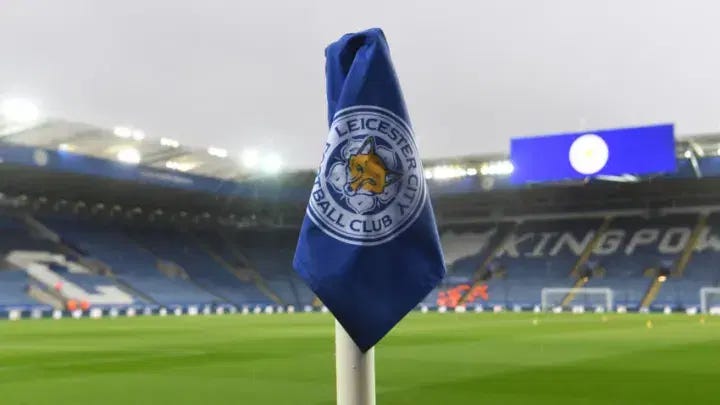
Leicester’s fall is almost as dramatic as its rise. After winning the Premier League as 5,000-1 outsiders in 2016 and reaching the Champions League quarter-finals in 2017, the club has spiraled downward.
What went wrong:
The death of Vichai Srivaddhanaprabha (2018): The beloved founder’s passing removed a steadying hand
Reckless spending without safeguards: Generous contracts lacked relegation wage reduction clauses; when the club dropped to the Championship, the wage bill consumed 102% of revenue (healthy clubs operate at 50-60%)
COVID impact on King Power: The family’s duty-free business, reliant on air travel and tourism, was devastated, forcing cost-cutting at the worst possible moment
Poor recruitment and managerial churn: Four managers in less than a year, each with different tactical approaches, destabilised the squad
PSR breaches: The club faced Profit and Sustainability Rules charges and was docked six points this season, losing its appeal
Loss of experienced leaders: The squad lacked players who understood relegation battles, leaving them ill-prepared for the fight
The numbers tell the story: in 2019-20, Leicester were third in the Premier League. Five years later, they are 23rd in the Championship, heading to League One. Chairman Top has insisted the family remains committed — “the club is like a son” — but supporters have grown restless.
⚖️ What’s at Stake
Como’s success is a proof of concept for Southeast Asian ownership done right: patient, strategic, and integrated with football expertise. Leicester’s collapse — and Thaksin’s chaotic tenure before it — are warnings that money alone is not enough, and that political baggage, financial recklessness, and the death of a visionary owner can undo years of progress.
For the region’s aspiring football owners — and there are many — the lessons are now clearer than ever:
Stability matters more than spending – Como’s gradual rise outperformed both Thaksin’s crash-and-burn and Leicester’s boom-and-bust
Football people must run football operations – Fàbregas, Henry, and Wise provided expertise that the Hartonos wisely deferred to; Thaksin relied on his own instincts and was widely mocked for his lack of football knowledge
Financial discipline is non-negotiable – Leicester’s wage bill disaster and Thaksin’s frozen assets are textbook cases of what not to do
Succession planning is critical – The death of Vichai Srivaddhanaprabha left a leadership vacuum his son has struggled to fill; Thaksin’s political downfall left him a fugitive within months of buying City
Build for the long term — Como’s seven-year climb from Serie D to Champions League was methodical; Thaksin’s 14-month reign and Leicester’s decade-long rollercoaster show the perils of the opposite approach
🏠 Why This Hits Home
For Southeast Asian fans, these stories mark the region’s growing footprint in global football. When Como plays Champions League football next season—potentially against the club Thaksin once owned—millions of Indonesians will have a vested interest in a club halfway across the world.
The infrastructure being built at Como and Oxford United could eventually benefit regional talent. Erick Thohir has already used Oxford to create a pathway for Indonesian players in English football. The Hartonos could follow suit.
But Leicester’s fall and Thaksin’s flameout are reminders that European success is never guaranteed. Thai ownership has produced English football’s greatest upset, one of its most dramatic collapses, and a 14-month cautionary tale ending with a convicted fugitive on the run. For Thai fans, the whiplash has been brutal—and the lessons still being absorbed.
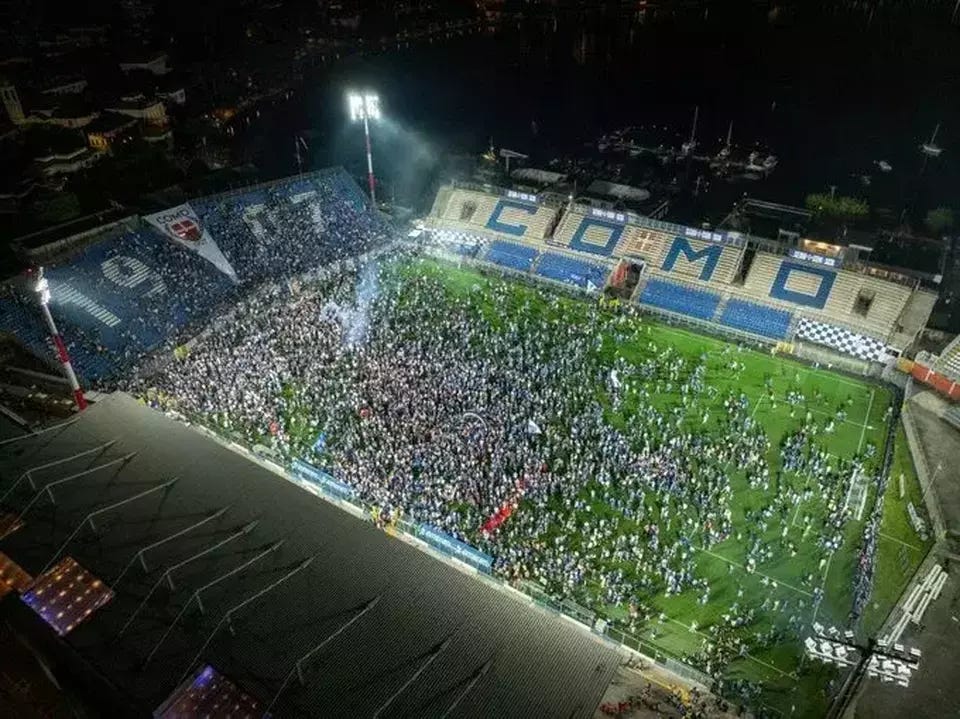
🔮 The Bottom Line
Como’s Champions League qualification proves that patient, well-managed Southeast Asian investment can succeed. Leicester’s collapse to League One offers a sobering warning: fairytales without financial discipline end badly. And Thaksin Shinawatra’s chaotic Manchester City tenure—the original ASEAN foray into European football—remains the earliest cautionary tale.
For the Hartono brothers, the challenge is sustaining success. For Leicester’s Chairman Top, it is survival. For future investors, the lesson is clear: patient capital and football expertise win; recklessness and political baggage lose.
As Serie A’s final whistle blew, one club celebrated on Lake Como. Another mourned in the English Midlands. And in the history books, the shadow of a Thai fugitive-turned-owner still lingers.
Need More Angles?
DW Thai ownership of European football clubs sees mixed results
Guardian, The Como’s ascent to Champions League offers bright note amid Serie A chaos
Guardian, The Leicester’s decline and fall feels like a cruel parable as League One beckons
VNExpress Indonesian billionaire brothers behind Como’s rapid rise in Italian football
VNExpress Who is Peter Lim, billionaire and owner of Spanish football club Valencia?
Warga Biz The 5 Southeast Asian Moguls Who Are Owners of Football Clubs
(ELS/QOB)