



🎯 The Main Takeaway
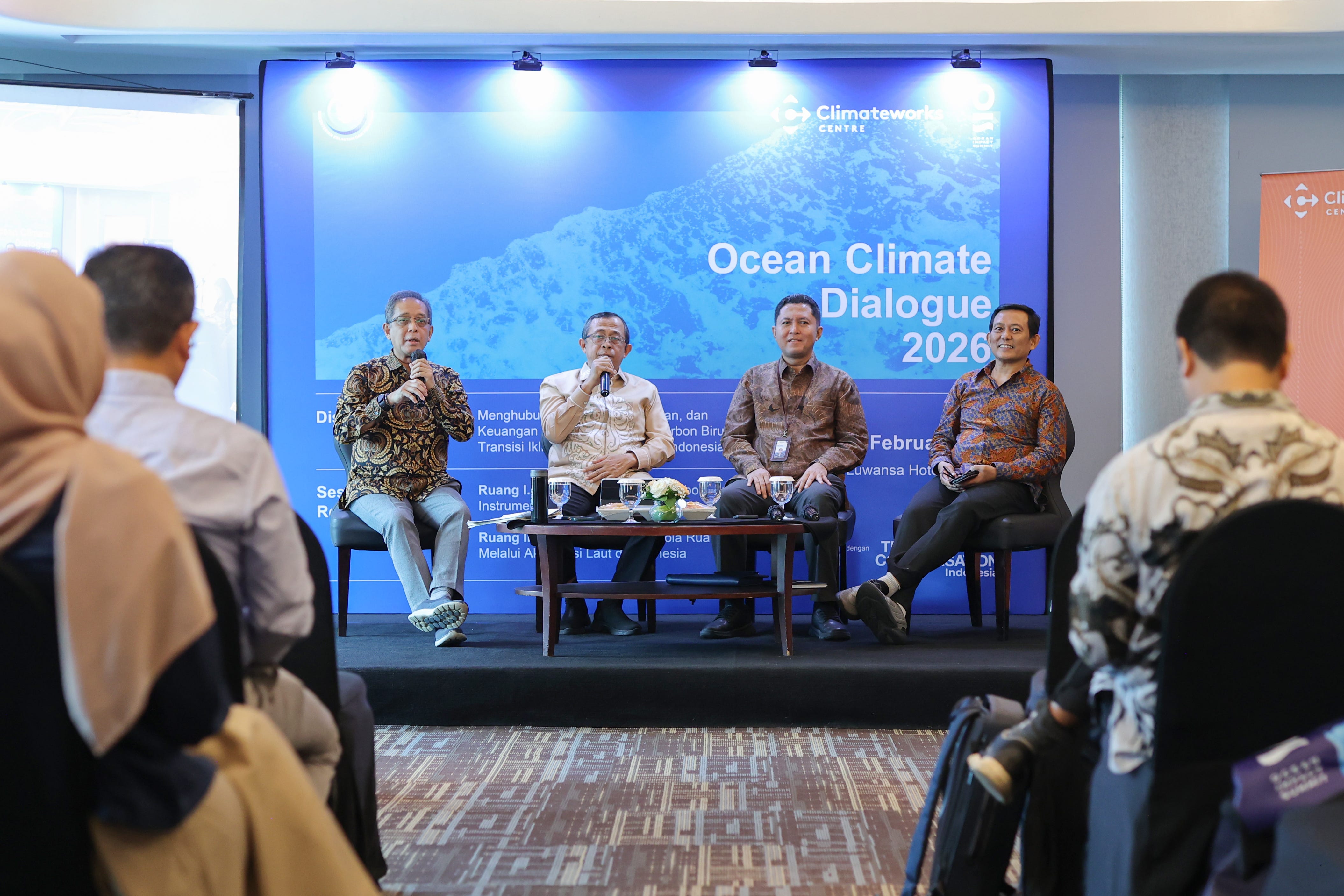
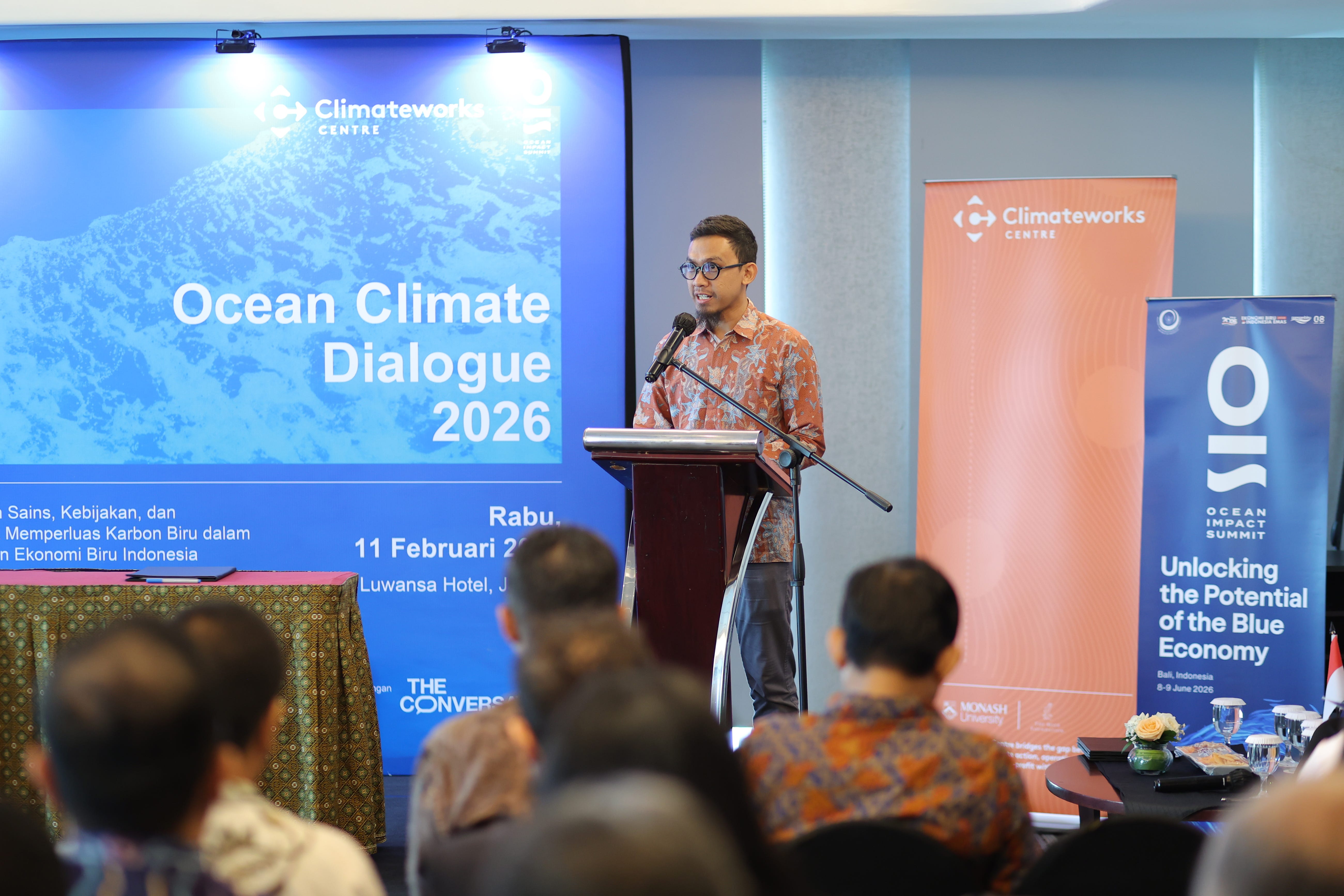
On Wednesday (11/02), Indonesia reinforced its commitment to accelerate blue carbon development during the Ocean Climate Dialogue 2026 in Jakarta, as part of its Second Nationally Determined Contribution (NDC) strategy and preparation for UNFCCC COP31 in Antalya, Turkey.
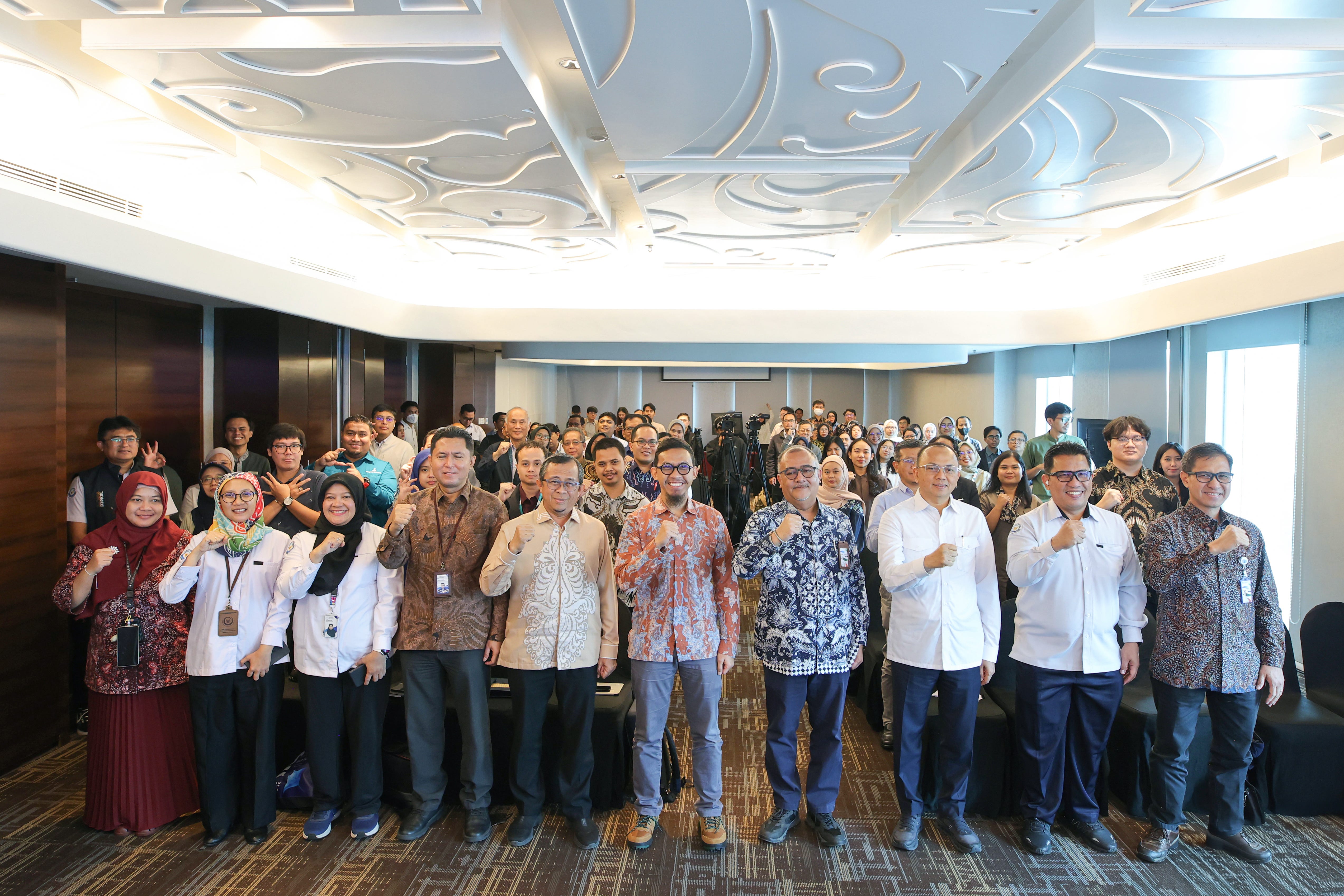
Hosted by the Ministry of Marine Affairs and Fisheries (KKP) together with Climateworks Centre and The Conversation Indonesia, the forum brought together policymakers, researchers, financial institutions, development partners, and civil society to align science, governance, and finance behind ocean-based climate solutions.
Indonesia holds approximately 17% of the world’s blue carbon ecosystems, including mangroves, seagrass meadows, and tidal wetlands.
With marine areas covering nearly three-quarters of the country’s territory, blue carbon is increasingly positioned not only as a mitigation tool, but as a strategic asset in climate diplomacy and economic transition.
“Integration of ocean issues into the national and global climate agenda can strengthen Indonesia’s marine climate diplomacy. However, leadership requires institutional alignment, integrated policies, and coordinated financing mechanisms.”
- Koswara, Director General of Marine Spatial Management, KKP
📡 Why It’s On Our Radar
Several structural drivers are pushing blue carbon to the center of Indonesia’s climate strategy:
🌡️ NDC commitments: Indonesia targets a 31.89% emissions reduction independently and up to 43.2% with international support. Blue carbon could help close that gap.
🌊 Ocean leverage: As the world’s largest archipelagic state, Indonesia possesses unmatched marine ecosystems that can function as high-impact nature-based solutions.
💰 Blue economy potential: The marine sector is estimated to carry USD 1.3 trillion in economic value.
🌍 COP31 positioning: With global climate negotiations increasingly recognizing ocean-based mitigation, Indonesia has an opportunity to shape the discourse.
In short, blue carbon connects climate policy, economic resilience, and geopolitical positioning into a single strategic framework.
💥 The Core Challenge
Despite strong potential, implementation remains the main hurdle.
📊 Data standardization gaps: Scientific data exists, but harmonized marine carbon accounting systems are still evolving.
🏛️ Fragmented governance: Marine, climate, and finance authorities operate across different institutional structures.
📑 Regulatory uncertainty: Investors require clear legal frameworks, tenure certainty, and credible measurement, reporting, and verification (MRV) systems.
💸 Financing mismatch: Long-term conservation projects often struggle to meet private capital expectations regarding risk and returns.
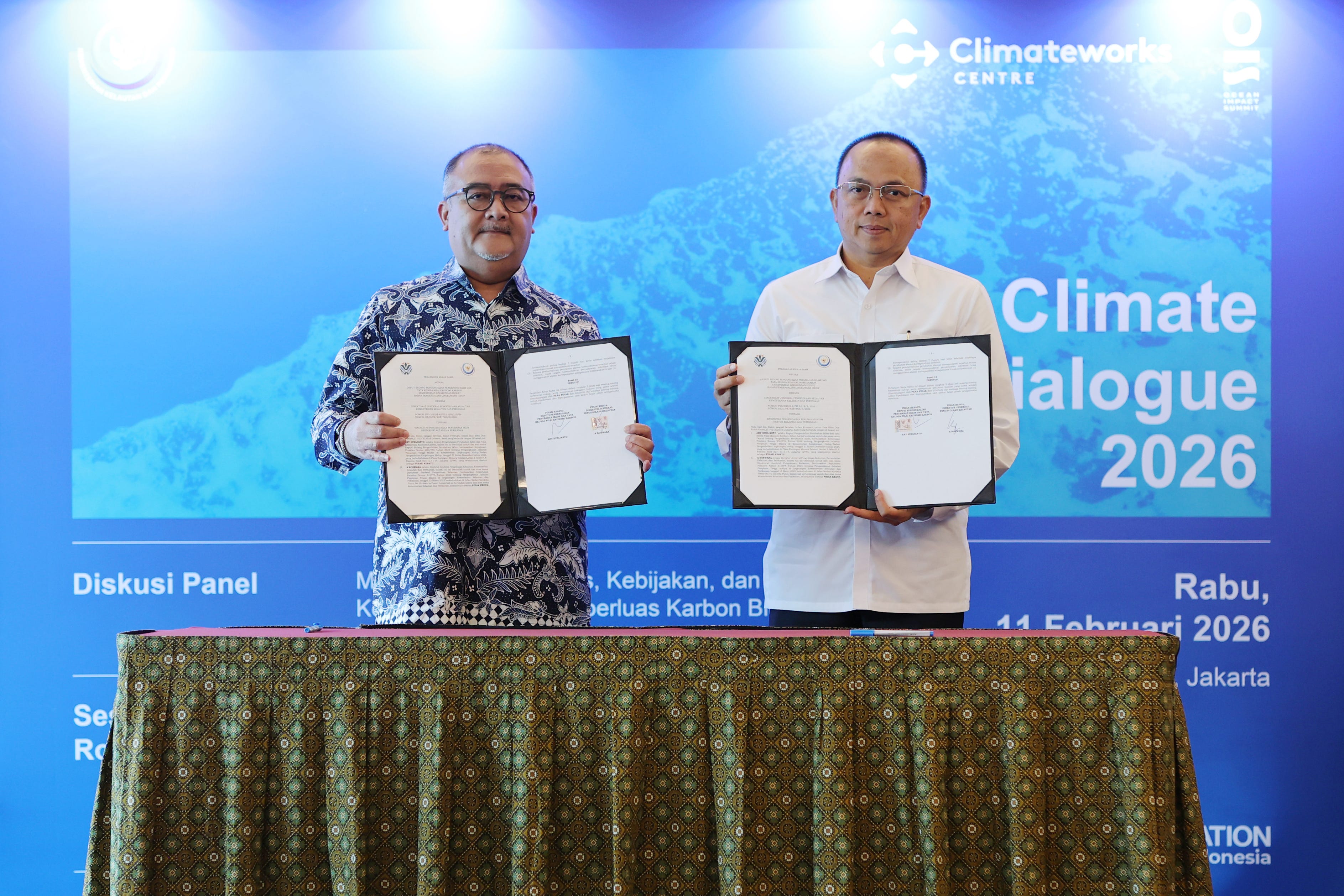
Deputy for Climate Change Control and Carbon Economic Governance, Ary Sudjianto, emphasized that blue carbon policies must align directly with the Second NDC to ensure measurable and accountable contributions.
Without clarity and coordination, blue carbon risks remaining aspirational.
💬 Inside the Ocean Climate Dialogue
The dialogue focused on bridging the gap between ambition and execution:
🔬 Science-policy integration: Strengthening marine data to support credible carbon accounting.
💰 Innovative financing: Matching project design with blended finance, carbon markets, and development funding instruments.
🗺️ Integrated marine planning: Aligning marine spatial planning with national carbon strategies.
🤝 Cross-level coordination: Improving collaboration between national ministries and local governments.
🌱 Scaling restoration: Expanding mangrove and seagrass restoration to combine emissions reduction with coastal resilience.
The message was clear: blue carbon must be embedded within Indonesia’s broader climate and economic architecture.
💡 What to Expect?
Ahead of COP31, Indonesia is likely to:
📈 Enhance marine carbon accounting systems to increase credibility in international carbon markets.
🏦 Develop financing frameworks that reduce risk and attract private capital.
📜 Strengthen regulatory coherence across ministries.
🌍 Elevate ocean-based mitigation in global climate diplomacy.
If managed effectively, blue carbon could become one of Indonesia’s signature contributions to global climate governance.
🏡 Why It Hits Home
Indonesia’s coastal communities face mounting climate risks:
🌊 Rising sea levels threaten infrastructure and settlements.
🐟 Ecosystem degradation undermines fisheries and livelihoods.
⛈️ Extreme weather intensifies vulnerability.
Mangrove and seagrass restoration are not just carbon sinks — they are natural defenses and economic lifelines.
This makes blue carbon a development priority, not merely an environmental agenda.
🌍 The Regional and Global Stake
For ASEAN and other coastal states:
⚖️ Indonesia’s approach could demonstrate how middle powers integrate ocean governance into climate leadership.
🧲 Successful implementation could attract greater climate finance into nature-based solutions.
📊 Strong standards may help shape marine carbon governance norms in emerging markets.
🚀 If elevated at COP31, ocean-based mitigation could gain greater prominence in global negotiations.
🧭 Beyond the Headline
The Ocean Climate Dialogue 2026 also serves as a lead-up to the upcoming Ocean Impact Summit, which aims to integrate sustainable blue economy goals with national climate targets.
The larger test now lies in institutional execution.
Ambition is present.
Data is improving.
Political signals are strengthening.
But delivery will determine credibility.
📌 Bottom Line
Indonesia is positioning blue carbon as both a climate solution and a strategic economic instrument ahead of COP31.
Success will depend not on rhetoric, but on governance alignment, credible carbon accounting, and sustainable financing mechanisms.
If implemented at scale, blue carbon could become a defining pillar of Indonesia’s climate transition — and a model for ocean-based climate leadership in the Global South.
(JUN/HAR/QOB)