



📌 The Main Takeaway
Ramadan is coming. The atmosphere becomes more spiritual as Muslims worldwide, including in Indonesia, welcome the blessed month with greater devotion.
During Ramadan, worship is not only about fasting. Many Muslims also read the Qur’an, perform Tarawih prayers, give charity, and engage in more acts of kindness to strengthen their connection with God.
As a result, Muslim communities need reminders to stay consistent in their worship and maintain their spiritual routines, including the use of technology such as AI.
📡 Why It’s on Our Radar
According to the Home Affairs Ministry:
🧑🤝🧑 Indonesia’s population is around 286 million as of June 2025.
☪️ At least 85% of the total population, or 245 million people, are Muslim.
⚠️ However…
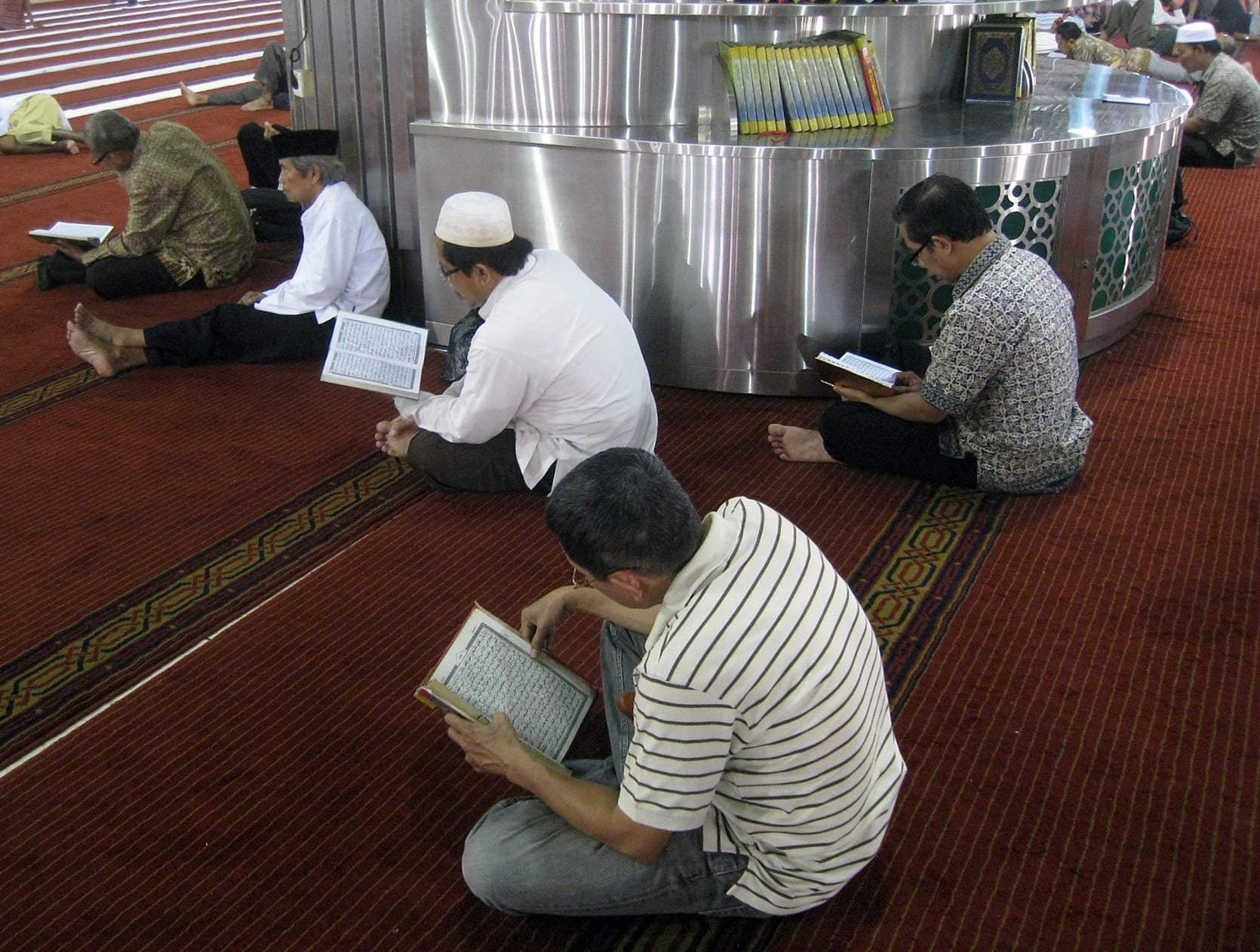
The Ministry of Religious Affairs reported that last year, 72% of Indonesian Muslims were still unable to read the Quran properly and correctly, making it one of the biggest challenges in improving Quranic literacy nationwide.
💔 Why does it happen?
Several key factors contribute to the low level of Quran-reading literacy in Indonesia:
📱 Busy Lives: Many Muslims today spend most of their time on social media and daily tasks, leaving little time for learning Islam, especially the Qur’an.
😟 Learning Fear: Many people shy away from learning the Qur’an because they find it too difficult to understand.
⏰ Late Start: Many adults lack basic Qur’an skills due to limited early education, and feel it’s too late to start learning as they grow older.
👩🏫 Mentor Gap: A lack of supportive mentors makes learning the Qur’an difficult, and many students feel judged for their mistakes.
🔔 Few Reminders: There is a lack of reminders to help Muslims maintain consistent worship amid their busy lives.
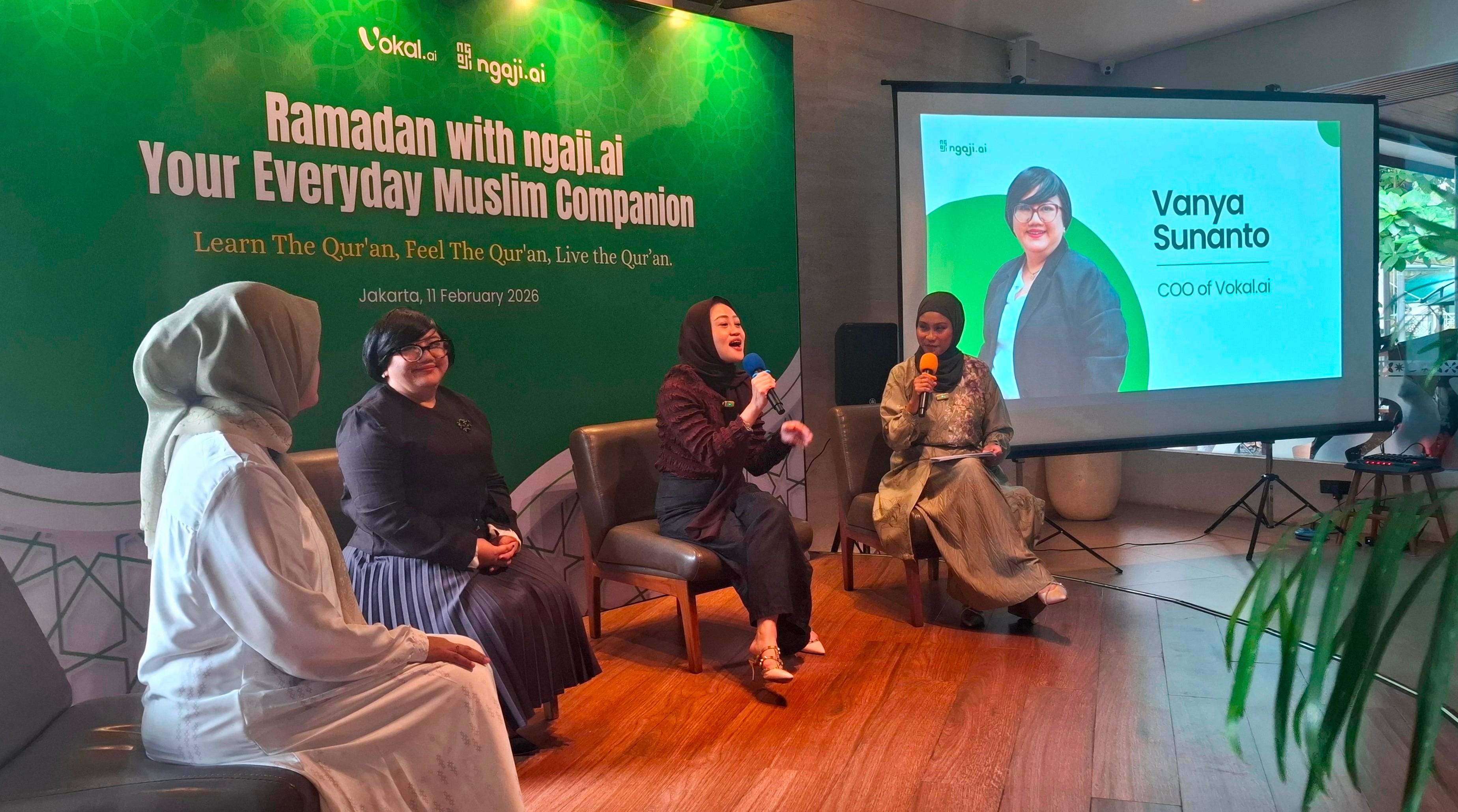
“The challenge Muslims face today is not only about whether they can read the Qur’an, but also about how to maintain sincere intentions, stay consistent, and remain focused in worship amid a life full of distractions. We aim to use technology as a daily companion for Muslims in their worship—without making them feel judged or monitored.”
Vanya Sunanto, COO Vokal.ai.
💡 What’s the Solution?
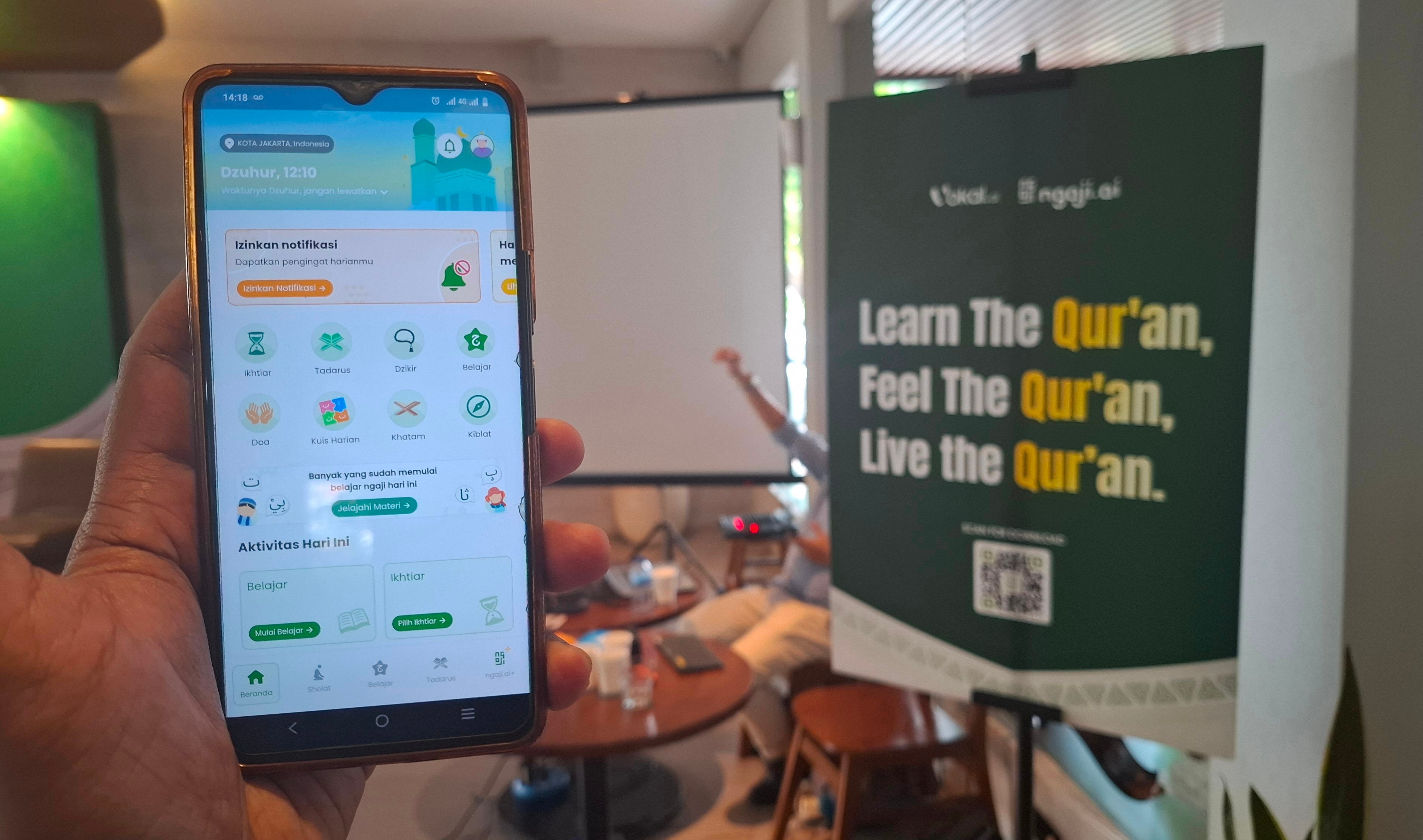
To solve this problem, the Indonesian ed-tech company Vokal.ai created a learning app called Ngaji.ai.
It helps Muslims learn about Islam and the Qur’an more easily, supports their daily worship, and aligns with Islamic values as outlined in the Qur’an.
“We believe that technology should not distract from worship, but instead support it and help users remain consistent. Starting this year and in the years ahead, we want this application to become a trusted daily worship companion—not just an app that is opened occasionally.”
R. Adhitya Zulfan, Head of Marketing Vokal.ai.
📱 What’s Inside the App?
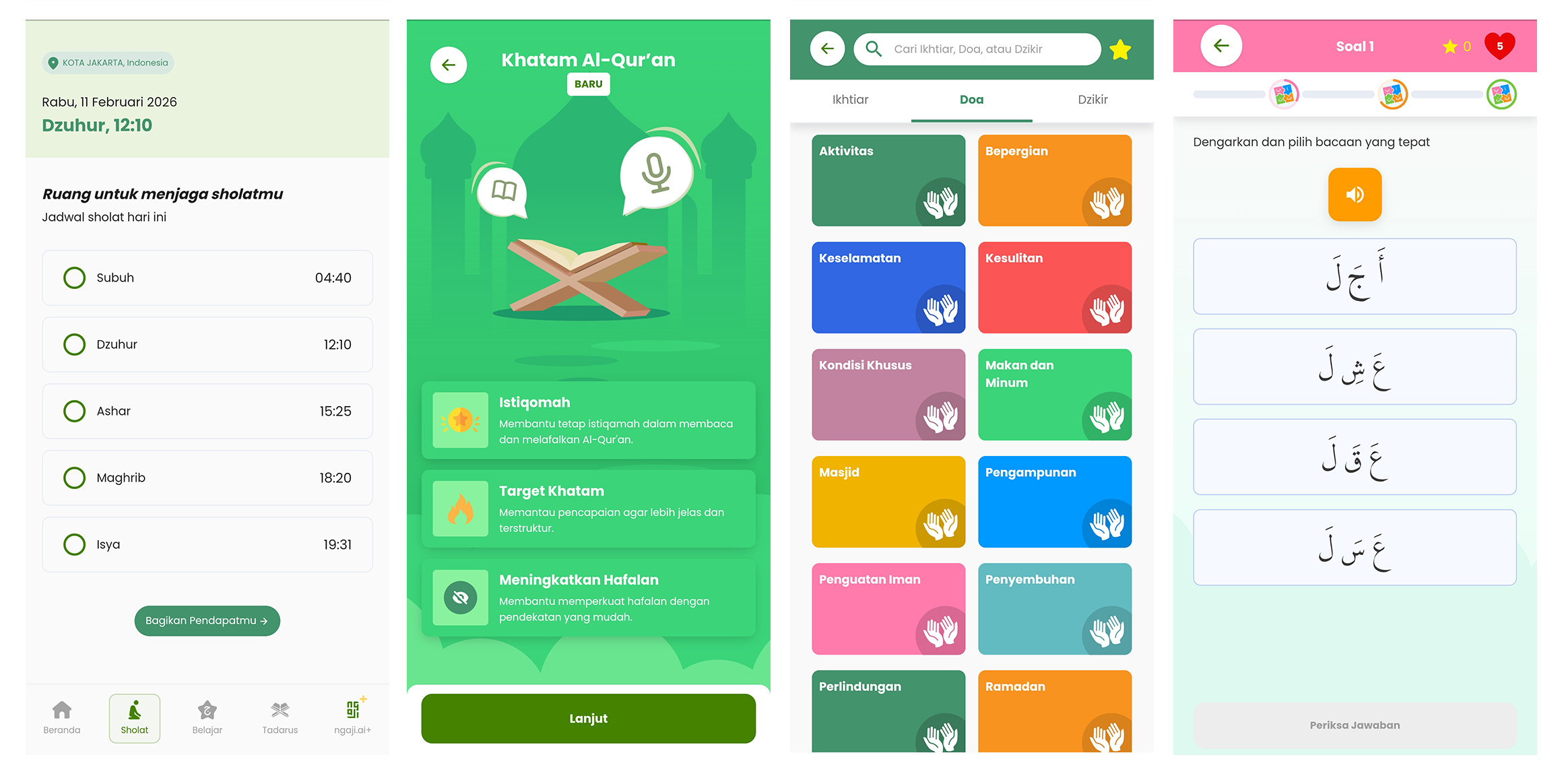
The app offers several Islamic and Qur’an learning features, including:
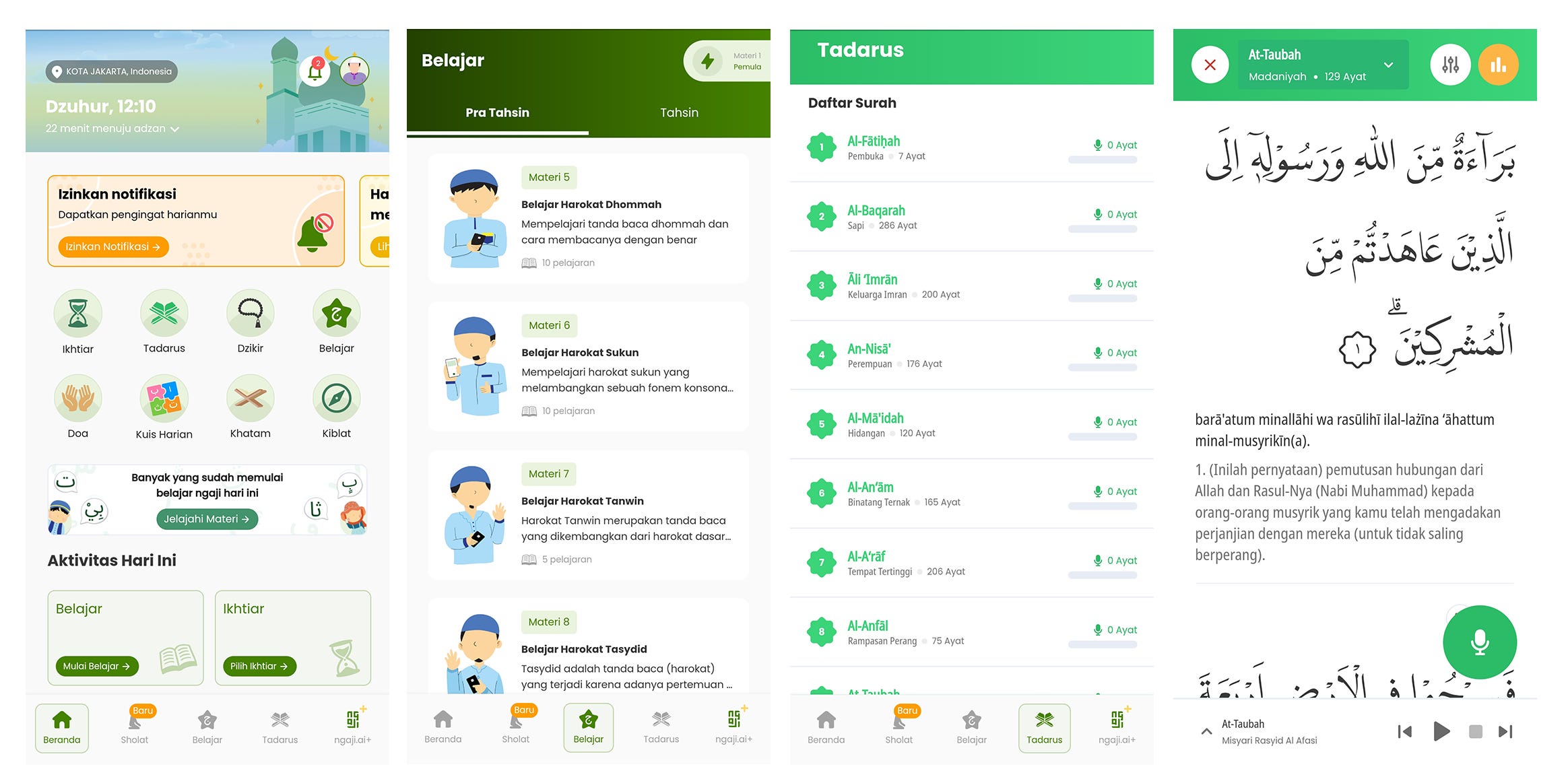
1️⃣ Basics of Hijaiyah: 15 learning modules, from basic to advanced, teach Hijaiyah (Arabic) letters and reading rules, with small quizzes for practice.
📿 Dhikr and Du’a: A collection of daily supplications and remembrances for users to read from morning to night.
📖 Tadarus: Users can read and learn the meaning of all 114 Qur’an surahs, listen to audio for correct pronunciation, and record their own recitation to be evaluated by AI.
📅 Khatam: A feature that lets users set goals to complete all 30 juz, track progress, and memorize the Qur’an step by step.
🕌 Prayer and Qibla: Reminds users of the five daily prayer times and helps them find the Qibla anywhere, even outside the mosque or their homes.
🌱 Ikhtiar: A guide that helps users follow Islamic values in personal, family, and community life by promoting good actions and avoiding bad behavior.
📝 Daily quiz: Short tests across all features to ensure users understand and retain what they learn.
“We want to help you build a habit of learning the Qur’an. The idea is to implement the very easy du’a, a very easy feature to remind you of the Qur’an the whole day. We really believe that AI is a tool to prevent complexities and make everything easy for you, but it is really for us to see how Muslims connect back to Islam, and to the religion.”
Fara Abdullah, CBDO Vokal.ai.
📊 What’s at Stake
The developers need to collect 30,000 audio datasets of people reading the Qur’an from across Indonesia to ensure the app’s AI is accurate, credible, helpful, and adaptable to regional accents, as its ’s main feature is to help users read and learn the Qur’an.
🎯 The Goal
The developers aim to achieve several goals, especially during Ramadan, including:
🌙 Daily Lifestyle: The platform integrates Islamic and Qur’an learning into the daily life and routines of Muslims.
📈 App Growth: Downloads and installs doubled before Ramadan, and grew five times during Ramadan.
💬 User Feedback: Collect feedback from users to improve the platform, help it grow, and become a trusted daily companion.
📈 The Current Performance
The developers say the app has performed well in terms of users, downloads, and other key metrics since its launch three years ago, including:
🧑👩👧👦 Users: Over 403,000 active users use the platform for worship, including 39,000 premium subscribers. Most are aged 25–40 and spend about seven minutes per day on it.
📥 Downloads: The platform has been installed by around 500,000 users since launch.
🤝 Collaboration: The developer works with communities, Islamic schools, and social organizations to support Muslims’ learning activities and help those in need, including allocating 25% of revenue from premium subscribers to send humanitarian aid to Palestine.
“The biggest challenge, especially during Ramadan, is maintaining consistency in worship. The intention is always there, but some acts of kindness go unnoticed. That’s why we need reminders that not only alert us, but also make us feel accompanied, so our worship remains present amid our busy lives.”
Verti Tri Wahyuni, User.
🔮 Looking Ahead…
The developers have several future plans for the app, including:
🎯 Target Expansion: Reach more mobile and internet users aged 18–55, encouraging them to install and use the app to learn the Quran anytime and anywhere.
🤝 Collaboration Growth: Form more B2B partnerships with NGOs, CSR programs, agencies, and ministries that support the app’s vision of promoting Qur’an and Islamic learning nationwide.
🌏 Market Expansion: Expand the app’s presence in Southeast Asia, focusing on Malaysia, Brunei Darussalam, and Singapore.
🏡 Why This Hits Home
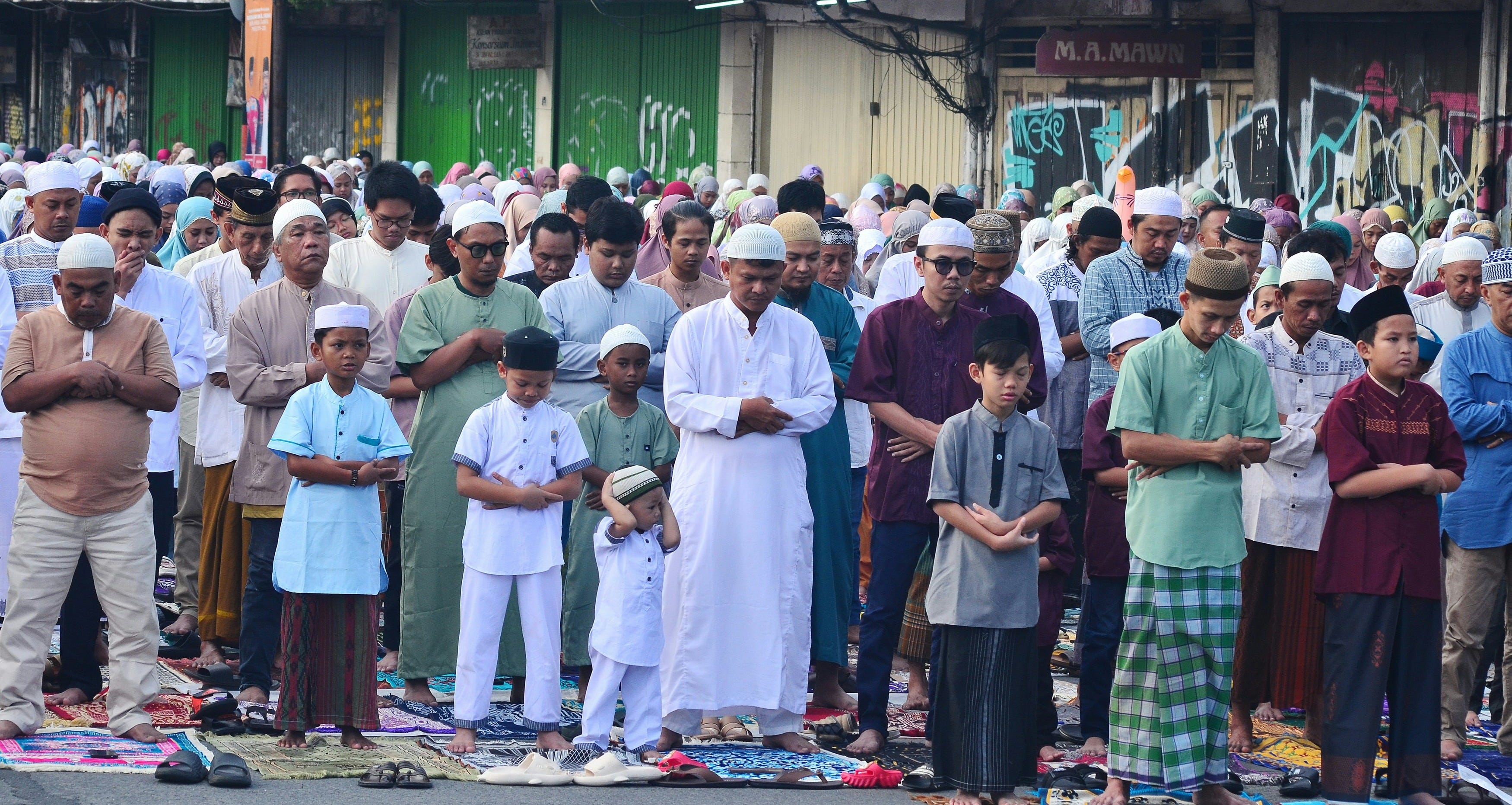
With over 245 million Muslims, Indonesia has the largest Muslim population in ASEAN and the world, making it a huge market for Muslim-related products and technology investments.
🌍 The Regional Stake
The app is expected to generate positive impacts in Indonesia and across the region, including:
🇮🇩 For Indonesia: With the largest Muslim population in the region, Indonesia is expected to become a benchmark for Muslim digital lifestyle trends in Southeast Asia.
🎓 For the education sector: The app reflects a broader regional shift toward AI-driven education and lifestyle tools, which could influence how Muslims in Southeast Asia integrate AI into religious practice.
💻 For developers: Developers can partner with institutions, agencies, NGOs, and CSR organizations across Southeast Asia to host regional events that promote Qur’an and Islamic learning.
🌍 For communities: Global communities can support the app by sharing Qur’an and du’a audio readings, or by investing to help it grow worldwide.
🚨 The Bottom Line
The platform serves as a supportive tool to help Muslims learn Islam and the Qur’an more consistently, and the presence of real human educators remains essential to guide and monitor meaningful progress.
🔍 Need More Angles?
Data Indonesia Data Jumlah Penduduk Indonesia Menurut Agama pada Semester I/2025
World Population Review Muslim Population by Country 2026
(NGO/QOB)