



🎯 The Main Takeaway
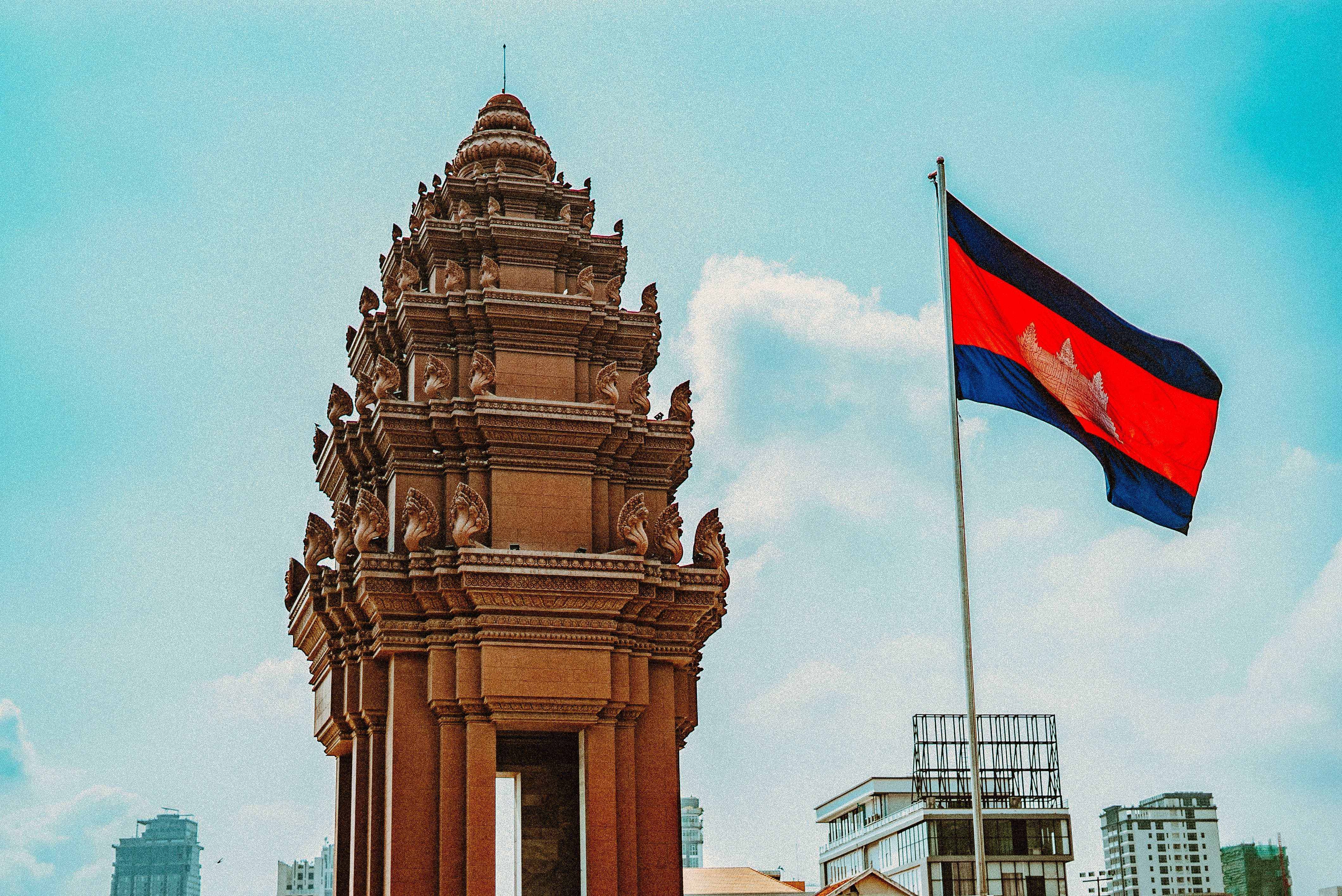
Cambodian National Constitution Day, marked on 24 September, commemorates the 1993 promulgation of the Constitution after decades of war and regime changes.
It marked Cambodia’s transition to constitutional monarchy and multiparty democracy through a peace process shaped by domestic political compromise and international intervention.
📡 Why It’s on Our Radar
🌏 It reshaped Southeast Asia: Cambodia’s conflict had drawn in Vietnam, neighbouring states and Cold War powers. The 1991 peace settlement helped move the country from a regional conflict zone into Southeast Asia’s emerging post-Cold War order.
🇺🇳 It tested international peace-building: United Nations Transitional Authority in Cambodia (UNTAC) oversaw elections, administration and refugee repatriation, making Cambodia a major case of UN-led post-conflict transition.
🇦🇸 It connects to ASEAN’s evolution: ASEAN’s six members at the time participated in the Paris peace process, while Cambodia later joined ASEAN in 1999. Its constitutional transition therefore sits within the region’s longer shift from Cold War conflict towards regional integration.
📜 Brief History: Decades of Regime Changes
Cambodia’s 1993 Constitution followed a series of political ruptures that repeatedly changed the country’s system of government.
🇫🇷 Independence: Cambodia gained independence from France in 1953 under King Norodom Sihanouk.
🏛️ The Republic: A 1970 coup led by Lon Nol removed Sihanouk, abolished the monarchy and established the Khmer Republic.
☠️ Democratic Kampuchea: The Khmer Rouge seized power in 1975 and imposed a radical agrarian regime that killed nearly two million people through forced labour, starvation, disease and execution.
⚔️ Vietnamese intervention: Vietnam overthrew the Khmer Rouge in 1979, but fighting among Cambodian factions continued for more than a decade.
🕊️ The peace process: The 1991 Paris Peace Agreements established a framework for ceasefire, elections, refugee repatriation and Cambodia’s political reconstruction.
🗳️ The election: More than 4.2 million Cambodians voted in the 1993 Constituent Assembly election organised under UNTAC.
🤝 Political compromise: FUNCINPEC and the Cambodian People’s Party formed a power-sharing government after the election, with Norodom Ranariddh and Hun Sen serving as First and Second Prime Ministers.
📜 The Constitution: The Constituent Assembly adopted the Constitution on 21 September 1993.
👑 The new Kingdom: Sihanouk promulgated the Constitution on 24 September, restoring Cambodia as a constitutional monarchy. The same day, he was elected King by the Royal Council of the Throne.
🎊 A Day of Lotus Tributes and Constitutional Reflection
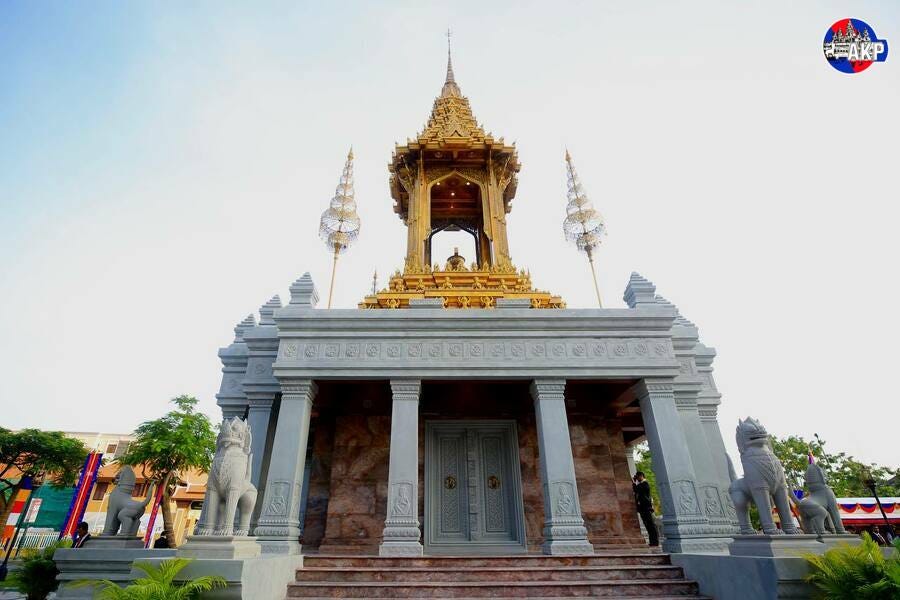
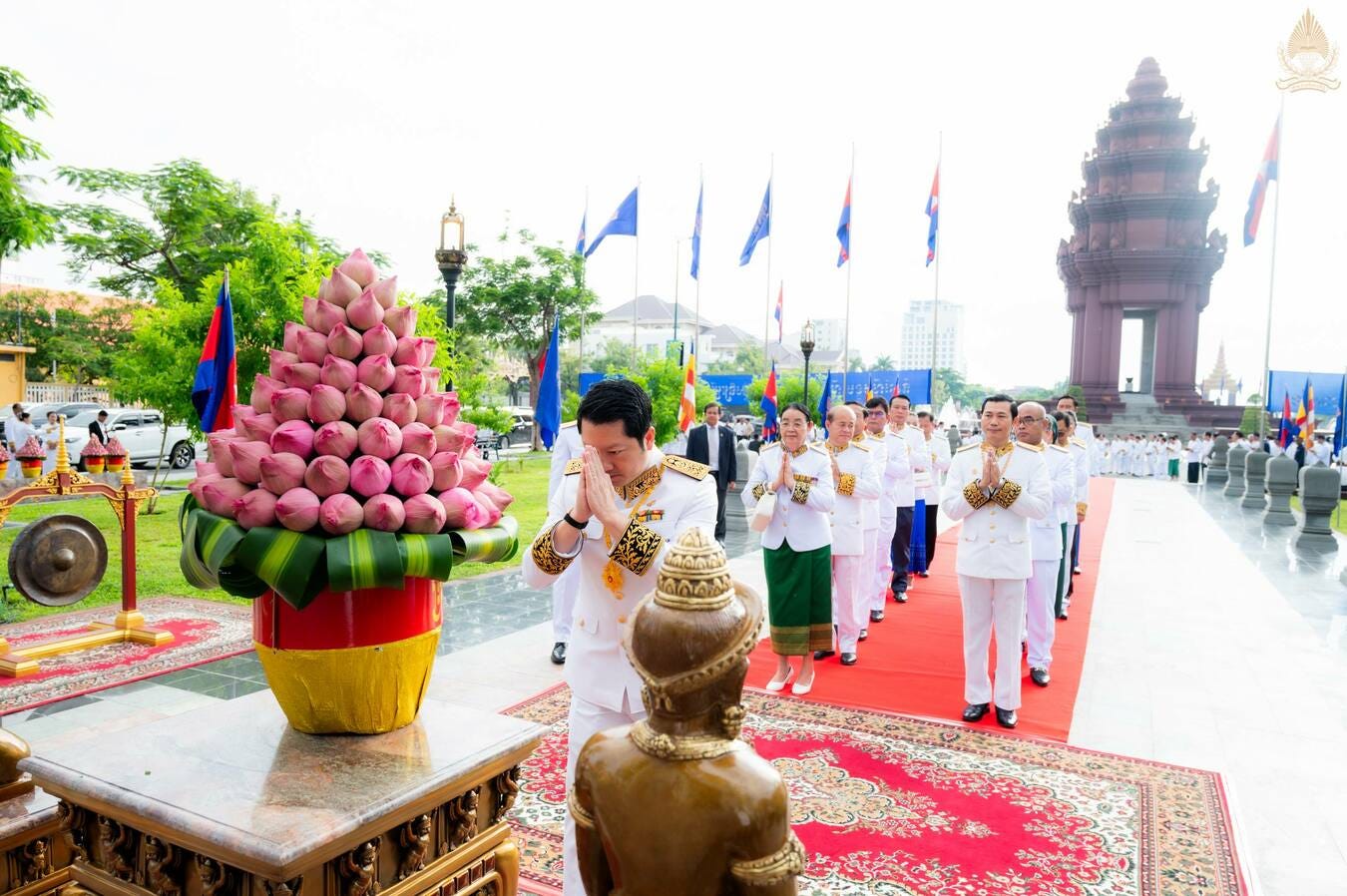
Cambodia marked the 33rd anniversary of its Constitution on 24 September with ceremonies in Phnom Penh, including the main commemoration at the Constitution Monument near the Independence Monument.
🪷 Lotus tributes: Delegations from ministries, the Senate and National Assembly took turns laying lotus floral tributes at the monument, turning the anniversary into a collective state commemoration.
🏛️ A national political occasion: Acting Head of State Hun Sen, Prime Minister Hun Manet and National Assembly President Khuon Sudary marked the anniversary, with official messages highlighting the Constitution’s role in peace, stability, rule of law and national development.
📜 33 years on: Officials also revisited the Constitution’s origins in the 1991 Paris Peace Agreements and the 1993 UN-supervised elections, linking this year’s commemoration directly to Cambodia’s post-conflict transition.
📅 Why 24 September? The Constituent Assembly adopted the Constitution on 21 September 1993. Three days later, King Norodom Sihanouk signed the Royal Decree promulgating it at the Royal Palace, formally establishing the constitutional monarchy.
🇰🇭 33 Years Later: Why It Still Matters
⚖️ A living Constitution: Cambodia’s Constitution has been amended 11 times since 1993, including an amendment in 2025, showing that the framework created after the peace process continues to evolve.
🏛️ A political framework: The Constitution established the institutions through which Cambodia’s political system operates today, including the monarchy, Parliament and executive government.
🌏 A regional transition: Cambodia’s path from conflict to constitutional rule eventually brought it into ASEAN in 1999, connecting a once-divided conflict zone to Southeast Asia’s regional institutions.
🛡️ A different security landscape: The challenges facing Cambodia today are no longer the armed factional conflicts of the 1970s and 1980s. Cross-border issues such as online scams now require cooperation through the same regional architecture Cambodia joined after the peace process.
🌍 Beyond the Headlines
While Constitution Day anchors the national conversation, September in Cambodia is also buzzing with cultural and contemporary developments:
🌅 Angkor Wat Equinox: Between 19-21 September, crowds flocked to Siem Reap to witness a rare solar alignment where the sun rises perfectly over the central tower of Angkor Wat.
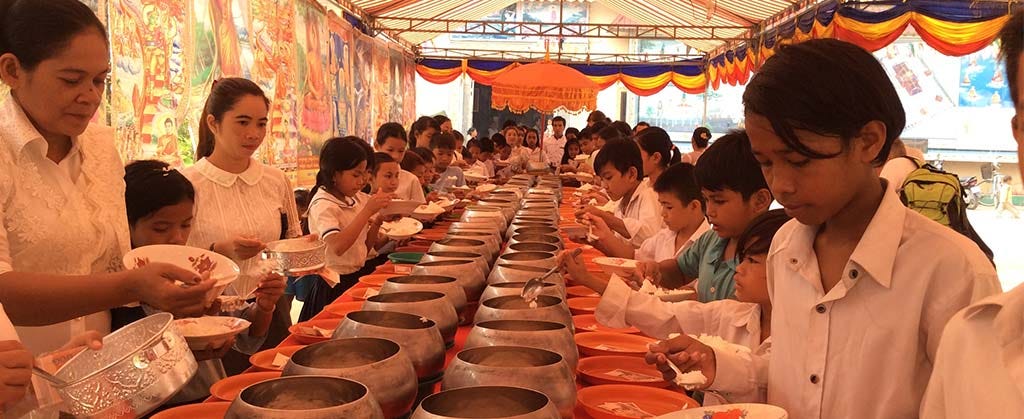
🌾 Pchum Ben preparations: The country is gearing up for Pchum Ben (Ancestors’ Day) in late September, one of the most sacred religious festivals driving mass travel to local pagodas.
🛡️ Cracking down on cybercrime: Cambodian authorities have recently intensified national and cross-border efforts to dismantle online scam syndicates, a major focal point in current regional diplomacy.
🌱 Bottom Line
A Constitution cannot erase the past, but it can help a country choose what comes next. Thirty-three years after Cambodia emerged from one of Southeast Asia’s darkest chapters, Constitution Day offers a moment to reflect on the distance travelled and the future still being built.
The hope is not simply to remember peace, but to preserve and build on it, so that every generation can inherit a Cambodia that is more peaceful, more secure and more hopeful than the one before. Happy National Constitution Day! 🇰🇭
Need More Angle?
Cambodianess Cambodia Celebrates 32nd Anniversary of Constitution
Khmer Times Cambodia marks Constitution Day with civic responsibility
United States Holocaust Memorial Musem Cambodia 1975–1979
(BRZ/ELS)