




🎯 The Main Takeaway
The XXV Winter Olympic Games—commonly known as Milano Cortina 2026—concluded on 22 February after two weeks of historic competition across Northern Italy.
For Southeast Asia, history was made as five nations—the Philippines, Thailand, Malaysia, Singapore, and Vietnam—took to the world stage.
This represented the largest collective regional presence ever, highlighted by Vietnam’s historic debut and Singapore’s first-ever performance in Alpine Skiing.
🔍 Why It’s on Our Radar
Historically, winter sports were seen as “impossible” for tropical Southeast Asia. However, the 2026 Games show a shift from “novelty acts” to serious competitive athletes.
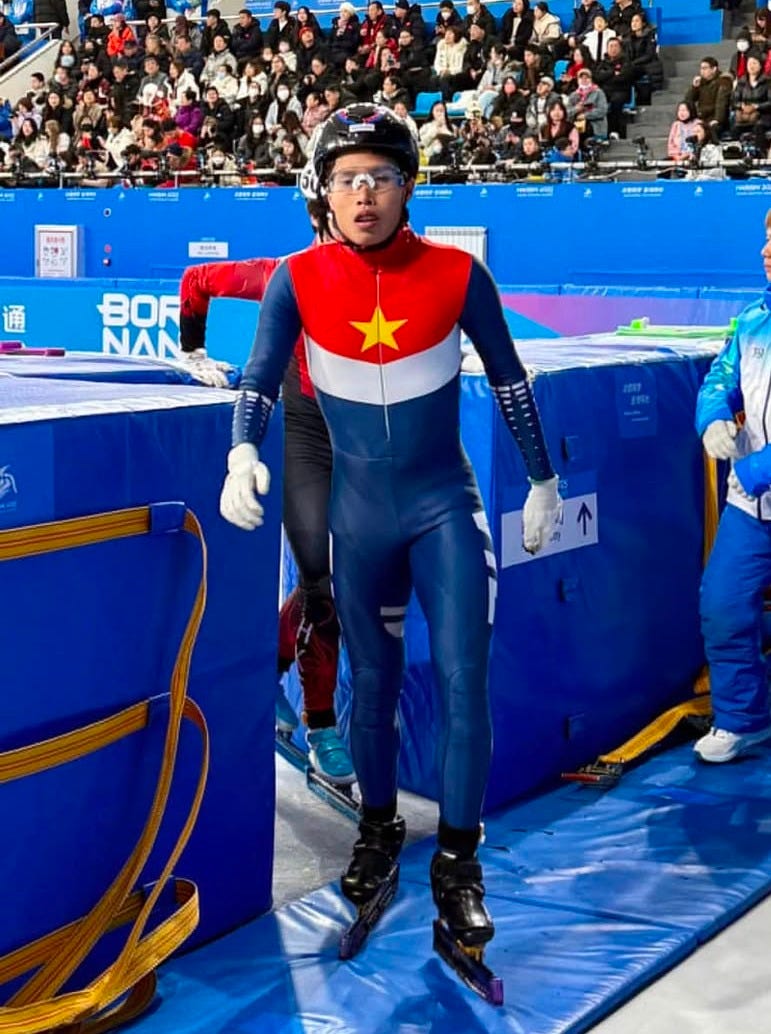
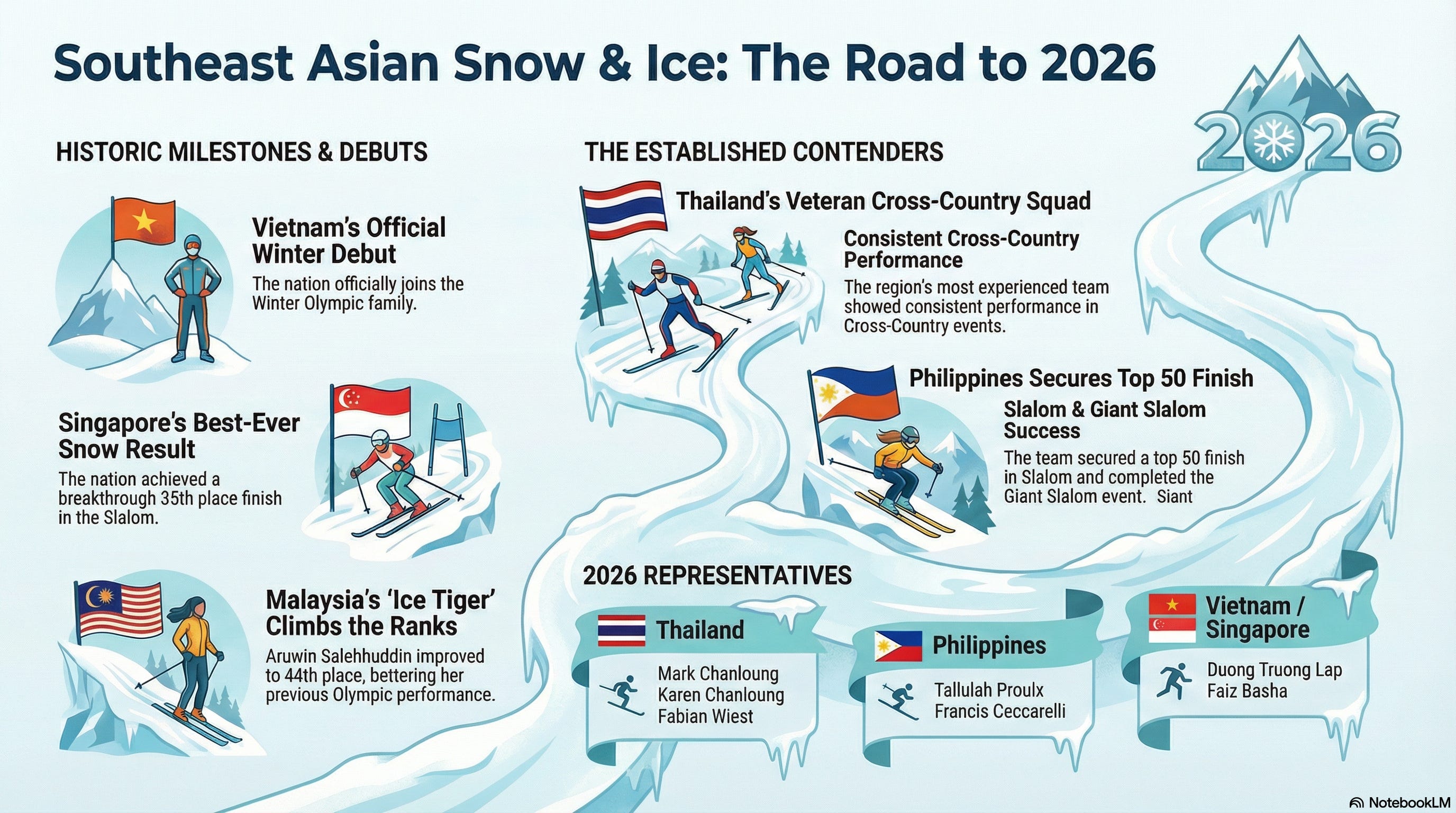
🇻🇳 Vietnam’s First Ever: Duong Truong Lap successfully carried the torch for Vietnam's first-ever Winter Olympic appearance, completing his events this past week.
🇸🇬 Singapore’s New Ground: Faiz Basha finished a strong campaign as the first Singaporean to qualify and compete in Alpine Skiing, finishing 35th in the Slalom amidst heavy snowfall on Monday, February 16.
🌟 Gen Z Takeover: The Philippines’ Tallulah Proulx, at age 17, finished 50th in the Slalom, proving that the next generation of tropical athletes is starting younger and training harder.

📸 The Big Picture
The struggle behind the glamour is real. From Faiz Basha’s steady composure while half of the field failed to finish to Aruwin Salehhuddin’s 44th-place slalom finish—surpassing her 2022 performance—these milestones represent triumphs of endurance and determination.
Most of these athletes spend 10+ months a year away from home to train, proving that heritage is not bound by climate. More than just competing—they are redefining the identity of the "Tropical Athlete."
❤️ Why This Hits Home
The Olympic resonates because it represents the “Global Southeast Asian.”
Most of these athletes are part of the diaspora—born or raised abroad but choosing to fly the flag of their ancestral tropical homes.
It hits home to see a name like Salehhuddin or Basha on a leaderboard next to names from Norway or Switzerland, proving that heritage is not bound by climate.

🌏 The Regional Stakes
The 2026 Winter Olympics represent a turning point for Southeast Asia, moving the region beyond mere participation and enabling it to finally compete on the world stage.
While athletes like Tallulah Proulx and Faiz Basha are currently leading the charge, the region’s long-term future in winter sports depends on structural investment.
Indonesia is already making significant efforts to bridge this gap by developing world-class facilities like the Ice House Sportindo airdome.
Such initiatives are crucial for Southeast Asian countries to eventually transition from their reliance on overseas training to becoming self-sustaining powerhouses in their own rights.
🔎 Beyond the Headlines
The 2026 Games were more than just a competition for ASEAN; they were a proof-of-concept for "Tropical Winter Sports."
🏅The “No Snow” Blueprint: Singapore’s Faiz Basha and Vietnam’s Duong Truong Lap proved that athletes from non-snow countries can compete by adapting training (like inline skating and short-track) to bridge the gap
🌍 The Ranking Revolutions: In previous years, Southeast Asian athletes often finished at the very bottom or "Did Not Finish" (DNF). In 2026, Singapore and Malaysia secured mid-pack finishes (Top 35-45), highlighting resilience against traditional snow-country competitors.

📊 Global Context: A Games of Firsts
While the Southeast Asian countries made its mark, the 2026 Games were a landmark event for the global sporting community:
Historic co-hosting: This was the first Olympic Games officially co-hosted by two cities (Milan and Cortina d’Ampezzo) and the first under the IOC presidency of Kirsty Coventry.
New Frontiers: The Games featured the debut of ski mountaineering (skimo).
Breaking the Ice: Brazil won its first-ever Winter Olympic medal (Gold in Men’s Giant Slalom by Lucas Pinheiro Braathen), becoming the first tropical and South American nation to do so. Georgia also secured its first Winter medal with silver in pairs figure skating.
🧭 Bottom Line
The “Big Five” are the pioneers, but the rest of the Southeast Asian countries is watching closely. The Milano Cortina 2026 games serve as a blueprint for how a tropical country can successfully navigate the world’s coldest sporting stage.
Need More Angle?
Milano Cortina 2026 Singapore alpine skier Faiz Basha on unlikely Olympic dream: “Everything has been pushing me to stop skiing, but I haven’t”
The Manila Times Ceccarelli, Proulx wave PH flag in Winter Olympics opening
The Star All eyes on Aruwin as Malaysia’s sole contestant at Olympic Winter Games
The Straits Times From World Cup minnows to S’pore’s first Winter Olympics alpine skier: Sporting markers to watch in 2026
Việt Nam News Việt Nam invited to compete at 2026 Olympic Winter Games
(AKO/BRZ/ELS/QOB)