



In a region racing toward digital transformation, Southeast Asia’s biggest challenge is no longer access to technology alone, but who shapes it, governs it, and benefits from it.
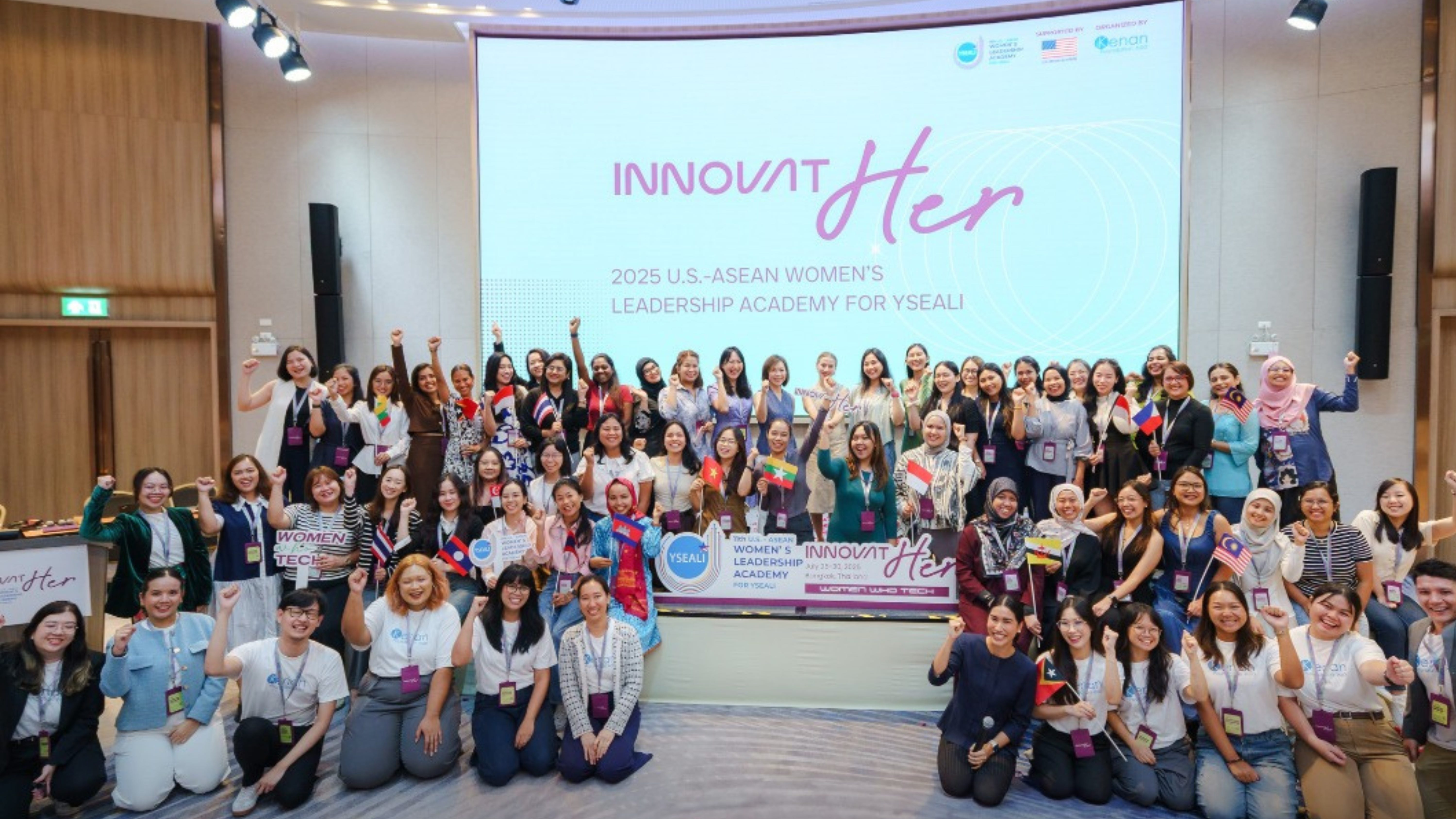
From Bangkok, the U.S.–ASEAN Women’s Leadership Academy for YSEALI (InnovatHer) assembled emerging women leaders in tech from across Southeast Asia, pointing to a future where women are not just participants in innovation, but architects of it.
The academy’s mission was clear: equip and empower women working in technology to apply digital solutions, including artificial intelligence (AI), to improve daily life, expand access to the digital economy, and drive meaningful policy advocacy across ASEAN.
“Technology has the potential to improve women’s lives, but only if women help shape that technology.” — Danica Tabas, YSEALI Women’s Leadership Academy, the Philippines (2025)
Spanning virtual preparatory sessions, a six-day in-person workshop in Bangkok, and post-program engagement, InnovatHer was designed to cultivate a generation of women leaders capable of bridging technology, policy, and social impact across borders—a linkage ASEAN increasingly needs.
🎯 The Main Takeaway
✅ The 2025 U.S.–ASEAN Women’s Leadership Academy for YSEALI: InnovatHer convened 56 women leaders from across ASEAN and Timor-Leste to focus on tech leadership, AI literacy, and policy engagement.
💬 The program underscored that women’s inclusion in tech is not just a participation issue, but a governance and equity imperative in ASEAN’s digital transformation.
🔗 Participants connected with mentors, industry leaders, and peers to translate tech fluency into advocacy, entrepreneurship, social impact, and regional cooperation.
🔎 Why It’s on Our Radar
🌐 Shaping ASEAN’s Digital Future:
As ASEAN economies accelerate digital adoption, questions about equity, access, and ethical use of technology have moved to the center of policy debates. Programs like InnovatHer help ensure that women’s voices are part of these conversations.
🤝 Cross-border Leadership Networks:
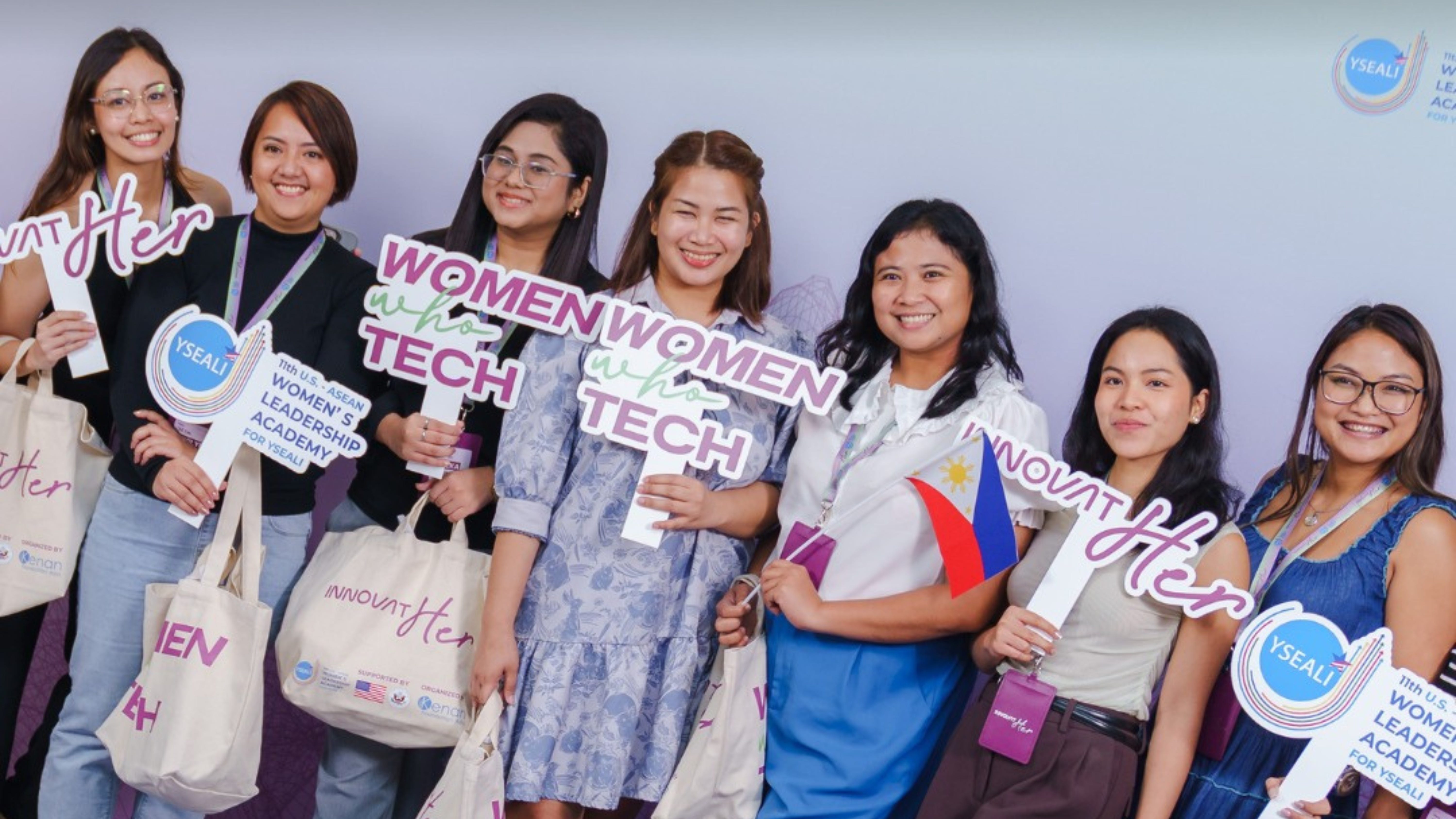
Unlike local meetups or national training programs, InnovatHer functions as a regional leadership pipeline, promoting collaboration among future women tech leaders from Indonesia, Malaysia, Brunei, the Philippines, Vietnam, Myanmar, Thailand, Cambodia, Lao PDR, Singapore, and Timor Leste.
In a region where many digital challenges are transnational, such networks are increasingly indispensable.
🤖 AI and Inclusive Innovation:
The 2025 edition explicitly centered on how AI can be leveraged to improve women’s daily lives and open access to the digital economy, signaling ASEAN’s acknowledgment that emerging technologies must be shaped with gendered perspectives.
🌏 The Regional Lens
Women in Southeast Asia still face structural barriers in tech leadership, venture funding, and policy influence, even as the region’s digital economy surges:
Indonesia, the Philippines, and Vietnam have expanding digital ecosystems but remain gender-skewed in tech leadership roles.
Singapore leads in tech infrastructure and startup capital, but still has significant gender gaps in STEM executive positions.
Malaysia and Thailand have growing women-led fintech and healthtech communities, yet access to growth capital lags.
Cambodia, Lao PDR, and Myanmar see youth innovation emerging from education hubs, but policy channels for women innovators to scale regionally remain limited.
Programs like InnovatHer help bridge these gaps by creating shared knowledge spaces where participants can co-develop solutions, exchange strategies, and cultivate regional identity.
⚖️ What’s at Stake
💼 Competitive Advantage:
Countries that empower women in tech are more likely to build resilient and inclusive digital economies.
🧠 Policy Influence:
As ASEAN grapples with AI ethics, data governance, and digital inclusion, women leaders equipped with both technical fluency and advocacy skills will play a crucial role in shaping credible and inclusive policy outcomes.
🌍 Inclusive Growth:
If women remain underrepresented in tech leadership, ASEAN risks reinforcing inequality in an economy where digital access increasingly determines education, employment, and civic participation.
📸 Beyond the Headlines
📍 Bangkok, Thailand — The academy’s intensive workshop included hands-on exercises in AI ethics, startup design, digital policy formulation, and network-building.
🧑🏫 Expert mentors included tech executives, policy researchers, and civic innovators from ASEAN and the United States.
🤝 Post-program activities will sustain engagement among alumni, fostering cross-country initiatives that address digital access, ethical AI, and women’s economic empowerment.
“In Southeast Asia, leadership programs matter less for the outcomes they promise, and more for the regional networks and shared perspective they help build, especially as women step into shaping the digital economy.”— Annisa Pratiwi Iskandar, YSEALI Women’s Leadership Academy Alumna, Indonesia (2022)
💬 In Perspective
The U.S.–ASEAN Women’s Leadership Academy for YSEALI: InnovatHer reflects a larger truth about the region’s tech trajectory: innovation leadership cannot be gender-neutral if it is to be inclusive.
In an ASEAN where millions are entering the digital economy every year, ensuring that women help define not just technologies but the values behind them will shape whether digital transformation delivers opportunities equitably, or widens existing divides.
“Leadership is not passive. It is the decision to step forward, often without being asked, to experiment and build solutions that help communities become more resilient and self-sufficient over the long term.” Eveline Tseng, Deputy Public Affairs Officer, U.S. Mission to ASEAN
For ASEAN, the message is clear: the future of tech leadership is regional, inclusive, and already underway.
✨ Need More Angles?
(ZAA/QOB)