



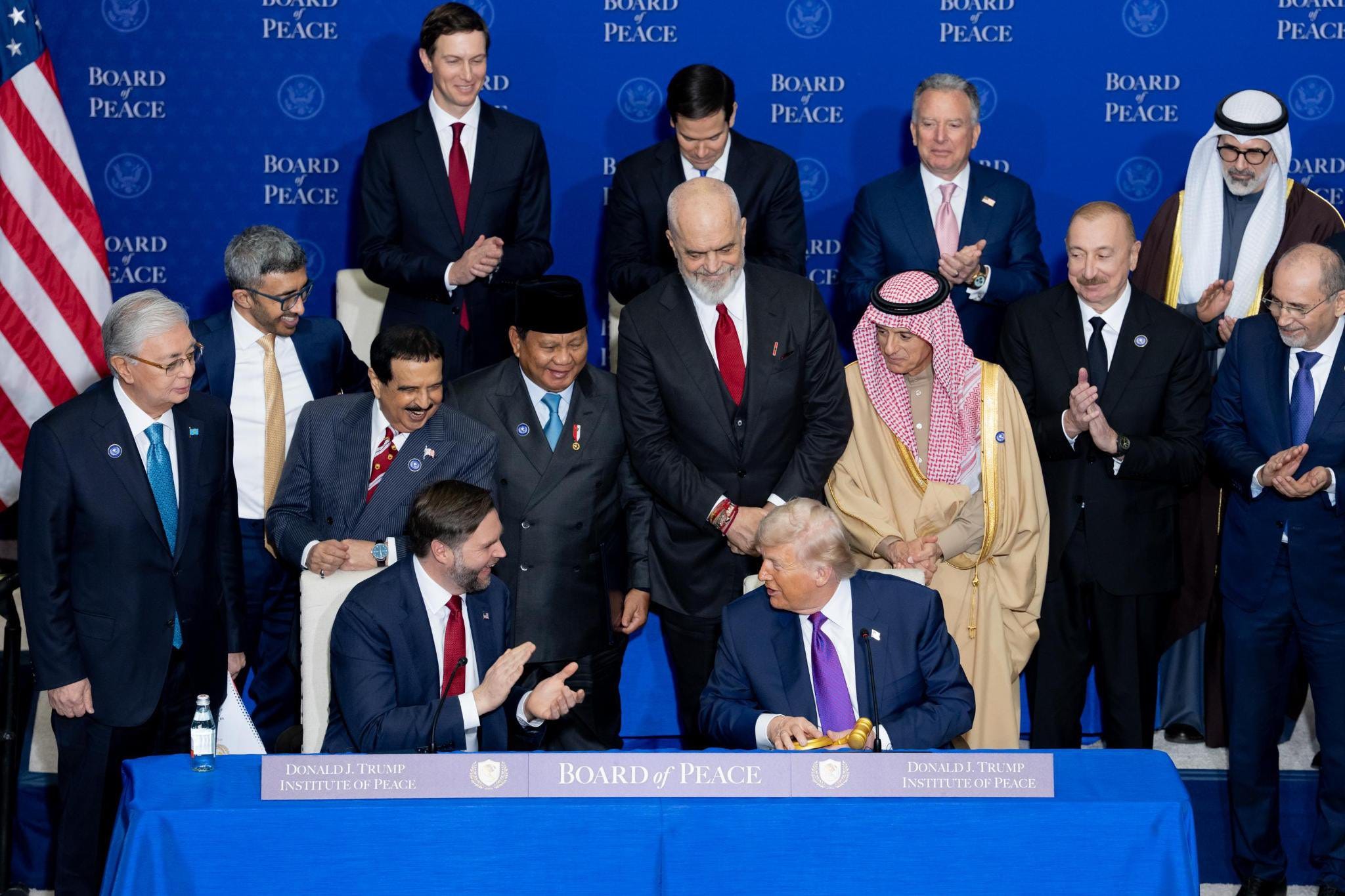
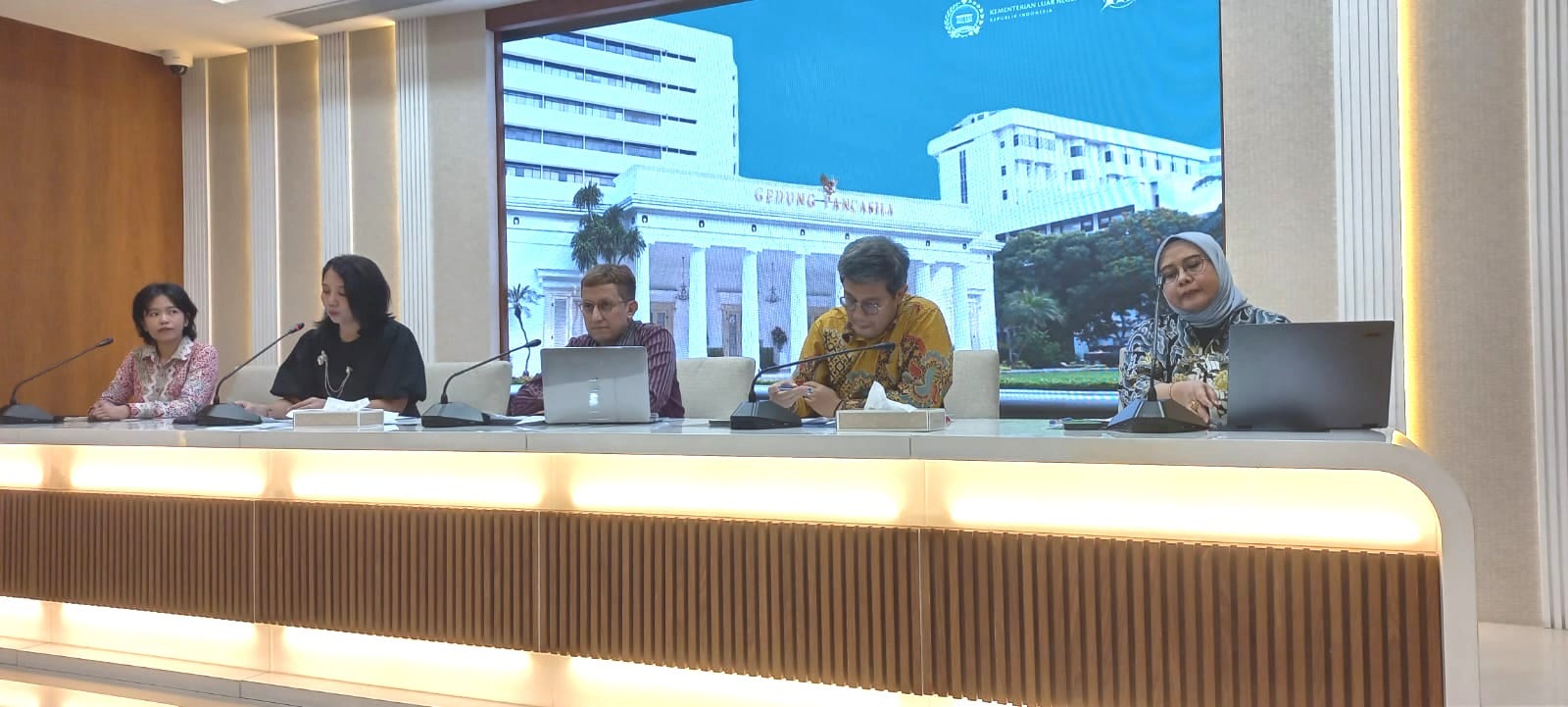
At a 27 February 2026 press briefing, Indonesia’s Ministry of Foreign Affairs moved quickly to clarify that Jakarta’s participation in the Board of Peace does not weaken ASEAN unity.
Foreign Ministry spokesperson Yvonne Mewengkang addressed the issue following President Donald Trump’s inaugural Board of Peace meeting in Washington, which focused on Gaza’s reconstruction and stabilization.
Jakarta’s message was deliberate: engagement in global initiatives remains consistent with its regional commitments—ASEAN centrality included.
“So far, three ASEAN member states have joined the Board of Peace.”
— Yvonne Mewengkang, Spokesperson of the Ministry of Foreign Affairs of Indonesia
The three Southeast Asian leaders present were:
Prabowo Subianto, President of Indonesia
To Lam, General Secretary of the Communist Party of Vietnam
Hun Manet, Prime Minister of Cambodia
Notably absent were the Philippines, Thailand, and Malaysia.
The variation in attendance signals differentiation—not division.
ASEAN members continue to calibrate their external engagements based on national priorities, strategic calculations, and diplomatic bandwidth. In a more fragmented global order, flexibility increasingly coexists with regional unity.
🇮🇩 Why This Hits Home
Concerns quickly surfaced: Would selective participation weaken ASEAN centrality under the Association of Southeast Asian Nations framework?
The Foreign Ministry’s spokesperson addressed that directly:
“Within ASEAN, we respect each member state’s foreign policy principles. Decisions regarding participation in the Board of Peace are sovereign choices, and we do not interfere in one another’s decisions.”
— Yvonne Mewengkang
The message was deliberate. ASEAN unity does not require uniform foreign policy moves. Sovereignty remains foundational.
More importantly, Jakarta drew a clear red line:
“What is important is that Indonesia’s participation in the Board of Peace does not disrupt our solidarity and harmony with other ASEAN member states.”
— Yvonne Mewengkang
Engagement abroad does not equal disengagement from ASEAN.
👀 Why It’s on Our Radar
The Board of Peace is widely viewed as a potential parallel diplomatic track operating alongside institutions such as the United Nations.
That prospect invites caution in Southeast Asia. The region’s prosperity has largely unfolded within a rules-based international order. A shift toward more transactional formats introduces strategic unease.
Indonesia’s approach suggests calibrated confidence: engage emerging mechanisms while reaffirming ASEAN centrality.
Vietnam and Cambodia appear to be operating within a similar calculation. Others are maintaining strategic distance, for now.
But Jakarta insists there is no fracture:
“There is no issue regarding the participation of Indonesia and three other ASEAN member states in the Board of Peace. On the contrary, this can be a valuable diplomatic experience, and the insights gained can later be useful for ASEAN and the region.”
— Yvonne Mewengkang
That framing turns potential controversy into opportunity.
🌏 Why This Matters
ASEAN’s strength has always been its flexibility.
The grouping operates on the principles of non-interference, consensus, and sovereign equality. Member states have historically taken different approaches to major powers while maintaining institutional cohesion.
This episode reinforces that model:
Some engage directly in emerging diplomatic platforms.
Others choose caution.
ASEAN as an institution remains intact.
Differentiation without disintegration.
⚠️ What’s at Stake
If platforms like the Board of Peace mature into durable alternatives to established multilateral mechanisms, Southeast Asia may eventually face pressure to articulate a clearer collective position.
For now, Indonesia’s posture reflects preventative diplomacy: clarify early, contain speculation, and pre-empt narratives of fragmentation.
The risk is not sudden rupture, but gradual institutional erosion if unity is mistaken for uniformity.
🔍 Beyond the Headlines
This is less about one meeting in Washington and more about how ASEAN navigates a shifting global order.
Indonesia is demonstrating a strategy of calibrated engagement:
Participate to shape outcomes.
Reaffirm ASEAN centrality publicly.
Share diplomatic insights regionally.
As Yvonne Mewengkang emphasized, the experience gained on the Board of Peace could later benefit ASEAN as a whole.
That is strategic hedging — not strategic drift.
🧭 The Big Picture
Southeast Asia is adjusting to a landscape where influence increasingly moves through flexible coalitions and issue-based alignments.
Indonesia’s participation reflects middle-power pragmatism: secure access where necessary, uphold core principles, and preserve regional equilibrium.
ASEAN unity, in this view, is not defined by identical attendance lists — but by sustained cohesion despite differing tactical choices.
🧾 The Bottom Line
Indonesia, Vietnam, and Cambodia opted for engagement.
Other ASEAN members exercised caution.
According to Indonesia’s Ministry of Foreign Affairs, participation in the Board of Peace does not dilute ASEAN solidarity. It reflects sovereign decision-making within a shared regional framework — a long-standing feature of ASEAN’s operating style.
The briefing also touched on broader foreign policy concerns, including developments in Iran. The Foreign Ministry stated that conditions remain stable, the Indonesian Embassy continues to monitor the situation closely, and Indonesian citizens in the country are safe, reinforcing Jakarta’s dual focus on diplomatic engagement and citizen protection.
ASEAN is not fractured.
It is flexible.
In a fragmented global order, flexibility may be its greatest strategic asset.