



🎯 The Main Takeaway
ASEAN–South Korea economic cooperation is entering a more strategic phase.
For years, the relationship has largely centered on trade liberalization, investment, and market access. But geopolitical tensions, pandemic-era disruptions, climate regulations, and technological competition are changing what both sides expect from economic cooperation.
The emerging agenda is no longer only about moving goods more cheaply. It is increasingly about securing access to:
🔋 Batteries and clean technologies
💻 Semiconductors and digital infrastructure
🪨 Critical minerals
⚡ Energy networks
📦 Logistics and industrial inputs
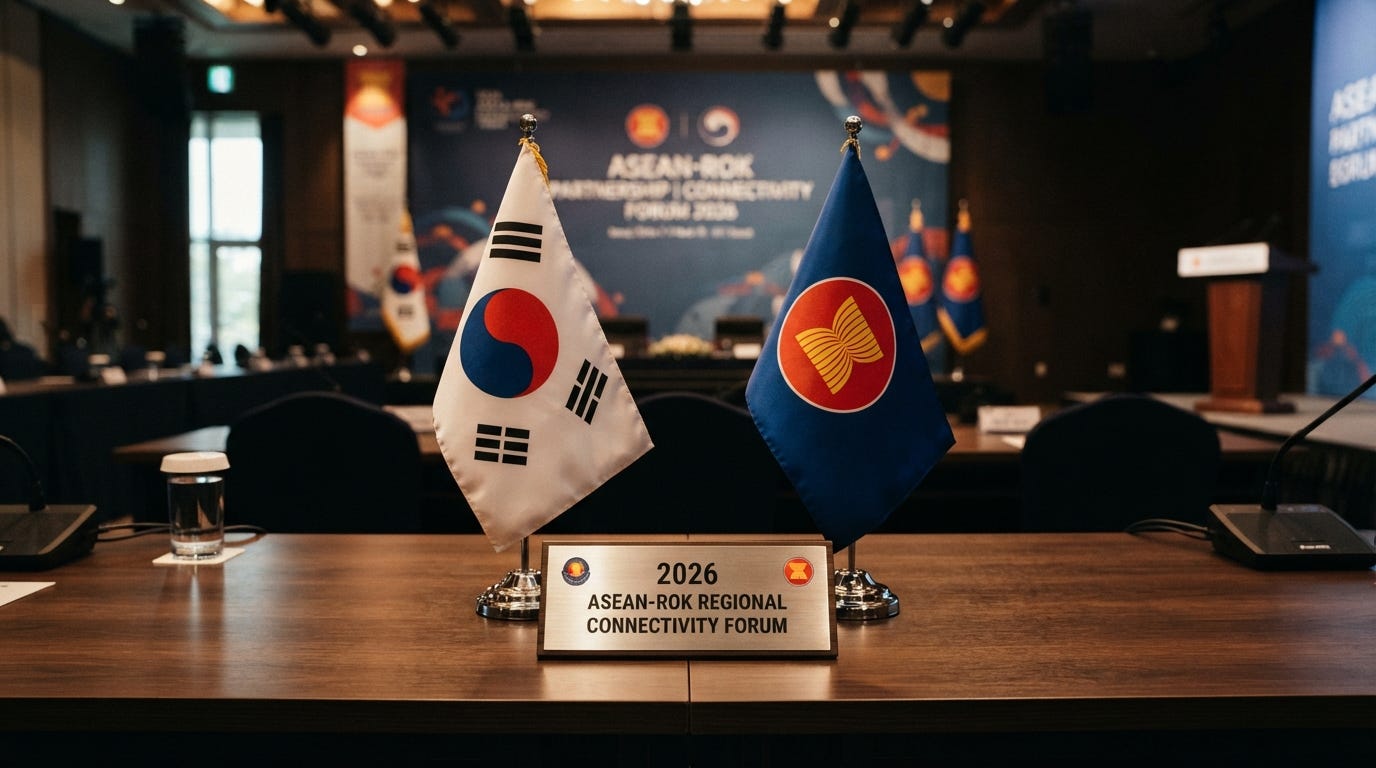
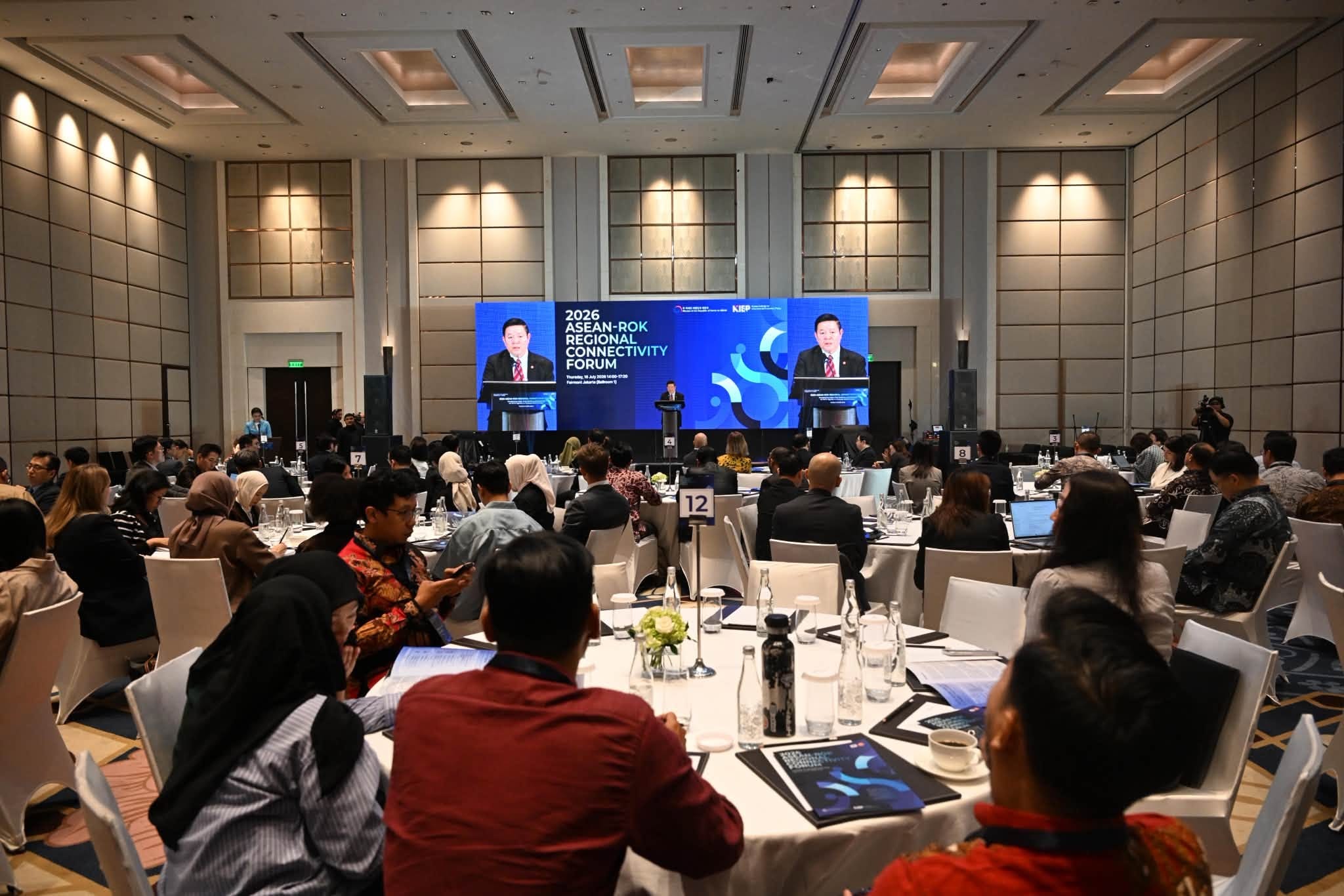
At the 2026 ASEAN–ROK Regional Connectivity Forum in Jakarta on 16 July, policymakers, researchers, and business representatives examined how an upgraded ASEAN–Korea Free Trade Area (AKFTA) could become a platform for supply-chain resilience rather than remain primarily a market-opening agreement.
But the central challenge is clear:
ASEAN and South Korea already have deep economic connections. What they still lack is a coherent regional system for managing the risks created by those connections.
📡 Why It’s on Our Radar
The discussion matters because ASEAN and South Korea are not trading at the margins of one another’s economies.
A presentation by the Korea Institute for International Economic Policy reported that South Korea exported approximately US$114 billion to ASEAN and imported around US$79 billion from the region in 2024. ASEAN accounted for an estimated 16.7% of Korean exports and 12.5% of its imports.
These flows are deeply embedded in regional production networks.
South Korea supplies ASEAN with products and inputs, including:
⚙️ Machinery
🧪 Chemicals and industrial materials
💻 Electronics
🛢 Petroleum products
🔋 Components for clean-technology production
ASEAN, meanwhile, supplies South Korea with:
💾 Semiconductors and electronic components
⛽ Energy and resource inputs
🏭 Manufactured products
🍚 Food and light-industry goods
This means disruptions in one country can quickly spread across factories, ports, and markets elsewhere.
The relationship is no longer simply bilateral trade. It is an interconnected production system.
🔄 Trade Policy Is Moving Beyond Tariffs
Traditional trade agreements were primarily designed to reduce tariffs, expand market access, and improve the movement of goods and services.
That model is becoming insufficient.
Modern trade policy increasingly covers:
🛡 Supply-chain security and emergency responses
🪨 Access to strategic minerals and industrial inputs
🌱 Carbon standards and responsible sourcing
📲 Digital documents and traceability
🏭 Industrial and technological cooperation
The forum’s core proposition was that AKFTA should evolve accordingly: from an agreement that supports supply-chain efficiency into one that explicitly strengthens supply-chain resilience.
That distinction matters.
An efficient supply chain may minimise costs under normal conditions. A resilient one must also withstand geopolitical confrontation, climate disasters, shipping disruptions, export restrictions, and sudden shortages.
🧩 The Institutional Gap
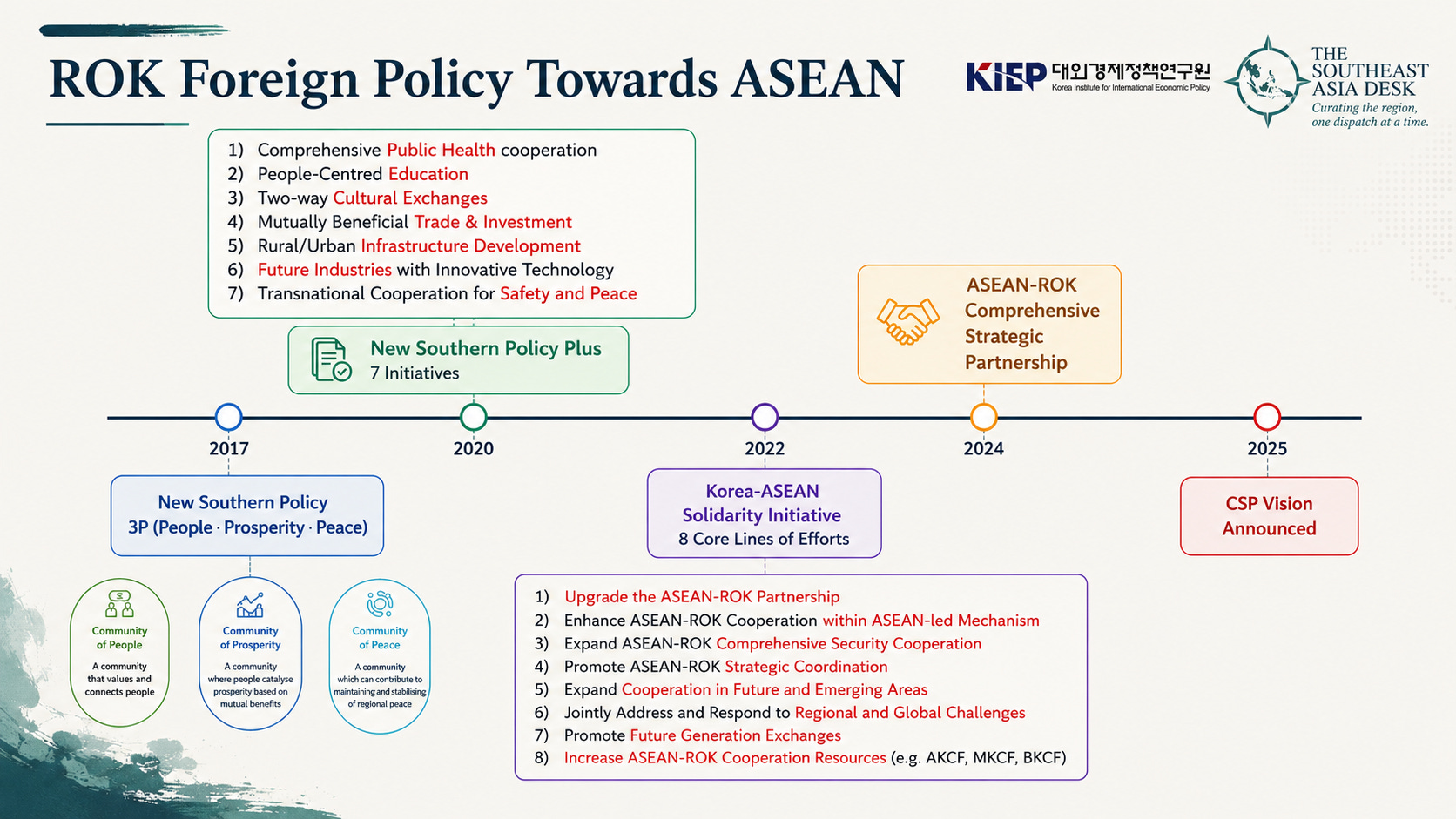
ASEAN and South Korea are not starting from zero.
Existing cooperation already includes:
📜 AKFTA tariff preferences
📄 Electronic certificates of origin
🚢 Customs and trade-facilitation initiatives
🔋 Bilateral projects involving batteries and electric vehicles
🪨 Critical-mineral cooperation
💻 Digital and energy programs
However, much of this cooperation remains bilateral, sector-specific, or project-based.
The forum materials identified several continuing gaps:
⚠️ No dedicated AKFTA mechanism for monitoring supply-chain risks
📉 Limited joint vulnerability assessments
🚨 Weak early-warning and crisis-coordination systems
🧾 Different customs, standards, and digital procedures
🏪 Uneven readiness among ASEAN members and smaller businesses
In other words, the problem is not the absence of activity.
It is the absence of an integrated institutional architecture connecting those activities.
One proposal was to establish a dedicated supply-chain cooperation chapter under AKFTA, potentially supported by a joint committee responsible for risk mapping, communication during disruptions, and post-crisis review.
Whether governments will accept such commitments—and provide the resources needed to implement them—remains uncertain.
🧭 ASEAN Has Its Own Connectivity Roadmap
The discussion also coincides with the launch of the ASEAN Connectivity Strategic Plan (ACSP) 2026–2035, the successor to the Master Plan on ASEAN Connectivity 2025.
The ACSP contains:
6️⃣ Strategic areas
1️⃣4️⃣ Objectives
4️⃣9️⃣ Strategic measures
1️⃣6️⃣2️⃣ Key activities
Its six areas cover:
🏗 Sustainable infrastructure
🏙 Smart and sustainable urban development
💻 Digital innovation
🚛 Seamless logistics and supply chains
📜 Regulatory cooperation
🧑🤝🧑 People-to-people connectivity
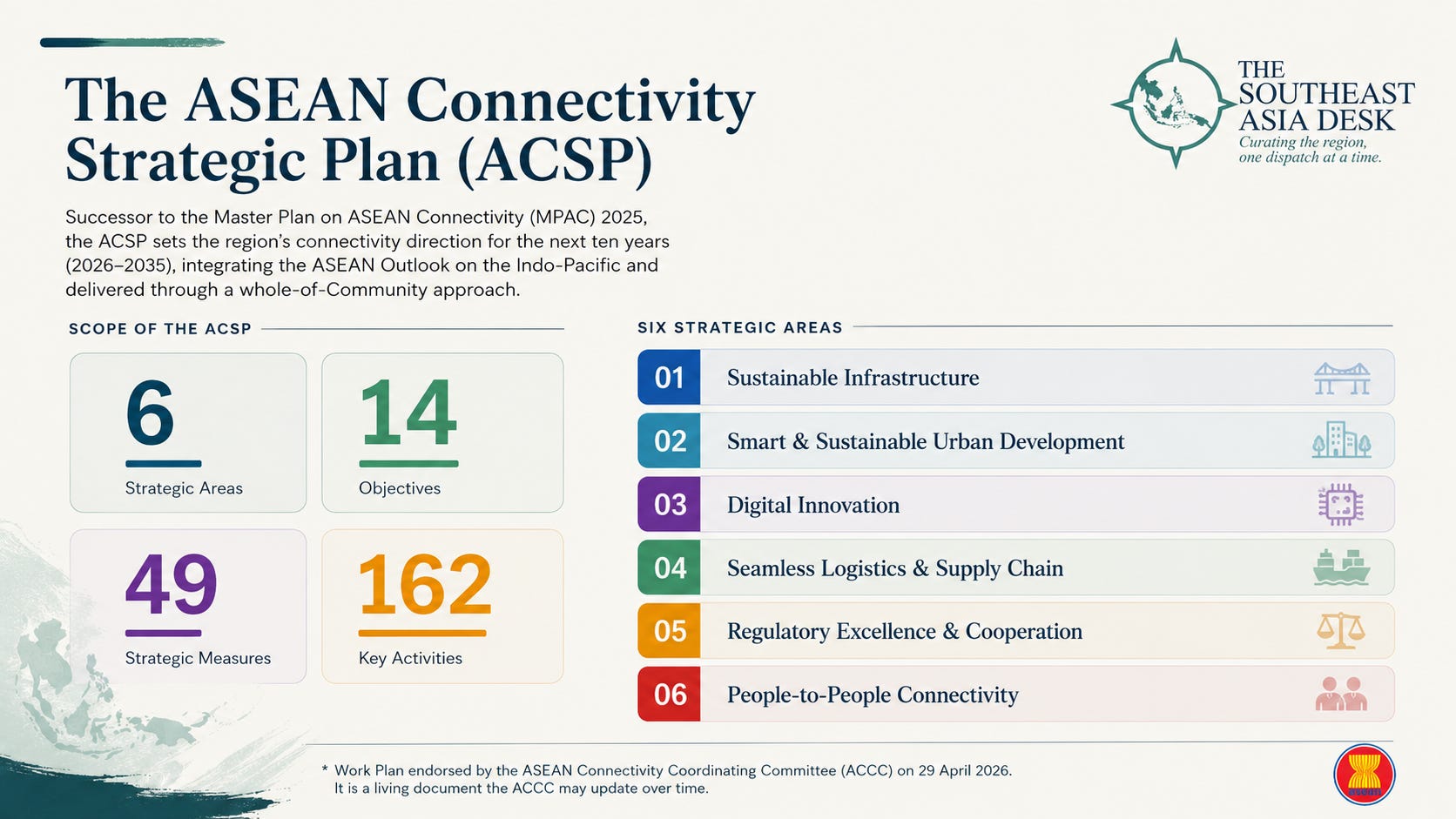
Its work plan was endorsed by the ASEAN Connectivity Coordinating Committee in April 2026 and is designed as a living framework that can be adjusted over time.
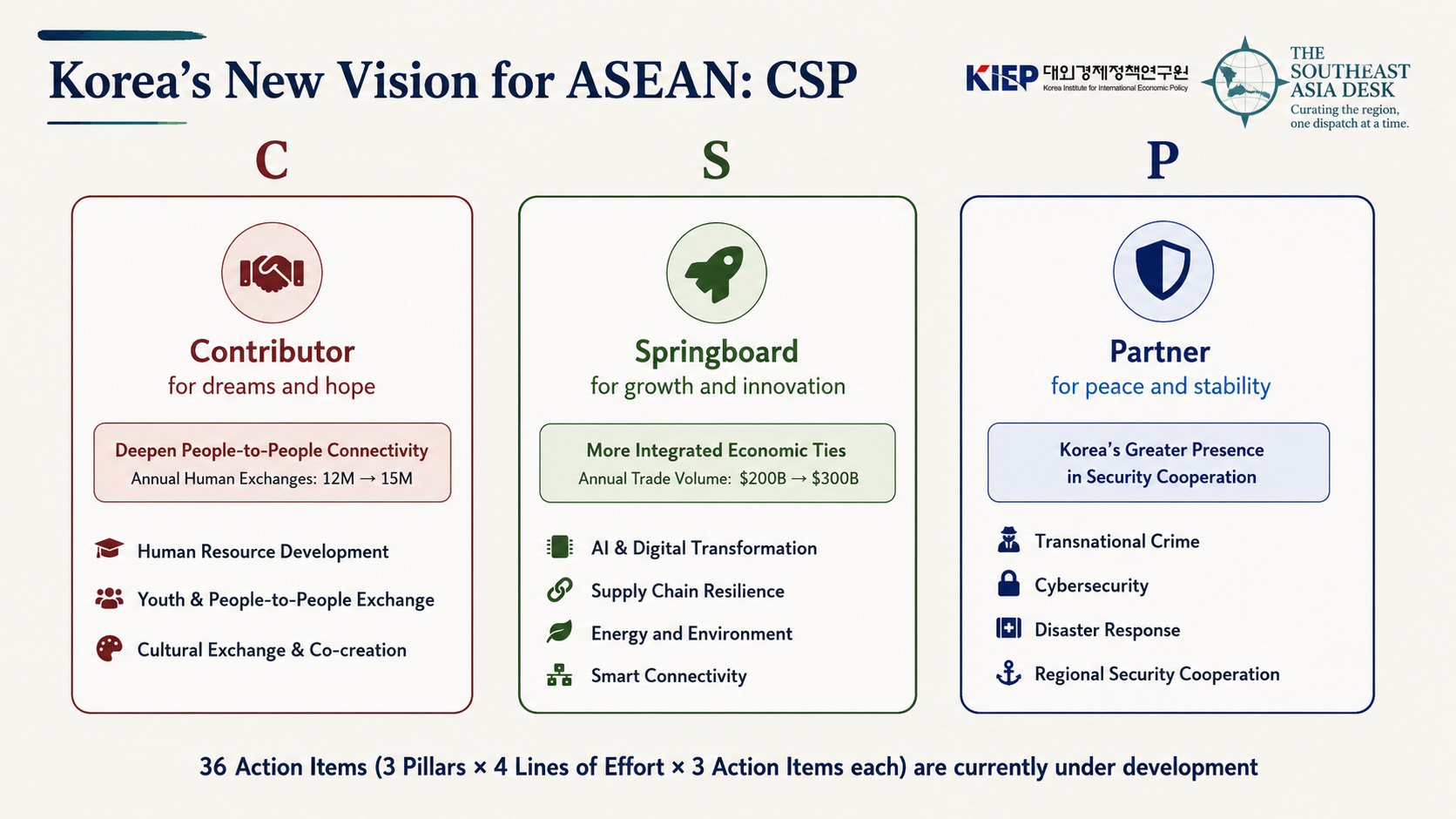
This creates substantial overlap with South Korea’s proposed agenda.
Potential cooperation areas include the ASEAN Power Grid, smart ports, digital customs, cross-border data systems, climate-resilient infrastructure, MSME development, and critical mineral supply chains.
But overlap on paper does not guarantee coordination in practice.
The ACSP itself recognizes that implementation will require clearer ownership, stronger alignment among ASEAN bodies, and more adaptive planning. Without this, its large number of activities could become another layer of regional commitments operating through disconnected institutions.
🪨 Critical Minerals: Opportunity or New Dependency?
Critical minerals emerged as one of the clearest areas of strategic convergence.
ASEAN possesses significant mineral resources and processing potential, while South Korea brings demand, capital, and technological capabilities in batteries, electric vehicles, electronics, and advanced manufacturing.
An ASEAN–Korea Cooperation Fund project running from 2024 to 2026 has focused on critical mineral management, geological knowledge, training, and technology sharing. Its presentation reported the collection of 5,724 mineral-related datasets from ASEAN member states for a regional data platform.
This could improve regional knowledge and reduce information gaps.
However, better geological data is only the beginning.
For ASEAN, the real question is whether mineral cooperation will produce:
🏭 Local processing and industrial capacity
🧑🔬 Technology and skills transfers
💰 Greater domestic value creation
🌱 Strong environmental safeguards
🤝 Benefits for local communities
—or primarily create more reliable access to raw materials for external industries.
Forum recommendations included joint investment, industrial parks, technology cooperation, human-resource development, and local value creation. But these outcomes will depend on contract design, regulatory capacity, and the bargaining power of individual ASEAN governments.
A resilient supply chain for South Korea should not become an extractive dependency for Southeast Asia.
⚡ Energy Connectivity Brings Both Opportunity and Risk
Energy was another prominent area of discussion.
The ACSP identifies the ASEAN Power Grid and broader energy connectivity as part of the region’s sustainable-infrastructure agenda. Korean proposals highlighted technical cooperation in smart grids and long-distance electricity transmission.
KEPCO also presented both the ASEAN Power Grid and nuclear power as potential areas for future partnership.
South Korea’s grid experience could help ASEAN address a genuine regional need: connecting electricity markets so that surplus power in one country can help meet demand elsewhere.
However, large energy projects raise difficult questions involving:
💵 Financing and long-term debt
📜 Cross-border regulation
⚡ Electricity pricing
🛡 Energy sovereignty
🌱 Environmental impacts
🏘 Community consent
Nuclear cooperation requires an even more careful distinction between corporate proposals and agreed ASEAN policy. Any future program would need rigorous national assessments covering safety, waste management, regulatory independence, financing, and public accountability.
Technical capacity alone cannot resolve political and governance risks.
💻 Digital Connectivity Could Determine Who Benefits
Another proposed priority is connecting Korean and ASEAN customs and logistics systems.
Possible measures include:
📄 Expanding electronic trade documents
🚢 Improving real-time logistics tracking
🛃 Simplifying customs procedures
🔗 Linking Single Window systems
📊 Strengthening supply-chain visibility
These reforms could reduce administrative costs and shorten clearance times.
But digitalisation is not automatically inclusive.
Larger corporations are generally better equipped to manage electronic certification, carbon reporting, traceability requirements, and cybersecurity obligations. Smaller firms may face higher costs for software, training, and compliance.
This is especially important in Southeast Asia, where micro, small, and medium-sized enterprises remain central to employment but often participate only indirectly in global value chains.
Without technical assistance and phased requirements, new digital and environmental standards could produce a two-tier system:
🏢 Large companies become more integrated.
🏪 Smaller firms face new barriers to entry.
The proposed AKFTA upgrade, therefore, includes capacity-building, simplified documentation, and public-private dialogue—not merely stricter rules.
⚖️ What’s at Stake
For South Korea, deeper cooperation could provide:
🪨 More diversified sources of strategic materials
🔋 Stronger battery and clean-technology networks
🏭 Alternative manufacturing locations
📉 Reduced exposure to external disruptions
For ASEAN, it could attract:
💰 Investment
🧠 Technology and knowledge
🏗 Infrastructure
📈 Opportunities to move into higher-value production
But the benefits will not be distributed automatically.
ASEAN economies differ significantly in infrastructure, regulatory capacity, industrial development, and bargaining power. Countries already integrated into Korean manufacturing networks may capture opportunities more quickly than less developed members.
There is also a broader strategic risk.
Supply-chain resilience can mean diversification and shared capacity. But it can also become a softer term for competing economic blocs, preferential sourcing networks, and pressure to align with one partner’s standards.
ASEAN must therefore ensure that stronger cooperation with South Korea supports regional integration rather than deepening internal fragmentation.
❤️ Why This Hits Home
For consumers, supply-chain policy may sound distant.
Its consequences are not.
Disruptions affecting minerals, energy, semiconductors, or shipping can influence the prices and availability of:
📱 Mobile phones and electronics
🚗 Vehicles and batteries
⚡ Electricity
🍚 Food and household goods
🏭 Manufacturing jobs
Stronger logistics and crisis coordination could reduce some of these vulnerabilities.
But poorly designed agreements could also shift adjustment costs onto workers, small businesses, local communities, and resource-producing areas.
That is why the success of an upgraded AKFTA should not be measured only through total trade or investment.
It should also be judged by whether it creates:
👷 Better-quality employment
🏪 Opportunities for local businesses
🌱 Responsible production
🧑🔬 Technology and skills development
📉 Greater protection from economic shocks
🌐 The Regional Stakes
ASEAN–Korea cooperation is becoming part of a larger contest over how production networks will be organized in the Indo-Pacific.
Critical minerals, batteries, semiconductors, artificial intelligence, and clean energy are increasingly treated as economic-security issues. Major economies are seeking trusted partners and more predictable supply chains.
This gives ASEAN greater strategic relevance, but not necessarily greater collective power.
To convert relevance into influence, ASEAN must:
🤝 Negotiate around regional priorities
🏭 Demand meaningful local value creation
📜 Improve regulatory coordination
🌱 Apply credible social and environmental safeguards
🧭 Avoid excessive dependence on any single market or investor
South Korea, meanwhile, will need to demonstrate that its partnership offers more than access to ASEAN’s markets, labor, and natural resources.
The strongest foundation would be a reciprocal model: Korean supply security matched by ASEAN industrial upgrading.
📌 The Bottom Line
The proposed AKFTA upgrade reflects an important shift in ASEAN–South Korea relations.
The partnership is moving:
➡️ From tariffs to resilience
➡️ From trade flows to production networks
➡️ From individual projects to institutional coordination
➡️ From market access to economic security
The policy logic is persuasive. The implementation path is less certain.
ASEAN and South Korea already possess the economic connections required for a deeper partnership. What they now need are credible rules, financing arrangements, safeguards, and crisis-management mechanisms capable of turning those connections into shared resilience.
The real test will not be how many new initiatives are announced, but whether they create a more balanced, sustainable, and genuinely regional economic system.
🔍 Need More Angles?
ASEAN-Korea Center. ASEAN Connectivity Forum
ASEAN Secretariat. ASEAN and the Republic of Korea Reaffirm Commitment to Advancing the Comprehensive Strategic Partnership
ASEAN Secretariat. Strengthening Supply Chain Resilience and Advancing the AKFTA Upgrade in a Changing Global Economy
In Diplomacy. ASEAN Secretary-General Highlights Connectivity and AOIP at 2026 ASEAN-ROK Forum
(QOB/ELS)