



📌 The Main Takeaway
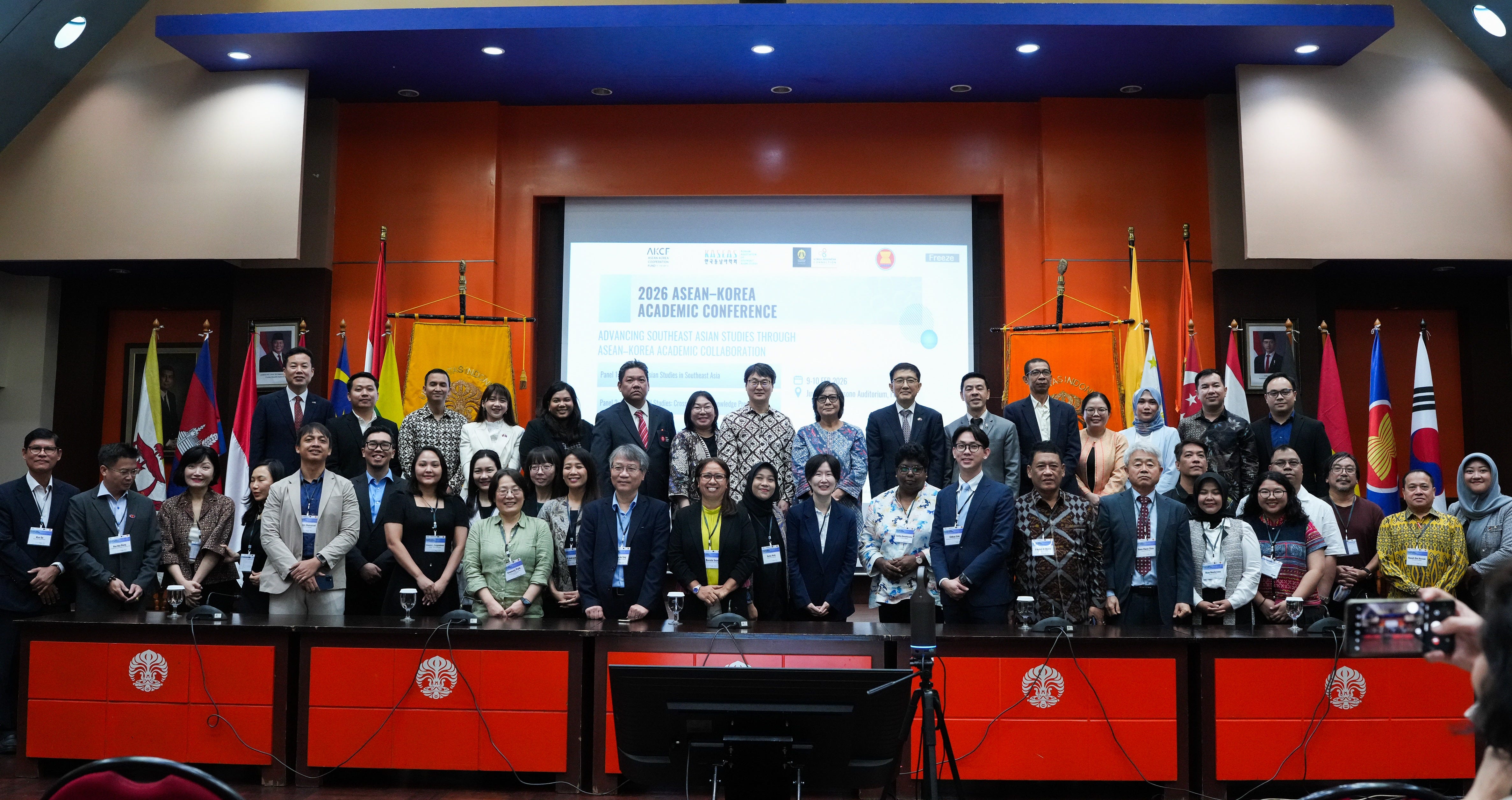
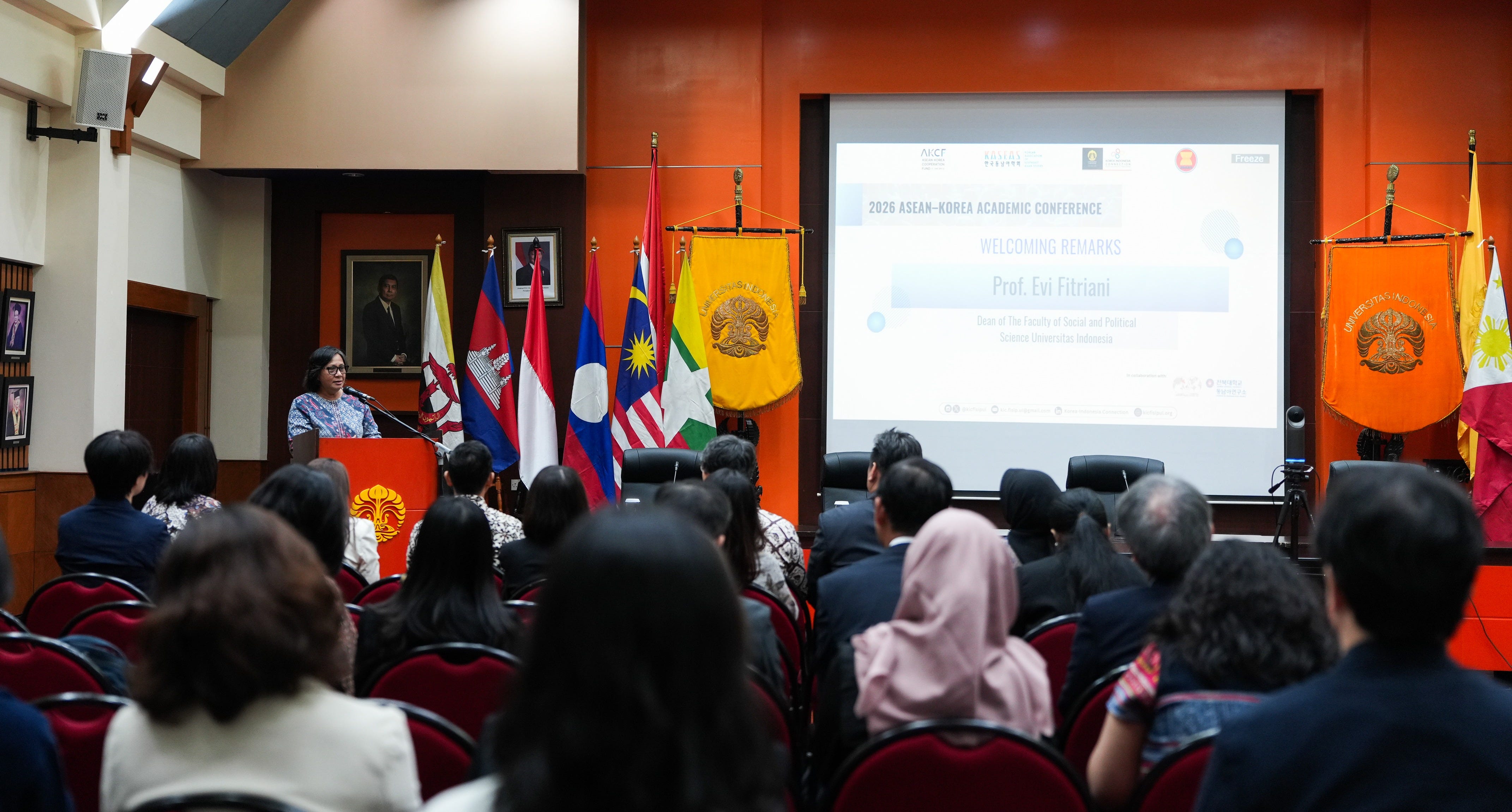
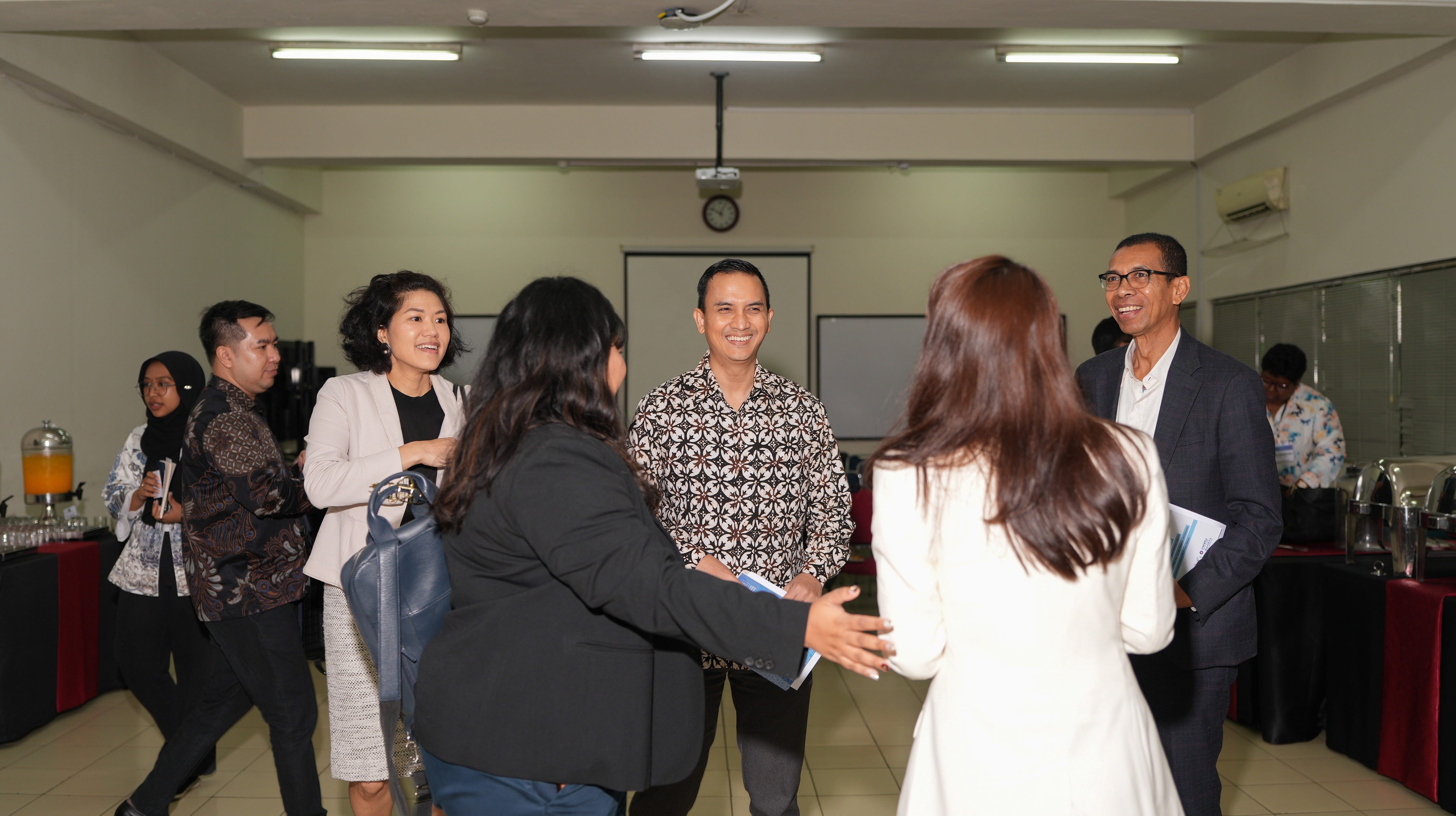
The ASEAN-Korea Platform for Great Minds (AKPGM), supported by the ASEAN-Korea Cooperation Fund (AKCF), held the 2026 ASEAN-Korea Academic Conference from February 9 to 10 at the University of Indonesia in Depok, West Java.
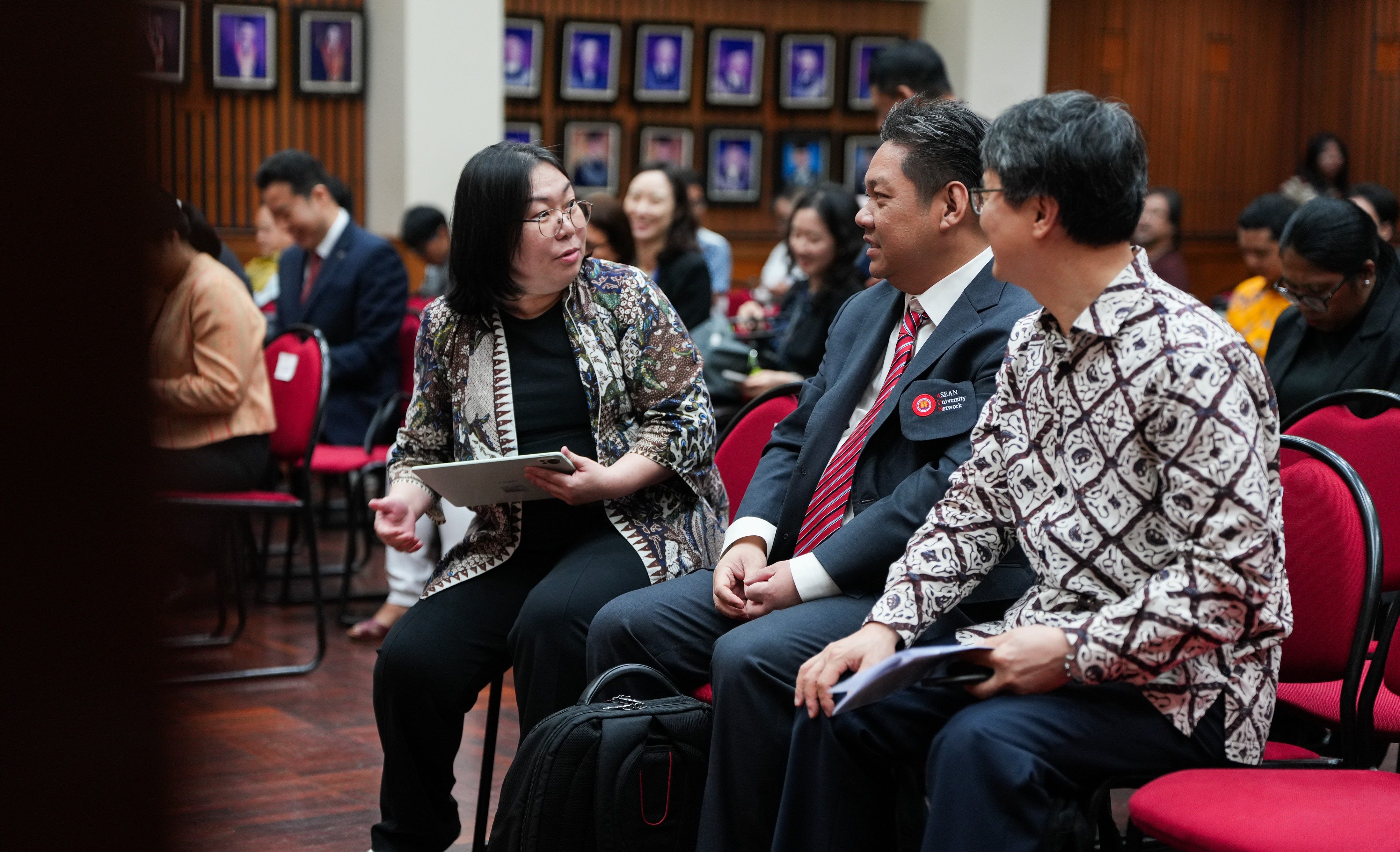
More than 30 academics and researchers from universities across ASEAN and South Korea gathered to discuss Southeast Asian studies, cross-regional knowledge, education, and current ASEAN–Korea relations.
📡 Why It’s on Our Radar
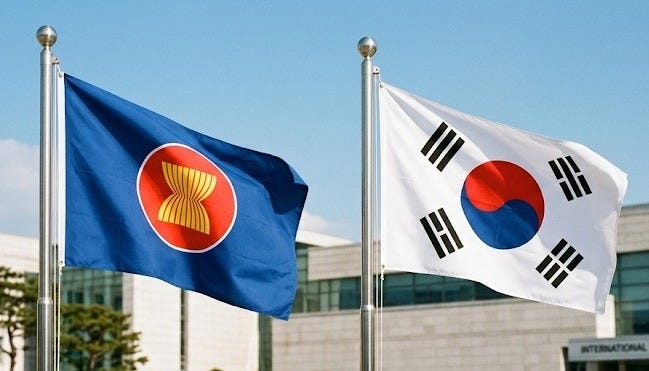
ASEAN and South Korea established the ASEAN–Korea Comprehensive Strategic Partnership on October 10, 2024, in Vientiane, Laos.
The partnership reflects deeper bilateral relations across three key pillars of cooperation:
🛡️ Advancing peace and security.
♻️ Building a smarter, sustainable, resilient, and connected future.
👩🎓👨🎓 Creating a socio-cultural platform for young and future generations.
The conference, was a follow-up action under the third pillar, aimed at educating young people through capacity building, cross-cultural understanding, and educational opportunities on both sides.
⚠️ Why It Matters
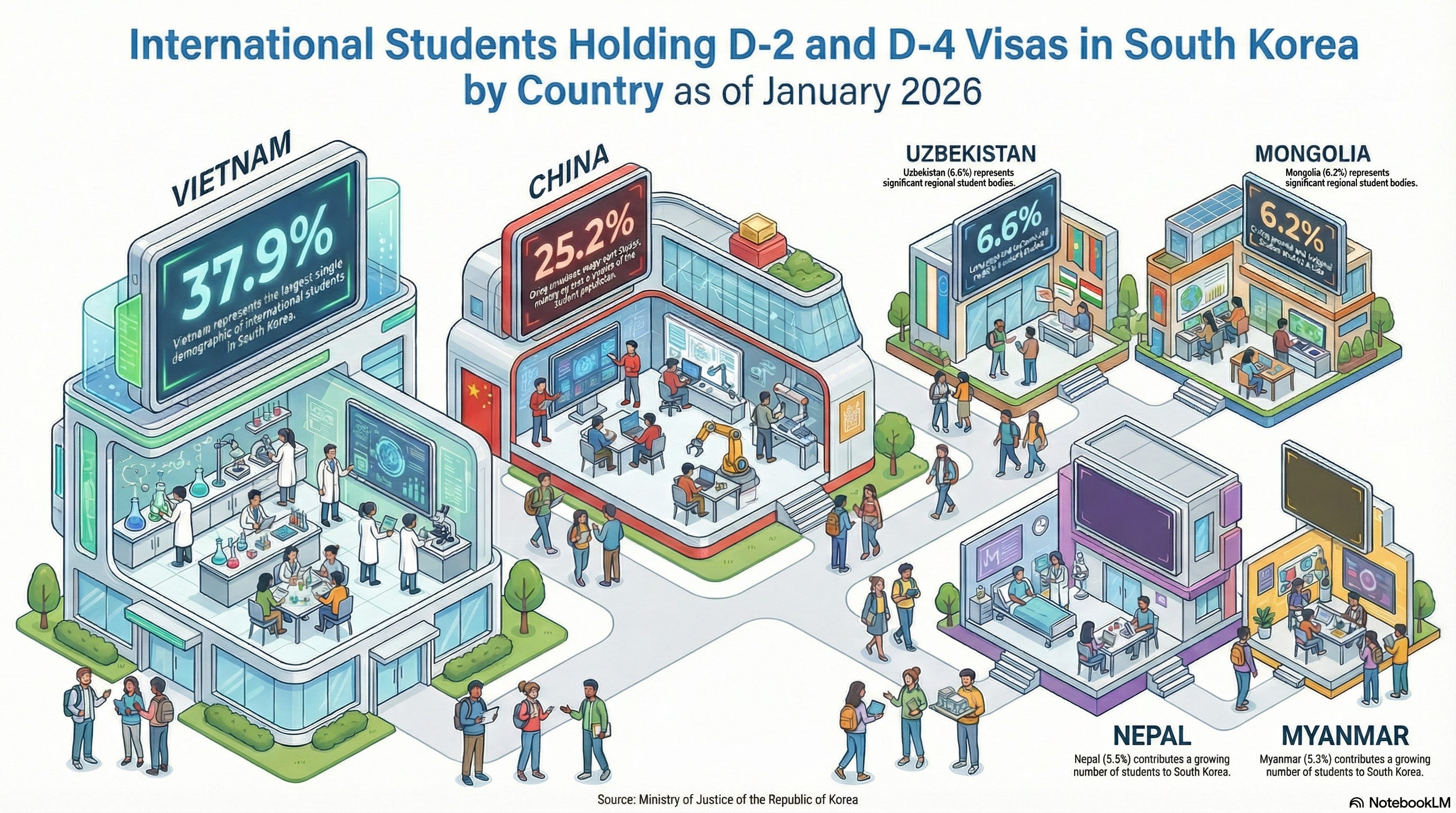
According to the Ministry of Justice of the Republic of Korea, the number of international students holding D-2 and D-4 visas in South Korea stood at 305,807 by the end of January 2026, an increase of 17.2% year on year.
🇻🇳 Vietnam led with 37.9% of the student share, followed by 🇨🇳 China with 25.2%, and then 🇺🇿 Uzbekistan, 🇲🇳 Mongolia, 🇳🇵 Nepal, and 🇲🇲 Myanmar.
🔍 What’s Inside the Event
The event features four thematic panel discussions:
🌍 Southeast Asian Studies in Southeast Asia.
🇰🇷 Korea–ASEAN Studies: Cross-Regional Knowledge Production.
📚 Educating Southeast Asia—Programs, Pedagogies, and Partnerships.
🔮 Contemporary Issues in ASEAN–Korea Relations: Challenges and Future Directions.
Participants were allowed to discuss education, socio-cultural exchange, diplomacy, and regional geopolitics from comparative and interdisciplinary perspectives.
“The aim of the conference is to foster cross-national dialogue among scholars and practitioners through the ASEAN-Korea academic network. This academic event honors the spirit of cooperation first established in 1994 to secure a progressive future for Southeast Asian studies and ASEAN-Korea relations”
Prof. Kim Dong-Yeob, President of the Korean Association of Southeast Asian Studies
💡 What to Expect
The two-day event aims to strengthen ASEAN–South Korea academic networks through several key goals:
🤝 Connectivity: Increase people-to-people connectivity through long-term academic study opportunities, community building, and socio-cultural exchange.
📈 Capacity building: Foster the development of emerging Southeast Asianists through cross-border knowledge
💬 Regional understanding: Enhance universities’ role in promoting regional understanding by sharing current issues in both regions, along with actions and strategies to address them.
📝 Policy recommendation: Provide recommendations to policymakers to address global challenges.
“In this time of geopolitical pressures, it is very important for us and countries to build a stronger collaboration to cultivate better understanding on global issues and its impact towards the region. It is our role as academics to advise policy-makers on how we can respond to those daunting challenges.”
Prof. Evi Fitriani, Ph.D., Dean of the Faculty of Social and Political Sciences, Universitas Indonesia
🏡 Why This Hits Home
ASEAN has been developing ASEAN Connectivity since its leaders adopted the Master Plan in Hanoi, Vietnam, on October 28, 2010, which was later updated as the Master Plan on ASEAN Connectivity 2025.
The master plan is expected to benefit all ASEAN Member States by boosting competitiveness, prosperity, and inclusiveness through stronger physical, institutional, and people-to-people linkages, supported by various strategies:
🏗️ Sustainable infrastructure: Increase public and private investment in infrastructure, improve productivity, and expand smart city development across ASEAN.
📱 Digital innovation: Support technology use for MSMEs, improve financial access, and enhance data management among member states.
🚚 Seamless logistics: Reduce supply chain costs and improve speed and reliability across ASEAN.
📜 Regulatory excellence: Harmonize standards and technical regulations in key sectors, followed by reduced trade barriers among ASEAN Member States.
✈️ People mobility: Make travel easier, close skills gaps, and increase the number of intra-ASEAN students.
The concept was later expanded to include ASEAN Connectivity with 11 external dialogue partners, including South Korea, to broaden cooperation in connectivity, particularly in the academic sector.
🌍 The Regional Stake
The conference is expected to generate regional impacts for ASEAN Member States and South Korea:
🗺️ For ASEAN Member States: The conference supports regional integration & connectivity, human capital development, informs policymakers on diplomacy and security issues amid geopolitical pressure, as well as strengthens long-term academic cooperation across the region.
🇰🇷 For South Korea: For South Korea: The country can position itself as a key partner in ASEAN’s regional development in the academic sector by providing academic infrastructure for Southeast Asian students, and promoting knowledge sharing.
“This conference is an important starting point for expanding Southeast Asian Studies. With frameworks such as ASEAN Plus Three, there is strong potential to broaden participation and invite more researchers, which would further enrich scholarly exchange and deepen regional understanding,”
Prof. Myo Oo - Myanmar Future Forum, Discussants
🧭 Beyond the Headlines
ASEAN and South Korea established bilateral relations in 1989, and have continued to strengthen their partnership afterwards.
Both sides completed a Free Trade Agreement covering goods, services, and investment in 2009, and upgraded their ties to a Strategic Partnership in 2010, enabling greater exchanges between their people, including:
📦 Trade: ASEAN is South Korea’s second-largest trading partner, with total trade reaching USD 204.79 billion in 2025, up 6.2% year-on-year and mostly with Vietnam.
💰 Investment: ASEAN is South Korea’s third-largest investment destination, with total FDI to the region reaching USD 6.37 billion in Q3 2025, 42.2% of which went to Singapore.
👷 People-to-people exchange: A total of 755,155 ASEAN nationals were recorded in South Korea in 2025, mostly from Vietnam and Thailand, with the majority working, visiting, and studying in the country.
🚨 The Bottom Line
The 2026 ASEAN–Korea Academic Conference is more than an academic gathering — it is a strategic platform that strengthens the intellectual, diplomatic, and socio-cultural foundations of ASEAN–South Korea relations.
🔎 Need More Angles?
ASEAN-Korea Center Overview of ASEAN-Korea Relations
ASEAN Secretariat Connecting ASEAN: An Overview
ASEAN Secretariat Joint Statement on The Establishment of The ASEAN-Republic of Korea Comprehensive Strategic Partnership
Study in Korea Statistik di Korea
The Asan Institute for Policy Studies ASEAN-Korea Comprehensive Strategic Partnership: Background, Meaning and the Way Forward
The Korea Times Korea’s international student population rises over 50% in 3 years
(NGO/ELS)