



🎯 Main Takeaway
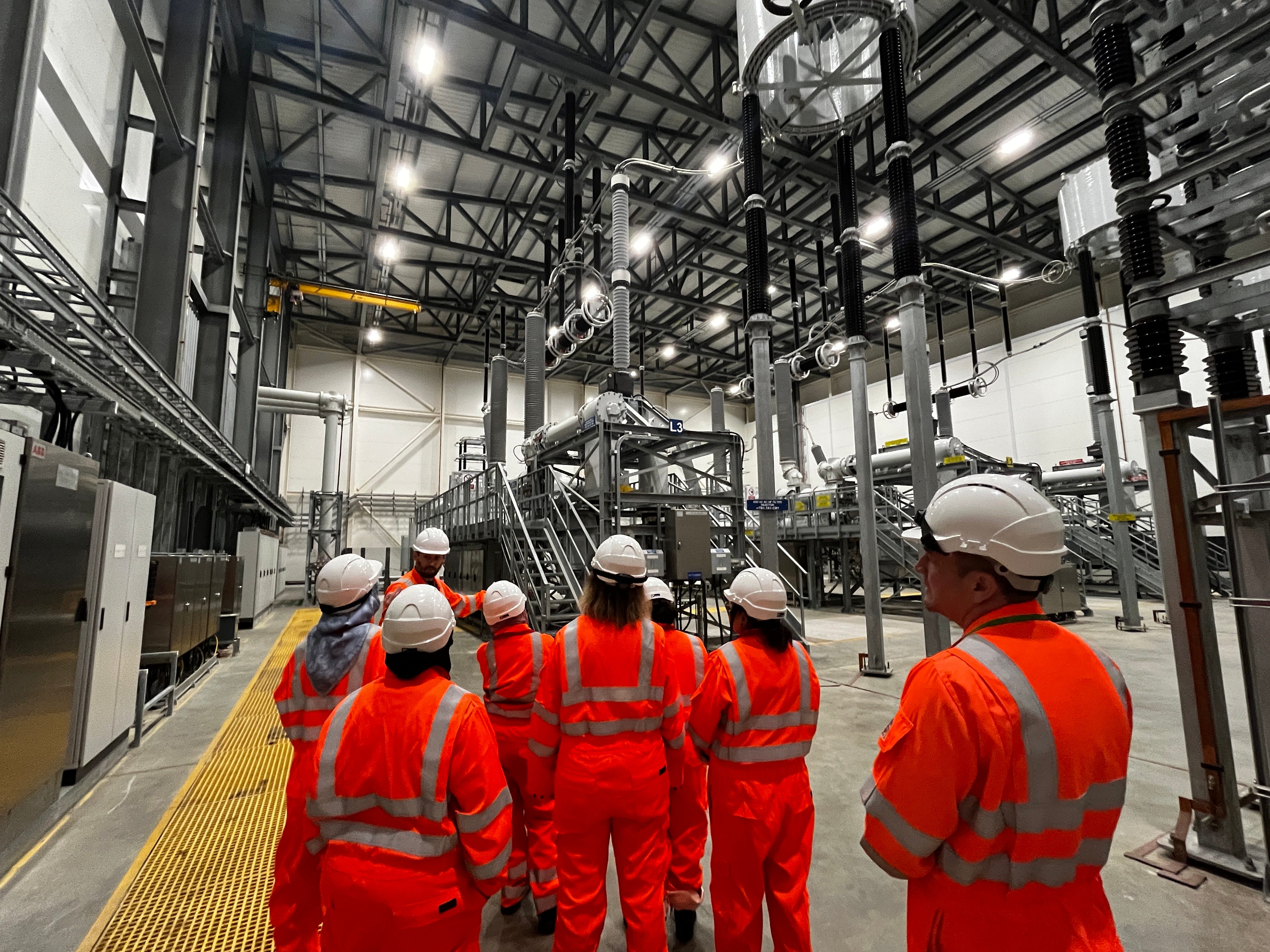
ASEAN representatives, along with delegates from several member states, conducted a study visit to the United Kingdom (UK) and the European Union (EU) from 21 to 25 September to learn from their practical experience in developing cross-border electricity interconnection systems.
This visit programme aims to support knowledge exchange on regional electricity connectivity and the implementation of the ASEAN Power Grid (APG) to fulfill Southeast Asia’s electricity demands in 2050, especially by harnessing renewable energy (RE).
Through this initiative, participants can engage with regulators, system operators, financiers, and industry representatives involved in planning, developing, and operating interconnection systems.
📡 Why it’s on Our Radar
International Energy Agency projected ASEAN electricity demand to more than double by 2050, from around 1.400 terawatt-hours (TWh) in 2025-2026 to roughly 3,323 TWh to 3,948+ TWh.
This surge in demand is driven mainly by advances in building, industry, and transportation.
Thus, ASEAN member countries have to fulfill energy demand by strengthening energy capacity, skilled workforce, and technological expertise through partnerships with other countries, especially the UK and EU, which have been able to step out of the energy crisis caused by the Russo-Ukrainian war through the development of the region’s interconnected RE systems.
Previously, the governments of the UK and the EU, along with Australia, Germany, and Canada, had initiated financing of around USD 25 million through the Regional Connectivity Fund for Energy in Southeast Asia (RCF) under the ASEAN Infrastructure Fund.
In the future, this funding scheme aims to reach infrastructure investment of over USD 100 billion.
“The ASEAN Power Grid is an ambitious, ASEAN-led vision for a more connected and resilient energy future. The study visit has shown that delivering regional connectivity is about much more than infrastructure. It requires strong partnerships, trusted institutions and close cooperation across governments, regulators, utilities and industry. The UK is committed to support ASEAN as it takes this work forward, sharing our experience while recognising that ASEAN will chart its own course.” - Helen Fazey, UK Ambassador to ASEAN
💡SEA Challenges in Renewable Energy
Although ASEAN has ambitious targets to develop the region’s renewable energy interconnections, its member states face several challenges in meeting future electricity demand.
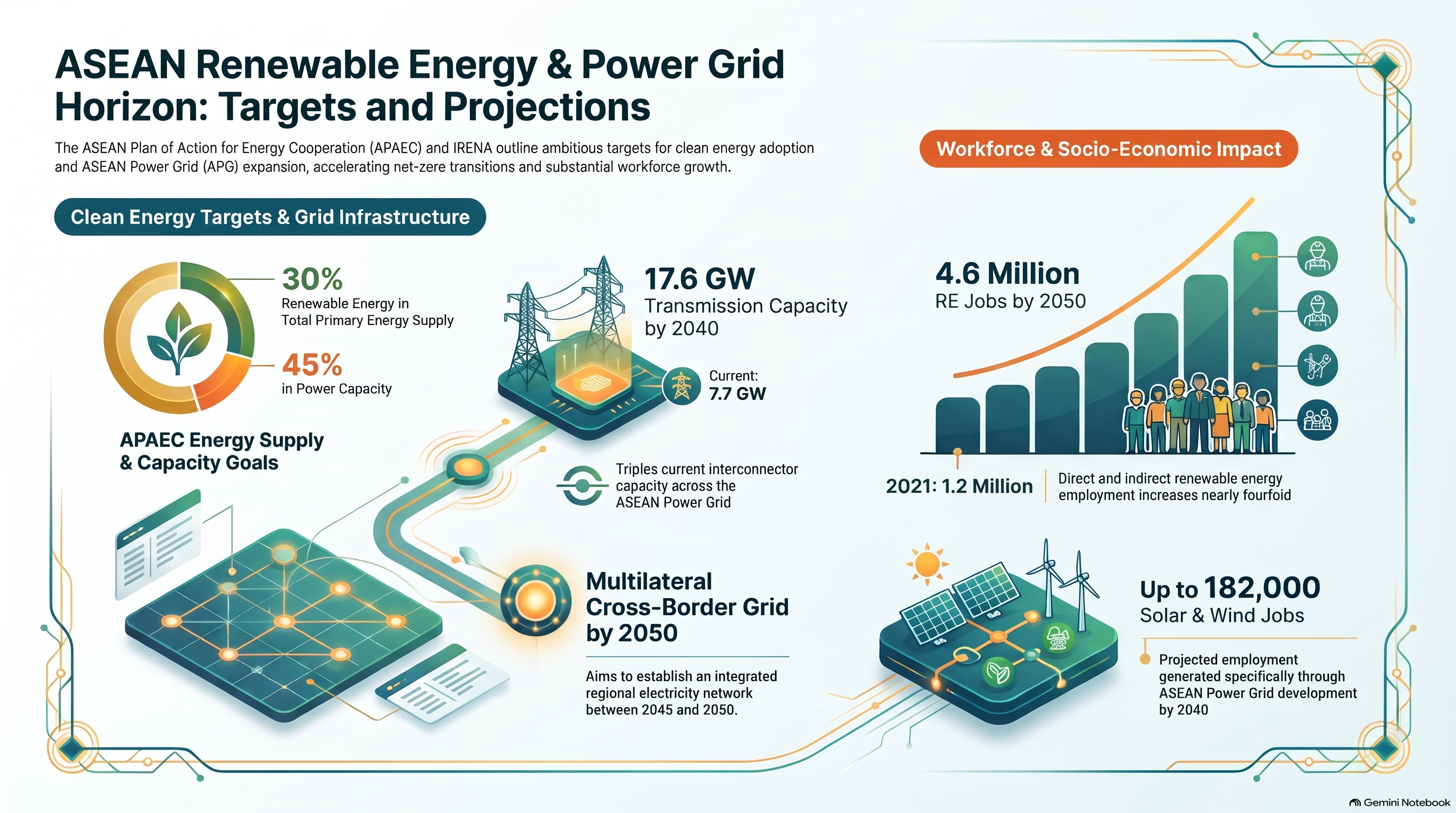
👷🏻♂️Several experts stated that ASEAN still faces a major problem due to a shortage of skilled professionals. The United Nations Economic and Social Commission for Asia and the Pacific (UN-ESCAP) also warned that labour shortages are becoming a growing constraint on regional energy ambitions.
📝Besides, co-research from the University of Ostrava and Telkom University also identifies that Southeast Asian countries face a bottleneck in RE development, especially caused by fragmented regulations, limited access to green finance, and underdeveloped carbon markets.
“The energy systems increasingly depend on planners, engineers, technicians, regulators and system operators who can manage integrated cross-border systems.” - Lin Yang, UN ESCAP Deputy Executive Secretary for Programme
Consequently, Southeast Asian countries have to focus on important steps, including developing human capital, strengthening institutional capacity, and harmonizing regulatory frameworks. Therefore, learning from regions that have successfully achieved this should be a priority.
🏁 The Bottom Line
As regional electricity demand continues to rise, cross-border interconnections offer opportunities to strengthen energy security, optimise renewable energy resources, and generate new employment.
Besides, ASEAN has faced challenges in addressing skilled workforce shortages, harmonising regulatory frameworks, and mobilising green financing.
Furthermore, it is crucial to draw lessons from regions with experience in solving the energy problem.
ASEAN’s study visit to the UK and EU highlights the importance of international cooperation in accelerating ASEAN’s renewable energy transition and implementing the ASEAN Power Grid.
🔎 Need More Angles
ASEAN Analysis of Supply and Demand for Green Jobs and Green Skills in ASEAN
ASEAN Centre for Energy Beyond Electricity: The Socioeconomic Side of the ASEAN Power Grid
ASEAN Centre for Energy The 9th ASEAN Energy Outlook
ASEAN Centre for Energy Enabling a Resilient and Sustainable ASEAN Energy Future through Digitalisation
Asian Development Bank Energy and Regional Cooperation: ASEAN Power Grid
GOV.UK ASEAN advances regional grid through UK, France and Brussels study visit
International Energy Agency (IEA) Energy outlook to 2050 based on today’s policy settings
International Energy Agency (IEA) Southeast Asia’s energy challenges and emerging opportunities
Kiripost Skills Shortages Threaten Asia’s Energy Transition, UN Agency Warns
The Italian Association of Chemical Engineering Barriers to ASEAN Renewable Energy: a Systematic Review and Bibliometric Analysis
(ADE/QOB)