



🎯 The Main Takeaway
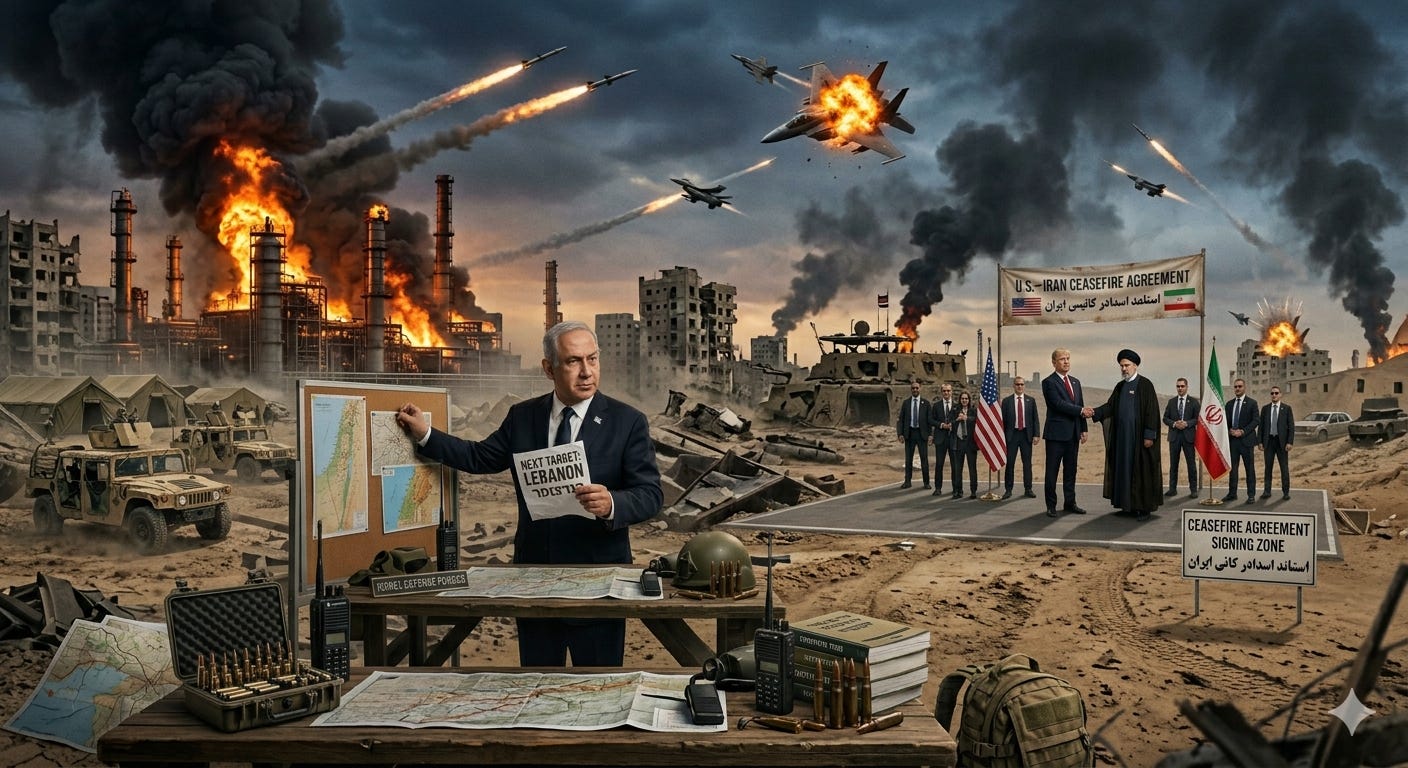
U.S. President Donald Trump announced a two-week ceasefire on Wednesday (4/8) to temporarily end the war between the U.S., Israel, and Iran, as well as to open space for peace negotiations, starting on the same day.
The decision was made after a Pakistani delegation and mediator, led by Prime Minister Shehbaz Sharif and Field Marshal Asim Munir, asked the United States to suspend its military action against Iran on Tuesday (4/7), including attacks on power plants, in order to encourage Iran to reopen the Strait of Hormuz.
Moreover, President Trump said that the U.S. had already met and exceeded all of its military objectives in Iran, and was ready to move forward with finalizing the agreement through his 15-point proposal.
“We have already met and exceeded all military objectives, and are very far along with a definitive agreement concerning long-term peace with Iran, and peace in the Middle East. Almost all of the various points of past contention have been agreed to between the United States and Iran, but a two-week period will allow the agreement to be finalized and consummated.”
Donald Trump, The U.S. President, on Wednesday (4/8).
⚠️ Iran’s Response
Iran expressed gratitude to Pakistan for its efforts to end the regional conflict.
The Islamic Republic is considering the 15-point framework submitted by the U.S. and has responded with a 10-point proposal from Iran.
Moreover, Iran agreed to temporarily halt its defensive operations if attacks on Iran are stopped, and guaranteed safe passage through the Strait of Hormuz.
“If attacks against Iran are halted, our powerful armed forces will cease their defensive operations. For a period of two weeks, safe passage through the Strait of Hormuz will be possible via coordination with Iran’s Armed Forces, and with due consideration of technical limitations.”
Abbas Araghchi, Iran’s Foreign Minister, on Tuesday (4/7).
📡 Why It’s on Our Radar?
The conflict between the U.S., Israel, and Iran has lasted for over 40 days and has caused significant impacts:
☠️ Death toll: Over 2,100 deaths in total from all sides, with 98% of the victims in Iran.
🩹 Injuries: More than 34,000 people have been injured, including around 26,500 in Iran.
🏬 Infrastructure damage: The conflict has damaged military assets belonging to the U.S., Israel, and Iran in the region, as well as various oil refineries across Gulf states. Iran’s nuclear facilities, water desalination plants, and civilian infrastructure were also hit by the strikes.
⛔ Strait restriction: Only selected ships from countries considered friendly to Iran are allowed to pass through the strait through coordination and payment of fees in Chinese yuan.
⚡ Energy surge: The conflict triggered both WTI and Brent oil prices to soar above USD 100 per barrel, and pushed LNG prices to over USD 2.8 per MMBtu as global shipping was disrupted.
🇺🇸 The U.S Proposal
No detailed information about the Trump administration’s 15-point framework to end the war with Iran, but U.S. media reports say it includes the following elements:
Iran commits to never developing nuclear weapons.
Iran must no longer enrich uranium within the country and must hand over its already enriched uranium to the IAEA.
Iran must commit to allowing the IAEA to monitor all remaining nuclear infrastructure in the country.
Iran must reopen the Strait of Hormuz.
Iran must end its support for regional proxies, including Hezbollah in Lebanon and the Houthis in Yemen.
Iran must limit the range and number of its ballistic missiles.
The U.S. will remove all sanctions imposed on Iran and end the mechanism that allows those sanctions to be reimposed.
🇮🇷 Iran’s Proposal
There is also no detailed public information on Iran’s 10-point proposal. However, various media reports indicate that it is said to include the following conditions:
The U.S. commitment to refrain from future aggression against Iran.
The U.S. must permanently end the war, not just implement a ceasefire.
Withdrawal of U.S. forces from the Middle East region.
Full compensation from the U.S. for infrastructure damage in Iran.
Full Iranian control of the Strait of Hormuz.
The U.S. commits to removing all primary and secondary sanctions on Iran.
Ceasing all hostilities against regional resistance groups, including those in Lebanon.
Release of all frozen Iranian funds and assets held by the U.S.
Iran retains the right to enrich uranium, but commits not to develop nuclear weapons
Ending all UN Security Council and Board of Governors resolutions.
🇮🇱 How About Israel?
Israel both agreed and disagreed with the ceasefire proposal submitted by the U.S.
Prime Minister Benjamin Netanyahu said that Israel agreed to a two-week ceasefire with Iran, but it does not include Lebanon.
Israel continued to launch one of its largest attacks on Lebanon, striking around 100 targets across the country on Wednesday (4/8), killing at least 250 people and injuring over 1,100 residents.
Israeli officials will begin direct talks with Lebanon this week to seek a peaceful resolution and the disarmament of Hezbollah.
In response, Iran threatened to withdraw from the two-week ceasefire if Israel continues its attacks on Lebanon, and warned it could restrict access to the Strait of Hormuz again if the aggression persists.
“There is no ceasefire in Lebanon until security is restored to residents in the north, Hezbollah is disarmed, and a peace agreement is reached.”
Benjamin Netanyahu, Israeli Prime Minister, on Thursday (4/9).
🇺🇳 What About the UN?
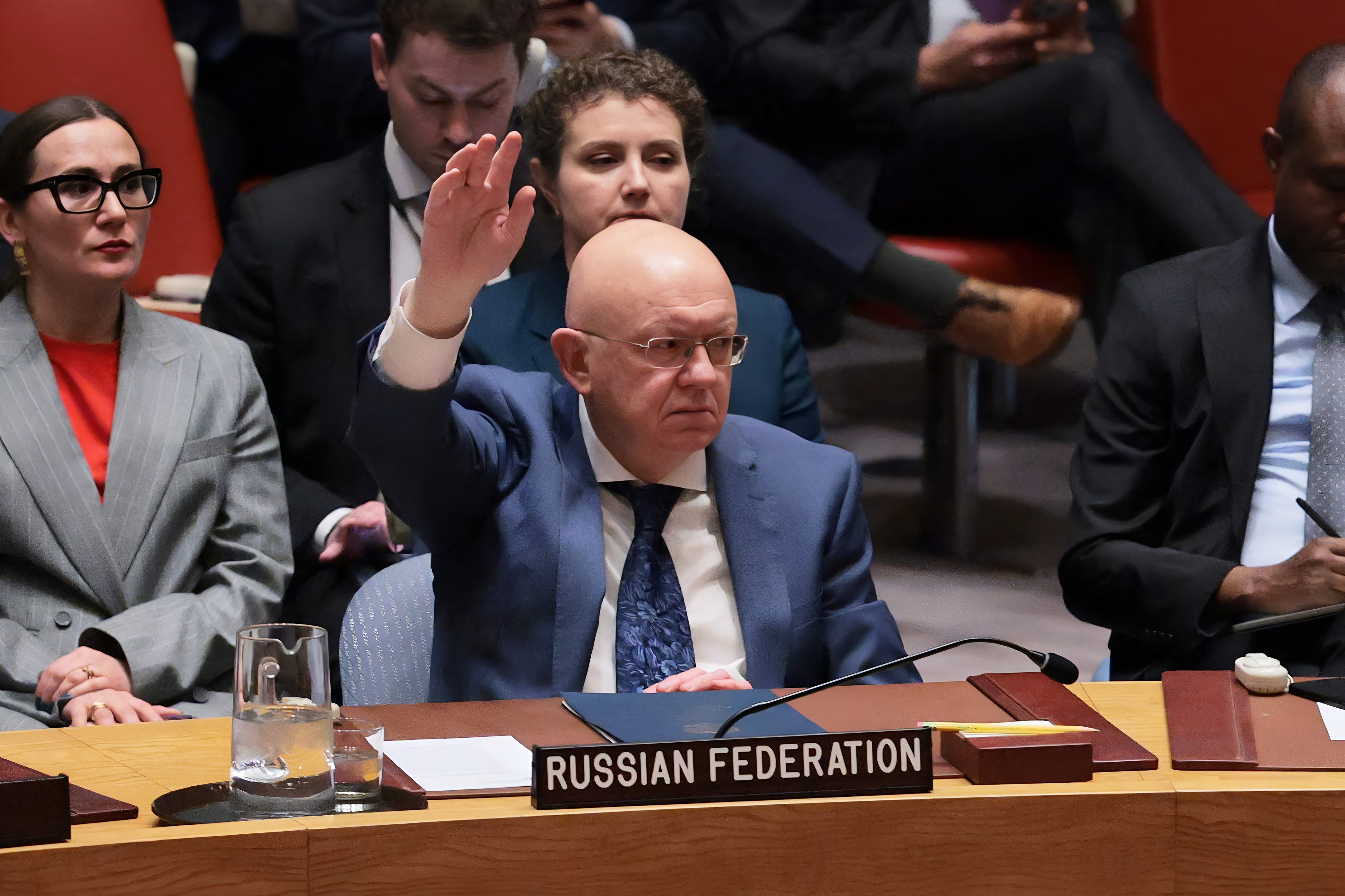
Just before the U.S. announced the two-week ceasefire with Iran, the UN Security Council held a meeting on Tuesday (4/7) at its headquarters in New York, to adopt a draft resolution aimed at improving security in the Strait of Hormuz through coordinated efforts, to ensure safe navigation for all vessels.
The draft resolution, proposed by Bahrain, called on Iran to immediately stop all attacks on shipping and any interference with navigation in the strait, a key route that carries at least 20% of global energy trade, and is vital for humanitarian aid as the conflict escalates.
During the meeting, 11 countries voted in favor of the draft, while China and Russia vetoed it, and Colombia and Pakistan abstained. As a result, the resolution was not adopted by the council.
“The resolution presented Iranian actions as the sole source of regional tensions while illegal attacks by the United States and Israel were not mentioned at all.”
Vasily Nebenzia, Russia’s Permanent Representative to the UN, on Tuesday (4/7).
“The draft failed to capture the root causes and the full picture of the conflict in a comprehensive and balanced manner.”
Fu Cong, China’s Permanent Representative to the UN, on Tuesday (4/7).
🙅♂️ The Islamabad Talks and Failed Negotiations
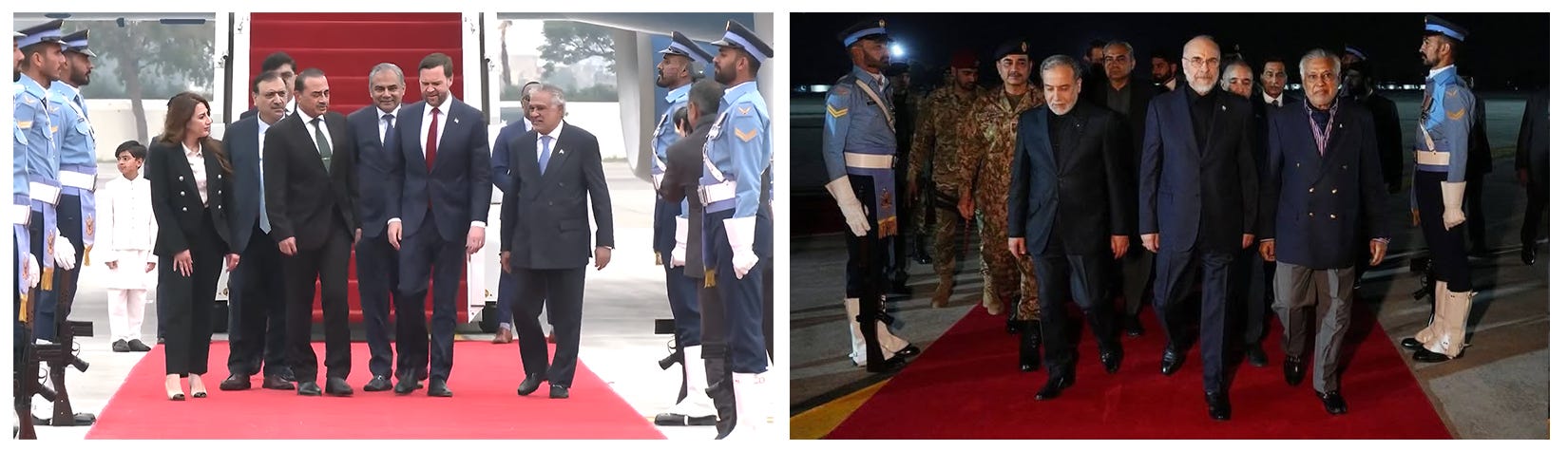
Following the escalating conflict in the region, the U.S. delegation, led by Vice President James David Vance, held face-to-face peace talks with its Iranian counterpart, led by Parliamentary Speaker Mohammad Bagher Ghalibaf, on Saturday (4/11) in Islamabad, with Pakistan acting as mediator.
The talks consisted of several rounds, mainly discussing a permanent ceasefire, the reopening of the Strait of Hormuz, and the end of Iran’s nuclear program. Other issues included Lebanon's inclusion in the ceasefire and sanctions relief for Iran.
Sadly, after 21 hours, the lengthy negotiations failed to reach a truce, as Iran refused to accept the U.S. ceasefire conditions, particularly those related to its nuclear program.
“Iran chose “not to accept our terms” at the talks. We need to see an affirmative commitment that they will not seek a nuclear weapon and they will not seek the tools that would enable them to quickly achieve a nuclear weapon.”
J. D. Vance, The U.S. Vice President, on Sunday (4/12).
In contrast, the Iranian delegation expected the talks to continue, as it did not anticipate an agreement being reached in a single round.
“The US has understood Iran’s logic and principles, and it’s time for them to decide whether they can earn our trust or not.”
Mohammad Bagher Ghalibaf, Iran’s Parliamentary Speaker, on Sunday (4/12).
🚫 The U.S. Threatens to Block the Strait of Hormuz
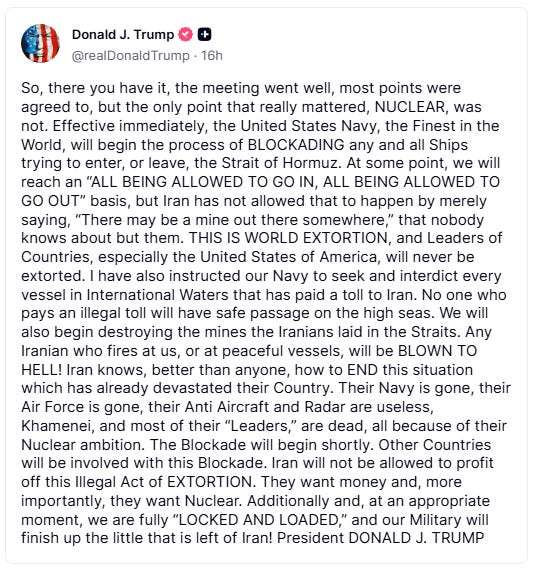
Following the failed ceasefire talks, U.S. President Donald Trump announced on Sunday (4/12) that the United States would begin a blockade of the Strait of Hormuz.
Trump claimed that Iran had been engaging in illegal acts of extortion by profiting from restricted access through the Strait to support its nuclear ambitions.
The U.S. Navy will prevent any ships from entering and leaving the Strait, or Iranian Ports. Moreover, it will begin clearing mines laid by Iran and target vessels that have paid tolls to Iran, aiming to ensure they do not feel safe on the high seas.
📊 The Impact (As of Apr 13)
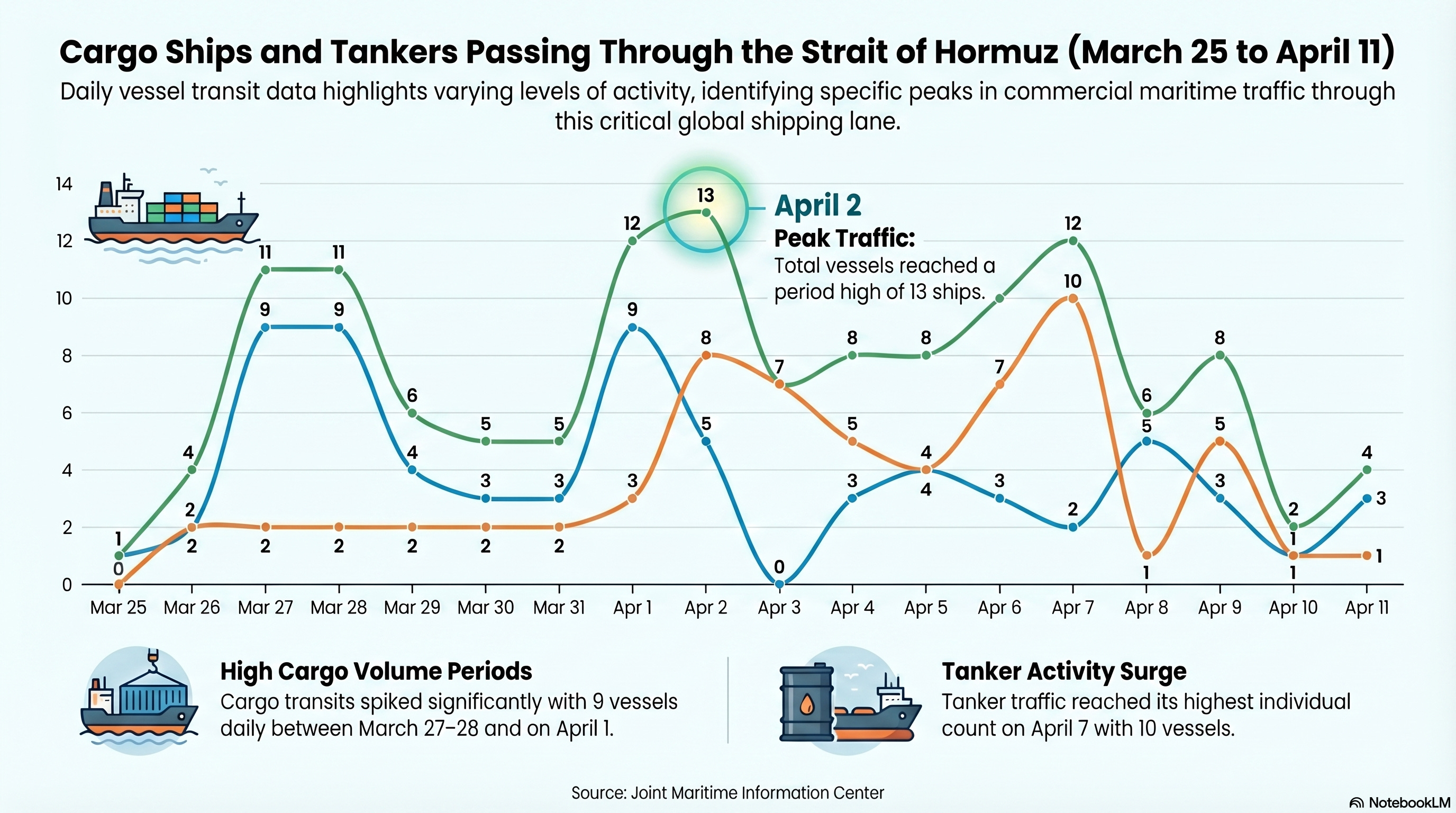
According to data from the Joint Maritime Information Center:
The number of cargo ships and tankers passing through the Strait of Hormuz increased between March 26 and April 7, with peak traffic on April 1 (12 vessels), April 2 (13 vessels), and April 7 (12 vessels), after Iran allowed some “friendly” vessels to pass through the strait in coordination with the IRGC.
However, vessel traffic declined again after the two-week ceasefire was announced on April 8, especially after Iran threatened to close the strait again following Israel’s attacks on Lebanon.
📈 As a Result… (As of Apr 13)
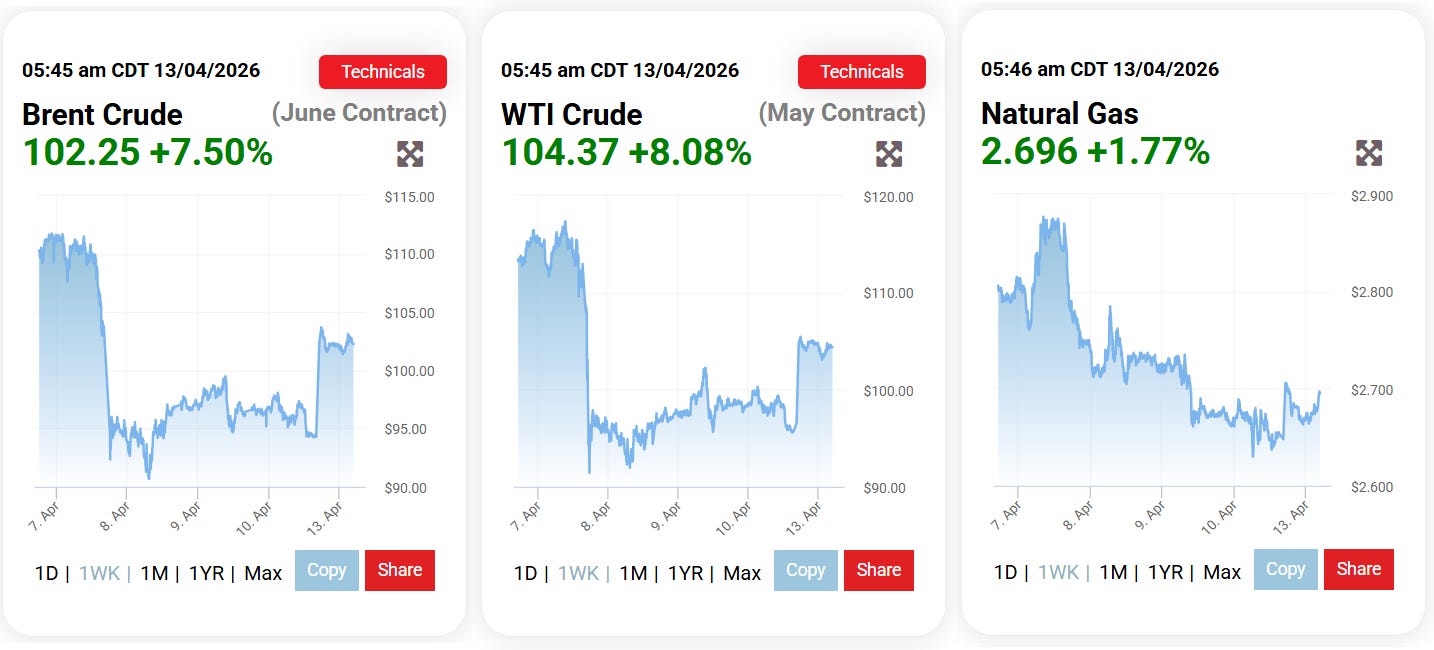
Global energy prices experienced turmoil following the two-week ceasefire announcement on April 8 and the U.S. Navy’s blockade of the Strait of Hormuz on April 12:
Brent crude oil prices fell by 13.29% from USD 109.27 to USD 94.75 per barrel on April 8, remained stable at around USD 95 per barrel until April 10, then rose by 8.3% to USD 103.11 per barrel on April 12, and continued to hover around USD 102 per barrel afterward.
WTI crude oil prices dropped by 16.41%, declining from USD 112.95 to USD 94.41 per barrel on April 8. They then stayed relatively steady at around USD 97 per barrel until April 10, before climbing by 8.45% to USD 104.73 per barrel on April 12, and remained close to USD 104 per barrel afterward.
LNG prices fell slightly by 5.09% from USD 2.87 to USD 2.72 per MMBtu on April 8, then declined further to USD 2.67 per MMBtu on April 9, and remained stable around USD 2.6 per MMBtu afterward.
🌍 The ASEAN’s Response
ASEAN Foreign Ministers welcome the two-week ceasefire between the U. S. and Iran, and call for full implementation of the agreement, maximum restraint, and an end to all hostilities.
They also urge all parties to act responsibly, avoid actions that could worsen the situation, and prevent further loss of life.
Moreover, the ministers also call for the protection of maritime security, the freedom of navigation, and overflight for non-combatant vessels and aircraft over the Strait of Hormuz, especially for international shipping routes.
“We underscore the importance of maintaining regional peace, stability and prosperity, upholding international law, and promoting earnest dialogue and diplomacy as the primary means of addressing conflicts and tensions, including the need for a complete and immediate cessation of hostilities across all fronts in the Middle East.” ASEAN Foreign Ministers, on April 13.
ASEAN Member States individual statements:
🇧🇳 Brunei Darussalam:
Brunei also condemns the continued attacks by the occupying power on Palestine and Lebanon.
“Brunei Darussalam strongly condemns the continued and reckless attacks by the Occupying Power against Palestine, as well as the Lebanese Republic including the killing of UNIFIL peacekeepers, which constitutes a clear and flagrant violation of sovereignty and territorial integrity, and international law. Brunei Darussalam urges the international community, including the United Nations and relevant stakeholders to fulfil their legal and moral obligations to hold the Occupying Power in Palestine accountable, and to take concrete steps to bring an end to the ongoing violations and to achieve a just and lasting resolution.” - MoFA Brunei Darussalam, on April 11.
🇮🇩 Indonesia:
Underscored the importance of dialogue and diplomacy as the only way to resolve the conflict, prevent further escalation, and achieve sustainable peace in the region.
“We reaffirm the importance of all parties exercising maximum restraint, respecting sovereignty and territorial integrity, and prioritizing dialogue and diplomacy in resolving conflicts.” Yvonne Mewengkang, MoFA Indonesia Spokeperson, on April 8.
🇱🇦 Lao PDR:
The Lao PDR hopes that all parties will exercise restraint and end the violence to prevent further escalation of the conflict.
“The Lao PDR hopes that all parties concerned will exercise their utmost restraint, cease all acts of violence, and resolve the ongoing conflict by peaceful means in accordance with the principles of the Charter of the United Nations and International Law, thereby bringing sustainable peace and stability to the peoples in the Middle East as well as to the world at large.” MoFA Lao PDR, on April 10.
🇲🇾 Malaysia:
Malaysian PM Anwar Ibrahim welcomed Iran’s 10-point ceasefire proposal, saying it could promote peace not only in the Middle East but also globally. He expressed hope that negotiations would be conducted in good faith to achieve a lasting, peaceful resolution of regional issues.
“It is imperative that the ten-point plan be translated into a comprehensive peace deal, not just for Iran, but also for Iraq, Lebanon and Yemen. Further, it is incumbent upon the parties concerned to ensure the end of the genocide and dispossession of the people of Palestine, not least in Gaza.” Anwar Ibrahim, Malaysian PM, on April 8.
🇸🇬 Singapore:
Singapore further welcomes the commitment under the ceasefire to restoring shipping traffic through the Strait of Hormuz.
“We call on all parties to uphold their obligations under international law, restore safe and unimpeded transit passage in the Strait of Hormuz in accordance with the United Nations Convention on the Law of the Sea, and ensure the safety of seafarers and ships,” MoFA Singapore, on April 8.
🇰🇭 Thailand:
Urged lasting peace in the Middle East, as the conflict has led to higher energy prices and supply chain disruptions affecting countries beyond the region.
“The conflict has caused significant harm, especially to Iran and neighboring countries, and has affected nations beyond the Middle East through higher energy prices and supply chain interruptions. As a result, Thailand, like other countries, is also hopeful that the ceasefire will lead to a sustainable resolution.” Sihasak Phuangketkeow, Thai Deputy PM, Minister of Foreign Affairs, on April 8.
🇵🇭 The Philippines:
President Marcos Jr. said that the two-week ceasefire could help the Philippines secure additional fuel supply and stabilize the domestic market.
“We will take full advantage of the two weeks to increase our supply as much as possible. Two weeks may not be enough time to bring the prices down. But maybe if it is extended further than that with the prospect of even better situation following, then prices will start to follow.” Ferdinand Marcos Jr., The Philippines President, on April 8.
🇹🇱 Timor-Leste:
Timor-Leste President Jose Ramos Horta stated for not extend congratulations to the U. S. - Iran ceasefire and urged both sides to demonstrate decency and statesmanship.
“After weeks of relentless air campaigns by Israel and the U. S., the assasination of the Iranian spiritual leader and his family, including a baby, and the deliberate attack on a clearly identified school that killed 170 girls and their teachers, then causing chaos in international trade that destroys many economies, should we congratulate them for agreeing to a brief and temporary ceasefire? On my part, there are no congratulations. Grow up, show wisdom, statesmanship, and decency. All of you, including Iranian leaders, stop supporting radical Islamist who sow violence in Lebanon, Palestine, Egypt, and Yemen. “ Jose Ramos-Horta, Timor-Leste President, on April 8.
🇻🇳 Vietnam:
Vietnam supports diplomatic efforts through dialogue to achieve peaceful solutions in line with international law and the UN Charter.
“Vietnam supports active dialogue to seek sustainable peaceful solutions to disputes based on the fundamental principles of international law and the UN Charter, for the benefit of all parties, and for regional and global peace, stability, cooperation, and development.” MoFA Vietnam, on April 8.
🇰🇭 Cambodia, 🇲🇲 Myanmar: No independent statements have been made regarding the U.S.–Iran two-week ceasefire.
📉 The Economic Forecasts for Asia and the Pacific
The Asian Development Bank forecasts that the Middle East conflict will weigh on development in Asia and the Pacific due to higher energy prices, which raise production costs and consumer prices.
As a result, regional growth is projected to moderate to 5.1% in 2026 and 2027, while inflation is expected to rise to 3.6% in 2026 before easing to 3.4% in 2027.
However, strong domestic demand in South Asia and Southeast Asia will continue to anchor growth in both regions.
🔎 Need More Angles?
Al Jazeera US-Israel attacks on Iran: Death toll and injuries live tracker
Asian Development Bank Economic Forecasts for Asia and the Pacific: April 2026
ASEAN Secretariat ASEAN Foreign Ministers’ Statement on the Developments in the Middle East
Investing.com Brent Oil Futures Historical Data
Investing.com Crude Oil WTI Futures Historical Data
Investing.com Natural Gas Futures Historical Data
MoFA Brunei Darussalam Brunei Darussalam's Statement on the Recent Developments in the Middle East
MoFA Singapore MFA Spokesperson's Comments on the Situation in the Middle East, 8 April 2026
MoFA Vietnam Vietnam welcomes US-Iran ceasefire agreement: Spokesperson
Plataformamedia.com Iran War: East-Timor President calls for “decency” Without Congratulating Ceasefire
Presidential Communications Office Ceasefire seen as window to boost PH fuel supply – President Marcos
Truth Social Donald J. Trump
UN News Security Council: Russia and China veto resolution on Strait of Hormuz
Vientiane Times Laos welcomes Iran–US ceasefire deal
(NGO/QOB)