



🎯 The Main Takeaway
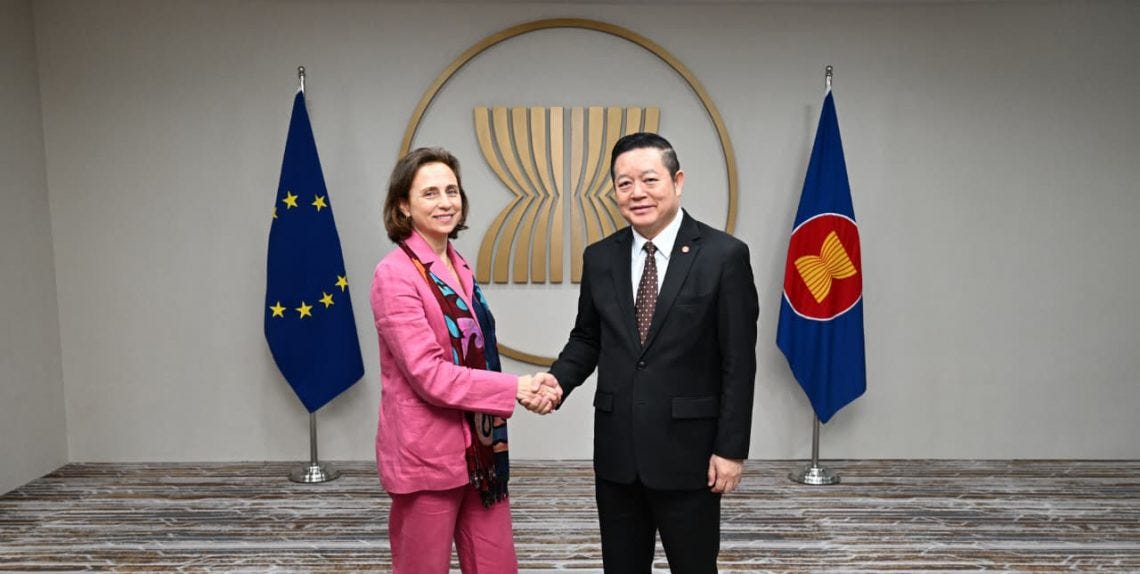
Southeast Asian leaders and European business executives are deepening cooperation at the ASEAN-EU Sustainability Summit 2026 in Cebu, as both regions confront mounting energy pressures and economic uncertainty.
Against a backdrop of volatile energy markets and slowing global growth, ASEAN and the European Union are positioning sustainability, industrial resilience, and long-term partnership as central pillars of regional stability and future development.
🌏 Who’s Involved in the Summit
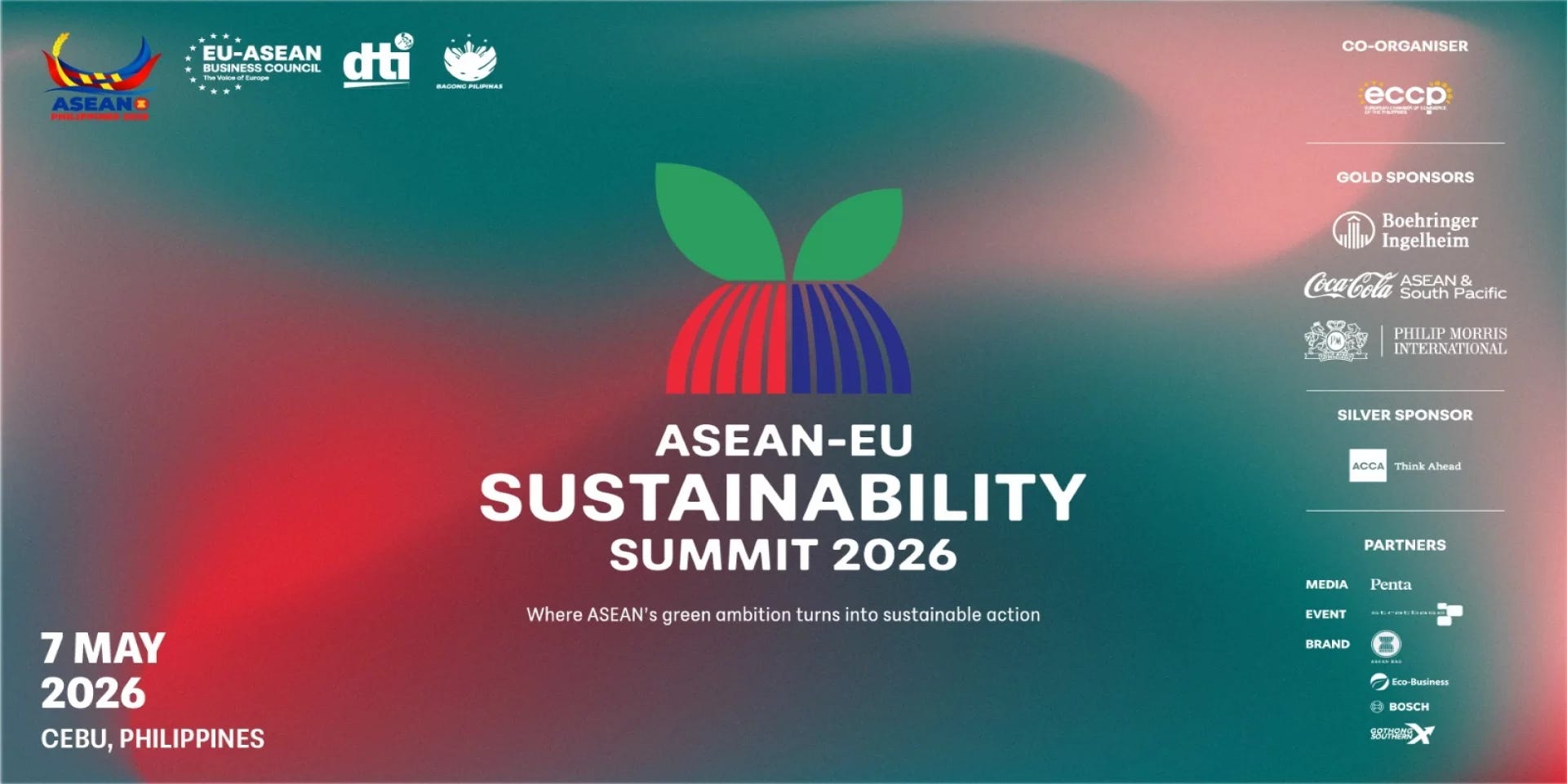
The ASEAN-EU Sustainability Summit 2026 is expected to gather hundreds of representatives from governments, corporations, think tanks, development institutions, and civil society organizations across Europe and Southeast Asia.
The summit — jointly organized by the EU-ASEAN Business Council and regional partners — reflects how sustainability discussions are increasingly moving beyond diplomacy alone and into the worlds of business, finance, energy, and industrial policy.
🎙️ Key ASEAN & EU Representatives
🇰🇭 Kao Kim Hourn (via video) — Secretary-General of ASEAN
🇪🇺 Jozef Síkela — European Commissioner for International Partnerships
🇪🇺 Sujiro Seam — EU Ambassador to ASEAN
🇵🇭 Massimo Santoro — EU Ambassador to the Philippines
🇪🇺 Patrick Child — Deputy Director-General for Environment, European Commission
🌍 Jan Dusik — Deputy Director-General for Climate Action
🤝 Chris Humphrey — Executive Director of the EU-ASEAN Business Council
🇵🇭 Paulo Duarte — President of ECCP
♻️ René van Berkel — Co-Convenor of the ASEAN Circular Economy Business Alliance
💼 George Barcelon — ASEAN Business Advisory Council representative
🚀 Joey Concepcion III — Chairman of ASEAN Business Advisory Council
🏢 Corporate Participation
Major multinational companies joining discussions include:
Philip Morris International
Boehringer Ingelheim
Coca-Cola Philippines
Circulate Capital
Their presence signals growing private-sector involvement in Southeast Asia’s sustainability transition — especially in areas such as healthcare, circular economy systems, energy resilience, and sustainable investment.
🧠 Think Tanks & Development Institutions
The summit also includes participation from:
Food and Agriculture Organization (FAO)
French National Centre for Scientific Research
Eco-Business
Stratbase
ACCA
The diversity of participants reflects a broader shift in ASEAN-EU relations
🔎 Why It’s on Our Radar
The escalating US–Israel conflict with Iran — and the resulting disruption around the Strait of Hormuz — has exposed one of Southeast Asia’s deepest structural vulnerabilities: energy dependence.
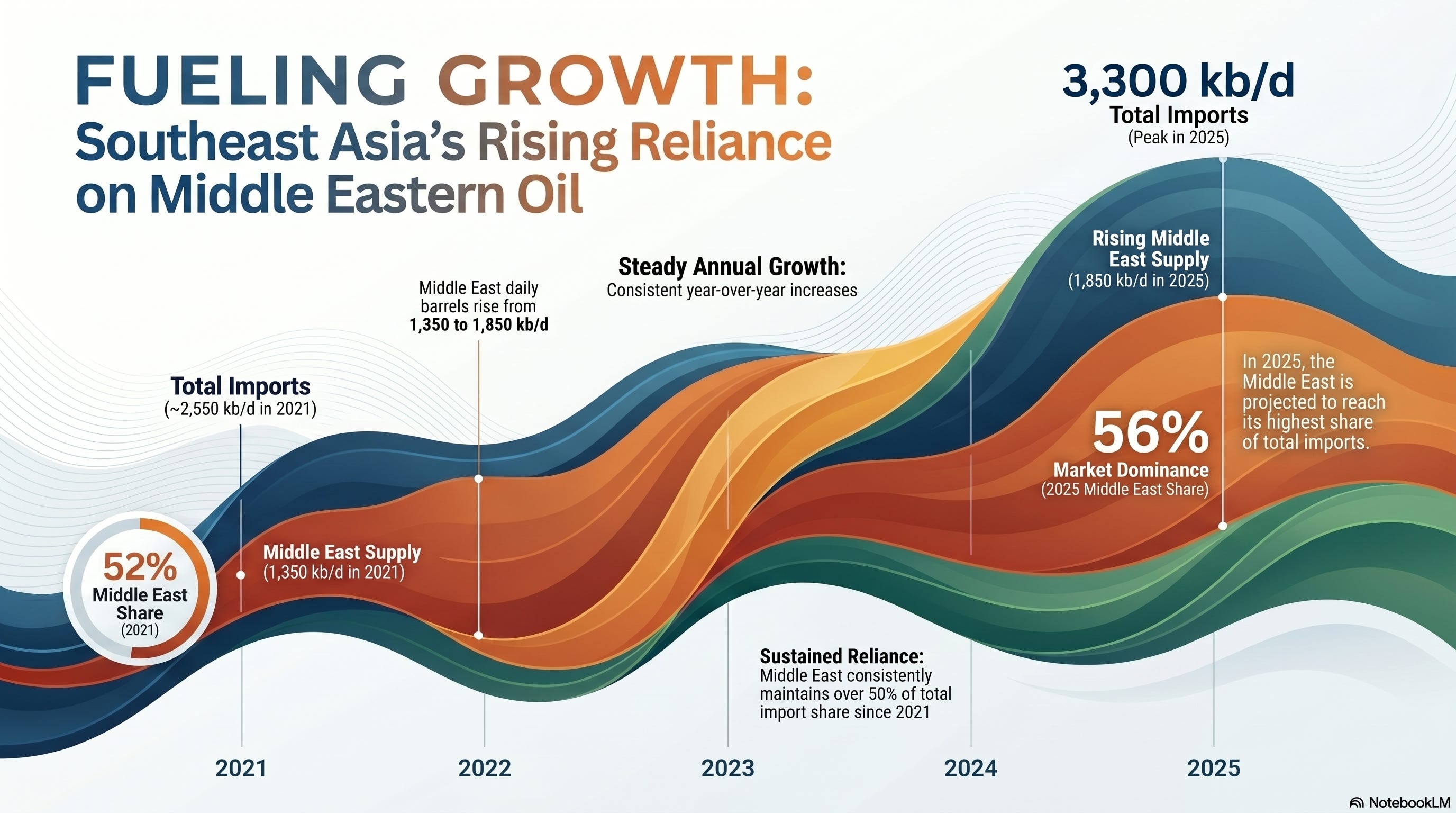
⚠️ ASEAN economies remain heavily reliant on imported oil and gas from the Middle East. According to the ASEAN Centre for Energy, around 56% of ASEAN’s crude oil imports in 2025 originated from the Middle East, leaving the region highly exposed to supply shocks and price volatility.
The disruption has already intensified:
⛽ Fuel price volatility
🚢 Higher shipping and insurance costs
📉 Inflationary pressure on industries and households
ASEAN economic ministers have warned that prolonged instability could significantly slow regional growth, particularly as more than 80% of oil and LNG transiting Hormuz is destined for Asian markets.
Beyond energy prices, the crisis also highlights a broader strategic concern:
🌏 Southeast Asia’s economic stability remains deeply tied to geopolitical developments far beyond its borders.
⚡ Why This Matters Now
Several ASEAN countries have already been grappling with energy supply stress since March, long before the Hormuz crisis escalated further.
🇵🇭 In the Philippines, the government declared a national energy emergency after local diesel and petrol prices more than doubled.
⛽ Meanwhile, in 🇰🇭 Cambodia, 🇱🇦 Laos, 🇲🇲 Myanmar, and 🇹🇭 Thailand, fuel shortages forced some petrol stations to suspend operations entirely, exposing how quickly regional supply chains can come under strain.
For years, ASEAN has promoted an energy strategy centered on:
🔋 Supply diversification
🌱 Renewable energy expansion
🔌 Regional power grid integration
🛢 Strategic energy reserves
The Hormuz disruption has now transformed those discussions from long-term policy goals into urgent strategic priorities.
🌏 The crisis is making one reality increasingly clear: Southeast Asia’s future economic stability will depend not only on energy access, but on how resilient and diversified that energy system becomes.
🇪🇺 Why the European Union?
The European Union’s own experience with energy disruption has made it an increasingly relevant partner for Southeast Asia.
Following the Russia–Ukraine war, Europe faced a major energy shock after Russia sharply reduced gas supplies to the region in 2022. The crisis exposed the risks of overdependence on external fossil fuel sources and forced the EU to accelerate structural reforms.
In response, the EU launched REPowerEU — a strategy aimed at:
⚡ Reducing reliance on imported fossil fuels
🌱 Accelerating the clean energy transition
🔋 Expanding renewable energy capacity
By 2023, EU lawmakers raised the bloc’s renewable energy target from 32% to at least 42.5% by 2030, while pushing toward an aspirational 45% goal.
The results are increasingly visible.
📊 In 2024, renewable energy accounted for 48% of total EU energy production, making it the region’s largest energy source.
Followed by:
☢️ Nuclear energy — 28%
🪨 Solid fuels — 15%
🔥 Natural gas — 5%
🛢 Crude oil — 3%
For ASEAN, the EU’s experience offers more than a climate model.
It provides a real-world case study in how a region can respond to energy insecurity through:
🔌 Interconnected power grids
📜 Binding renewable energy policies
⚡ Energy diversification strategies
🤝 Cross-border energy cooperation
➡️ As Southeast Asia faces mounting energy vulnerabilities, Europe’s transition is increasingly viewed not just as an environmental agenda — but as a strategic resilience blueprint.
🌐 How Far Has the EU–ASEAN Sustainability Partnership Evolved?
The relationship between ASEAN and the European Union has gradually expanded beyond trade and diplomacy into a broader sustainability and resilience partnership.
At the ASEAN-EU Sustainability Summit 2026, both regions are reinforcing cooperation in:
⚡ Green energy
🌱 Sustainable economic transition
🔌 Regional connectivity
💻 Digital transformation
One major framework is the EU–ASEAN Sustainable Connectivity Package (SCOPE), which supports:
🛰 Space policy cooperation
⚡ Regional clean energy grid development
💻 Digital trade integration
📚 Knowledge and capacity-building for sustainable value-chain management across ASEAN institutions and businesses
For the 2021–2027 period, the European Union has allocated around €180 million for ASEAN-focused initiatives aligned with the EU–ASEAN Strategic Partnership.
Key flagship programs include:
🌿 EU–ASEAN Green Initiative
⚖️ Team Europe Initiative on Human Rights and Rule of Law
🤝 Enhanced EU–ASEAN Dialogue Instrument (E-READI)
The cooperation increasingly reflects a shift from traditional donor-recipient relations toward more strategic and technical collaboration.
⚡ Energy Transition as a Shared Priority
One of the clearest examples is Indonesia’s participation in the Just Energy Transition Partnership alongside the EU, the United Kingdom, France, Germany, the United States, Italy, Canada, Japan, Norway, and Denmark.
The initiative aims to support emerging economies in transitioning from fossil fuels toward cleaner energy systems—while also addressing:
👷 Social transition impacts
📈 Economic restructuring
🌏 Long-term energy resilience
➡️ For ASEAN, sustainability cooperation with Europe is no longer only about climate goals. It is increasingly tied to economic security, industrial competitiveness, and strategic resilience amid global energy uncertainty.
💶🌏 EU–Southeast Asia Free Trade Push
The European Union is steadily deepening its economic footprint in Southeast Asia through a series of bilateral Free Trade Agreements (FTAs) with ASEAN member states.
Rather than pursuing an immediate ASEAN-wide agreement, Brussels is using country-level deals as “building blocks” toward a future EU–ASEAN region-to-region trade framework.
The strategy serves multiple goals:
📦 Strengthening supply-chain resilience
📈 Expanding trade and investment access
🌏 Deepening strategic ties with Southeast Asia
⚖️ Balancing growing Chinese economic influence in the region
Several key agreements are already shaping the landscape:
🇮🇩 Indonesia (2025)
The EU–Indonesia Comprehensive Economic Partnership Agreement (IEU-CEPA) was signed on 23 September 2025 and is currently awaiting ratification, with implementation expected by 2027.
The agreement is expected to:
👟 Remove more than 98% of import tariffs
🧵 Boost exports of footwear, textiles, and palm oil
💶 Expand European investment into Indonesia
➡️ The deal positions the EU not only as a trade partner, but increasingly as a long-term industrial and strategic partner for Indonesia.
🇸🇬 Singapore (2019)
Singapore became the EU’s most advanced trade partner in ASEAN through the:
📜 EU–Singapore Free Trade Agreement (EUSFTA)
🛡 EU–Singapore Investment Protection Agreement (EUSIPA)
Under the agreement:
📦 The EU removed tariffs on 84% of Singaporean products immediately
📉 Remaining tariffs were phased out between 2021 and 2023
More recently:
💻 The EU–Singapore Digital Trade Agreement, signed in May 2025, officially entered into force on 1 February 2026, reflecting growing cooperation in the digital economy.
🇻🇳 Vietnam (2020)
The EU–Vietnam Free Trade Agreement (EVFTA) entered into force in August 2020 and remains one of the EU’s most ambitious agreements in the region.
The deal aims to:
📉 Eliminate 99% of tariffs
🚢 Reduce non-tariff trade barriers
🏭 Strengthen manufacturing and export integration
Meanwhile, the Investment Protection Agreement gained further momentum after 16 EU member states ratified it in October 2023.
📌 The Bottom Line
These agreements reveal a broader strategic trend:
The EU is increasingly treating Southeast Asia not simply as an export market, but as a central pillar of its long-term economic diversification strategy.
For ASEAN, closer ties with Europe provide:
⚡ Alternative investment sources
🔗 More diversified trade networks
🌱 Support for green and digital transitions
➡️ In an era of geopolitical fragmentation, EU–ASEAN economic integration is becoming as much about resilience as it is about trade.
📰 Need More Angles
Asia Link, The University of Melbourne The war against Iran and the fragility of Southeast Asia’s energy responses
ASEAN Priority Areas of Cooperation
ASEAN Centre for Energy ASEAN Centre for Energy (ACE) on the situation in the Middle East and the impact on ASEAN energy security
Coordinating Ministry of Economic Affairs Kesepakatan Penyelesaian IEU-CEPA Sebagai Game Changer untuk Pertumbuhan Ekonomi
EU-ASEAN Bussines Council ASEAN-EU Sustainability Summit 2026 Agenda
European Comission A more secure and stable energy system
European Comission EU-Viet Nam Trade Agreement and Investment Protection Agreement
European Union External Action The European Union and ASEAN
European Parliament Renewable energy
Eurostat Energy in Europe – 2026 edition
Enterprise Singapore European Union – Singapore Free Trade Agreement (EUSFTA)
Lowy Institute ASEAN’s energy crisis is not about energy
(ADE/QOB)