



🎯 The Main Takeaway
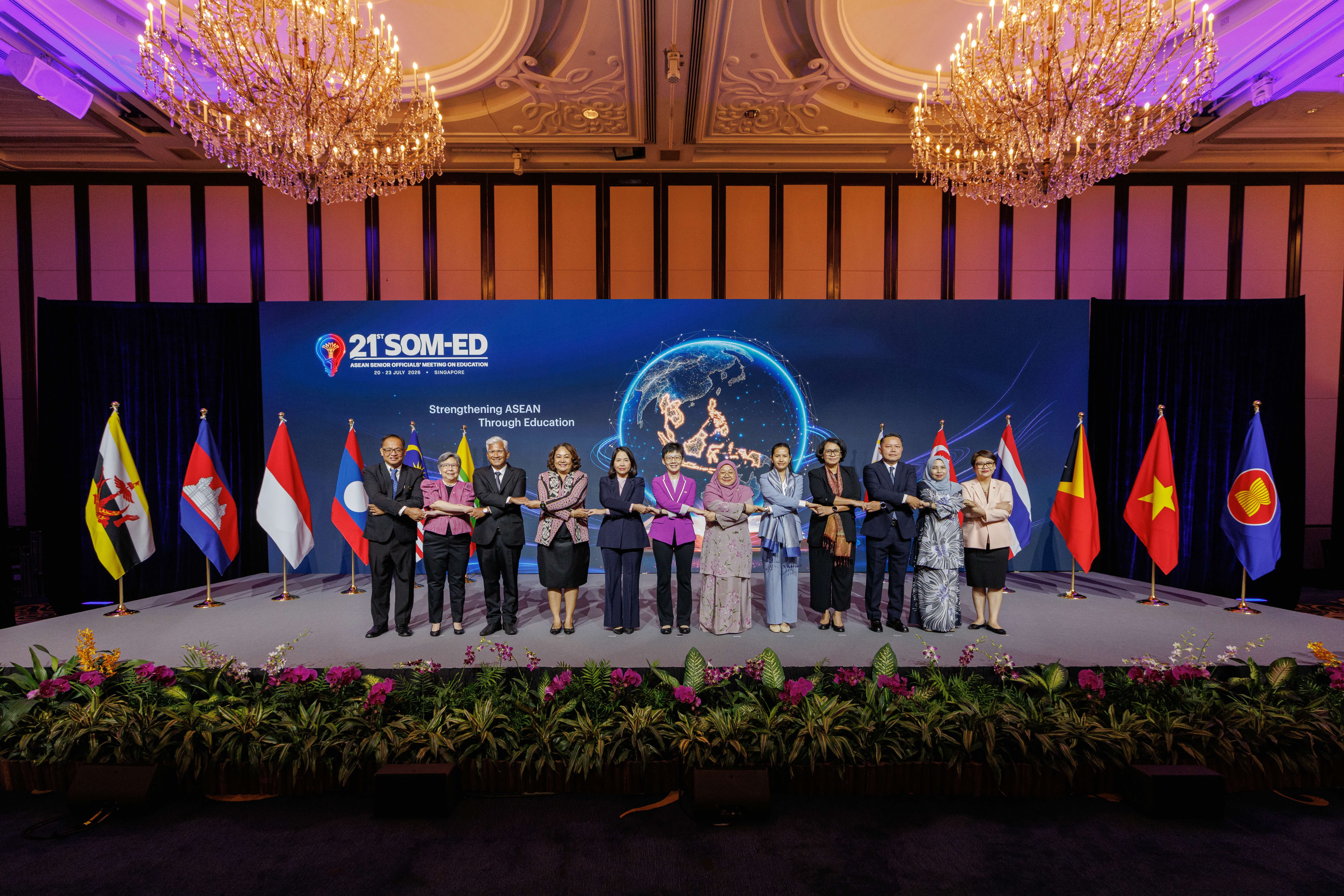
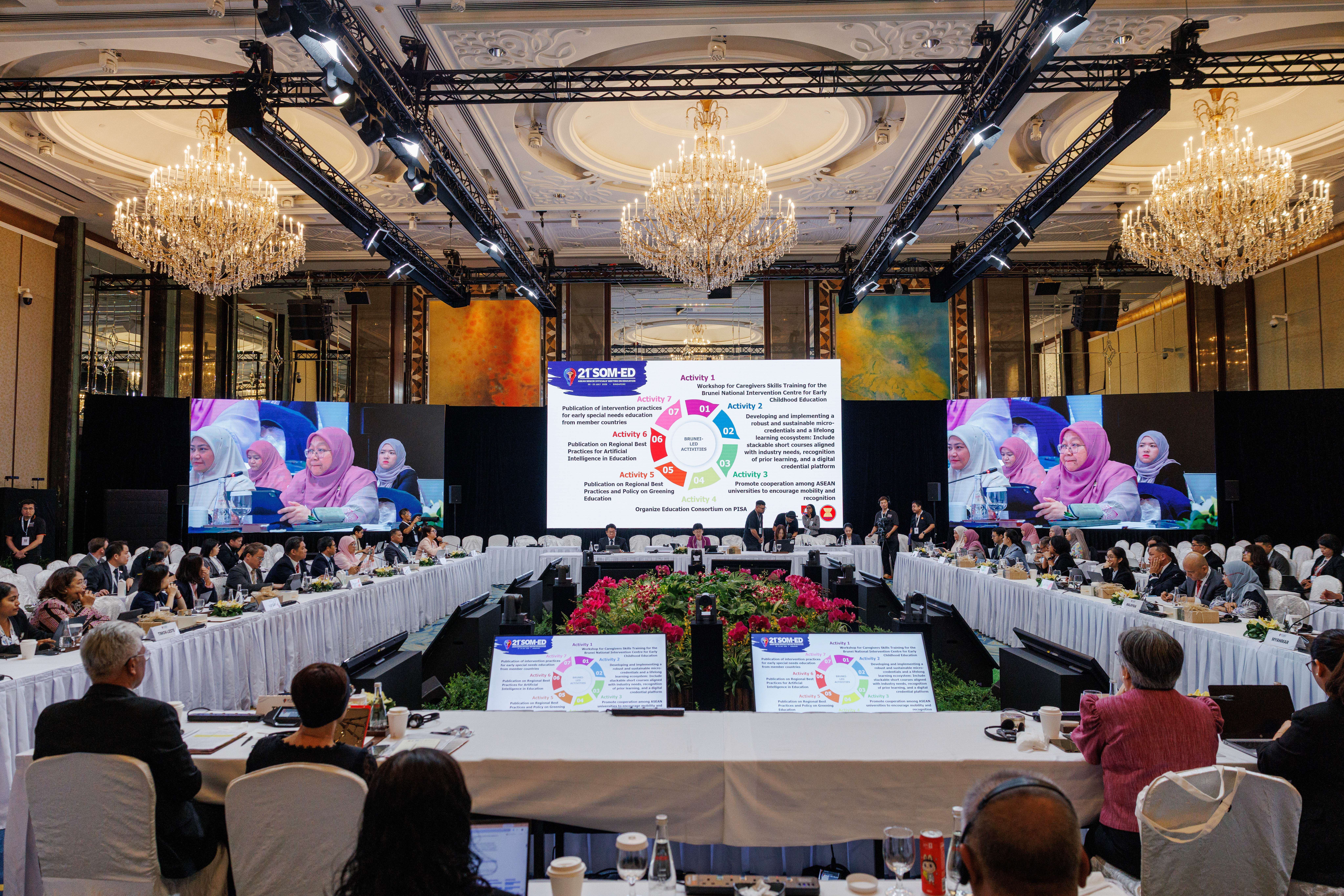
On 11 September 2026, at the Open Session of the 21st ASEAN Senior Officials Meeting on Education (SOM-ED) in Jakarta, the ASEAN Foundation formally secured backing for AI Ready ASEAN Powered by AI Opportunity Fund: Asia-Pacific.
The second phase of its flagship AI literacy programme is now folded into a larger regional financing vehicle.
🤝 Coalition, Not Solo Act
The programme is co-run with AVPN and backed by Google.org and the Asian Development Bank (ADB), running through the end of 2028.
🎓 The Numbers
More than 1.7 million K-12 students and teachers, plus university lecturers and staff, across ASEAN Member States.
💡 Strategic Pivot
Phase 1 built awareness. Phase 2 focuses on applied AI skills—integrating AI responsibly into teaching, learning, research, and workforce preparation.
📡 Why It’s on Our Radar?
The announcement lands at a moment when ASEAN’s education and digital-economy tracks are converging fast:
🚀 Proof of Concept, Already Delivered
The original AI Ready ASEAN launched in October 2024 with a US$5 million grant from Google.org, aiming to equip 5.5 million people across all ten member states through a train-the-trainer model.
It has since reached more than five million beneficiaries through AI literacy initiatives, enabled over 100,000 learners to complete in-depth AI training, and empowered more than 3,000 master trainers across the region.
💰 Bigger Money, Bigger Machine
Phase 2 now sits inside AVPN’s AI Opportunity Fund: Asia-Pacific, which grew from an initial US$15 million commitment to include a further US$10 million from Google.org, and has already selected 18 Local Training Providers for its worker-facing track.
That same fund is bankrolling a parallel effort, AIM ASEAN, aimed squarely at MSMEs through nine local partner organisations spread across Brunei Darussalam, Thailand, Vietnam, Cambodia, Indonesia, Laos, Malaysia, Myanmar, the Philippines and Singapore.
🗓️ Timing is the Story
This SOM-ED announcement doesn’t sit in isolation; it lands weeks after the 3rd ASEAN Think Tanks Summit flagged inclusive digitalisation as a Track-Two priority for the region’s Vision 2045 roadmap, and months before the ASEAN Digital Economy Framework Agreement (DEFA), which explicitly folds in AI governance, is due for signing at the 49th ASEAN Summit this November.
DEFA negotiations concluded in May 2026, and the agreement is now targeted for signature at the 49th ASEAN Summit in November 2026.
📖 What’s Actually New in Phase 2
Unlike Phase 1’s broad-based awareness campaigns, this iteration routes delivery through Local Implementing Partners (LIPs) selected per member state.
These partners will work directly with national education ministries to localise curricula, ensuring they align with domestic AI and education priorities rather than duplicating them. 🛠️
Beyond training, the programme will convene regional and national stakeholder meetings, bringing together government officials, AI practitioners, academics, civil society, and beneficiaries to feed concrete evidence into policy design.
The 4th Regional Meeting is set for December 2026 in Singapore. 🏛️
The programme is explicitly pegged to three region-wide instruments: the ASCC Strategic Plan 2026–2030, the AEC Strategic Plan 2026–2030, and the ASEAN Work Plan on Education 2026–2030.
The latter was only just adopted at the 14th ASEAN Education Ministers Meeting in Singapore in July 2026, marking Singapore’s assumption of the ASEAN Education Sector chairmanship for 2026–2027 under the theme ‘Strengthening ASEAN through Education’.

🌍 Key Voices: Moving from Awareness to Application
Phase 1 proved that ASEAN’s youth and communities are eager to adopt AI when given the right tools.
Moving forward, the mandate shifts from basic awareness to embedding practical skills directly into the region’s education systems to prepare the future workforce.
“Through Phase 2... we are not just focused on raising awareness about AI, but also equipping the region’s education systems with practical AI skills.” — Dr Piti Srisangnam, Executive Director, ASEAN Foundation
With AI literacy now categorised as a fundamental necessity, the programme’s funders are backing a pivot toward deeper, applied training intended to reach millions of students.
To achieve this, the initiative places teachers at the absolute centre of the technological transition. 👩🏫
“Educators play a central role in ensuring that learners across Southeast Asia can use this technology responsibly and effectively.” — Marija Ralic, Head of Google.org Asia Pacific
The ultimate test remains on-the-ground delivery. AVPN is tasked with channelling the fund to local implementing partners in the areas that need it most, ensuring the top-down regional mandate actually translates into scalable classroom practice. 🏗️
“This programme shows how coordinated regional action can turn AI readiness into real, measurable outcomes for teachers, students, and lecturers.” — Naina Subberwal Batra, CEO, AVPN
⚠️ Why This Matters
🔗 The Demographic Clock is Ticking:
Southeast Asia sits on a massive youth dividend — nearly a third of its 660 million people are under 20. As the region’s digital economy races toward a projected US$1 trillion by 2030 (potentially doubling to US$2 trillion if DEFA succeeds), the pressure to upskill is acute. Against these macro figures, training 1.7 million students isn’t just an educational target; it is a baseline economic necessity. 📈
🤖 Classrooms and Commerce are Now Linked:
By housing the education-focused AI Ready ASEAN and the MSME-driven AIM ASEAN under the exact same funding umbrella, the ASEAN Foundation is placing a calculated bet. The logic is clear: classroom literacy and small-business tech adoption must reinforce each other. This directly mirrors the dual-track strategy flagged at the recent ASEAN Think Tanks Summit.
⚖️ Public Mandates on Private Money:
The programme exposes a familiar structural tension in the region’s digital ambitions. It runs on philanthropic capital (Google.org and the ADB) rather than domestic education budgets. As ATTS delegates rightly pointed out, ASEAN excels at designing ambitious frameworks but routinely struggles with long-term accountability and delivery once external funding cycles end. 💸
🧩 A Live Governance Dry Run:
With DEFA negotiations closed and a November signature looming, AI governance is explicitly on the regional docket. Watching how AI Ready ASEAN navigates its rollout across ten distinct national education ministries will serve as a live stress test. It will reveal whether member states truly possess the institutional capacity to uphold the high-level commitments DEFA is about to formalise. 🏛️
🚀 Moving Forward
From Pilot to Institutionalisation:
The pathway now runs: LIP selection and ministry coordination ➡️ curriculum localisation per member state ➡️ training delivery through to 2028 ➡️ December’s 4th Regional Meeting in Singapore feeding into policy recommendations ➡️ convergence with DEFA’s November signature and the next cycle of ASEAN Summits.
📌 The Bottom Line
This is less a new initiative than a maturing one.
The ASEAN Foundation is converting a two-year awareness campaign into an institutionalised, ministry-coordinated skilling pipeline just as the region’s top economic instrument for AI governance heads toward signature.
Whether 1.7 million trained students and educators actually move the needle on ASEAN’s trillion-dollar digital economy bet will depend on the exact same thing Track-Two delegates flagged weeks earlier: not the frameworks, but the delivery. 🎯
🔍 Need More Angle?
ALLEN & GLEDHILL ASEAN member states conclude negotiations on landmark Digital Economy Framework Agreement
ANTARA Helping Small Businesses in Southeast Asia Tap into AI: ASEAN Foundation
ASIANEWS Brunei to work with ASEAN on future-ready education agenda
BERNAMA AI Usage Widespread In Ho Chi Minh City, But Literacy Gaps Persist: Study
(ARS/QOB)