



🎯 The Main Takeaway
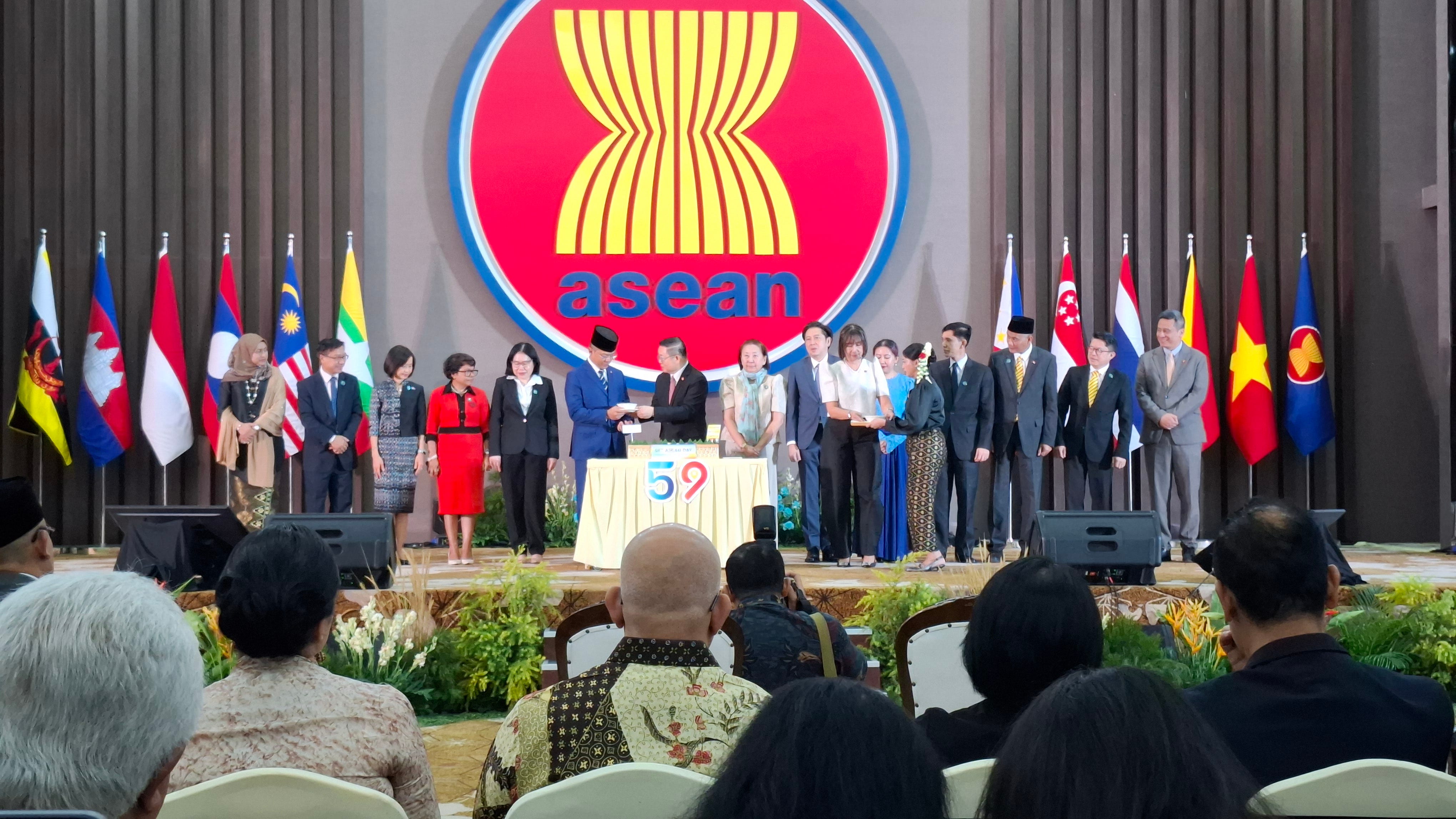
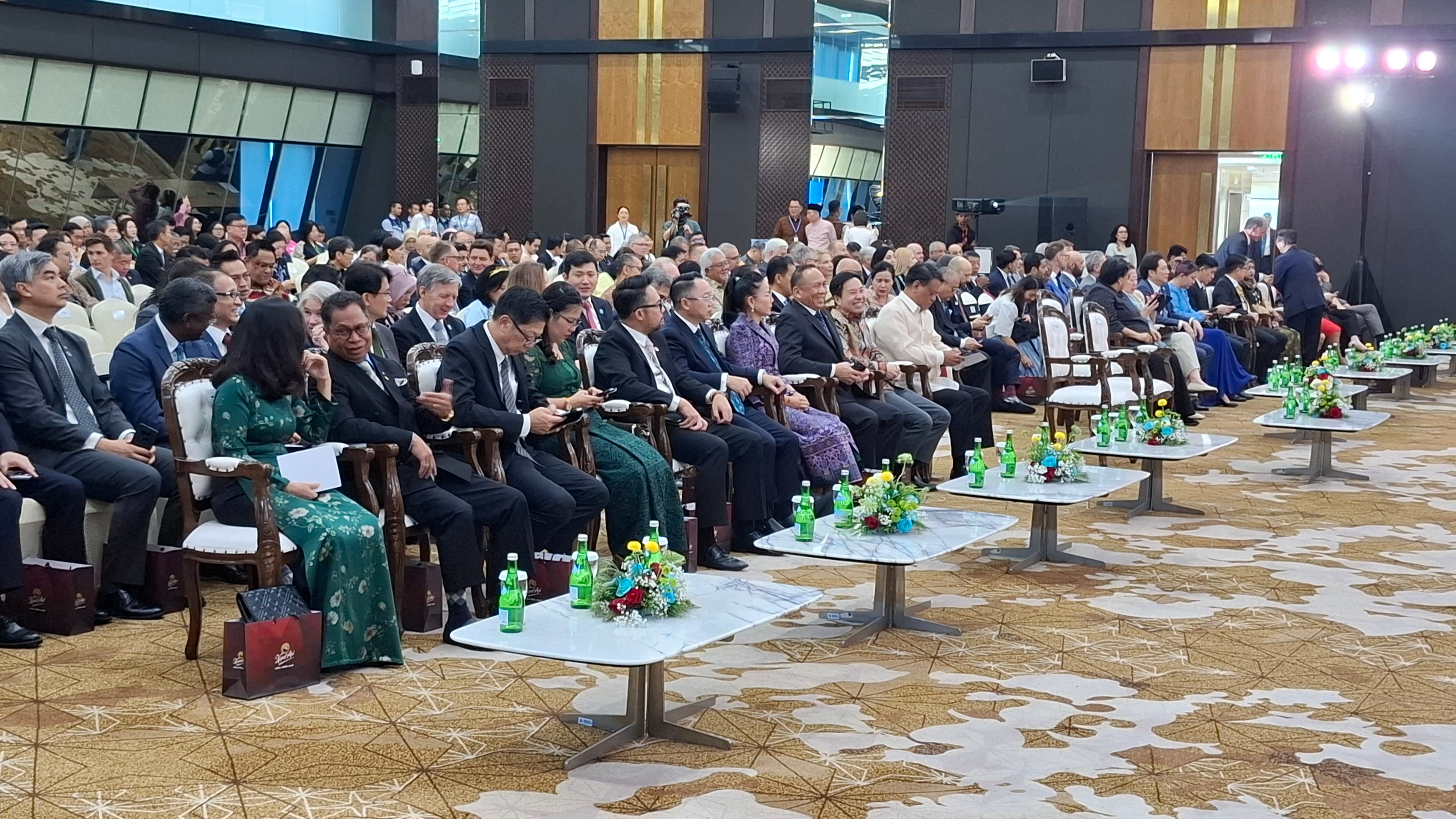
The Association of Southeast Asian Nations (ASEAN) marked its 59th anniversary on Saturday, August 8, 2026, at its Jakarta headquarters, bringing together key ministers, ambassadors, and regional partners under the Philippine Chairmanship theme, “Navigating Our Shared Future, Together.”
Amidst a backdrop of strategic competition, climate crises, and supply chain disruptions, the summit delivered a unified message: ASEAN’s culture of dialogue and its strict non-alignment are more vital than ever.
The gathering also marked two historic milestones: celebrating the bloc’s first year as a family of 11 with the full inclusion of Timor-Leste, and commemorating the 50th anniversary of the Treaty of Amity and Cooperation in Southeast Asia (TAC).
📡 Why It’s on Our Radar
The geopolitical and environmental crises discussed are not distant threats—they are actively reshaping Southeast Asia’s economic and physical landscape:
Climate & Economic Disruption: Across the region, communities are facing more frequent floods, droughts, and extreme weather, which directly threaten agriculture and food security while driving up living costs.
Global Supply Chain Shifts: Conflicts beyond ASEAN borders (such as the situation in the Middle East) are disrupting trade routes, driving up energy prices, and forcing a rapid reshaping of global investments.
A Youthful Demographic Engine: Almost half of ASEAN’s 700 million people are under the age of thirty. Their future relies on the bloc’s ability to pivot from traditional diplomacy to actionable policies in digital transformation, green jobs, and sustainable development.
🕰️ The Genesis & Evolution: From Cold War Conflicts to a Global Bloc
To understand the weight of the 59th anniversary, one must look back to the region’s turbulent history. “Southeast Asia” first emerged as a military concept during WWII, and unlike Europe (which received the Marshall Plan), the region was left to fund its own postwar recovery.
The Messy Prelude (1961–1965): Early attempts at regional cooperation failed. The Association of Southeast Asia (ASA) in 1961 and the Maphilindo plan in 1963 fractured due to bitter territorial disputes—most notably Indonesia’s Konfrontasi (confrontation) over the formation of Malaysia and the Philippines’ objections over Sabah.
The 1967 Breakthrough: Following a leadership change in Indonesia in 1965, the threat of communist expansion in Indochina drove a desire for regional stability and neutrality. On August 8, 1967, five visionary statesmen—Adam Malik (Indonesia), Narciso R. Ramos (Philippines), Tun Abdul Razak (Malaysia), S. Rajaratnam (Singapore), and Thanat Khoman (Thailand)—signed the Bangkok Declaration.
Brokered during a four-day retreat in the coastal town of Bang Saen, this informal, goodwill-driven approach—fondly dubbed “sports-shirt diplomacy”—laid the foundation for the consensus-based “ASEAN Way.” The original logo featured five brown rice sheaves; today, it holds ten, with Timor-Leste realising the vision of a fully united region as the 11th member in October 2025.
Decades of Adaptation: ASEAN’s longevity stems from its ability to continuously innovate its architecture during crises:
1971 (Cold War Neutrality): Lobbied by Indonesia and Malaysia, ASEAN declared the region a “Zone of Peace, Freedom, and Neutrality” (ZOPFAN) to urge colonial powers and the U.S. to limit their military footprints.
1976 (Post-Vietnam War Pivot): Following the communist triumph in Indochina, heads of state formalised the bloc by adopting the Treaty of Amity and Cooperation (TAC) and establishing a permanent secretariat in Jakarta.
1979–1984 (Security & Global Dialogues): As Vietnam invaded Cambodia in 1978, ASEAN successfully mobilised to diplomatically contain Hanoi. Recognising that security issues required broader frameworks, ASEAN launched the ASEAN Regional Forum (ARF) in 1984 to manage East Asian military transparency and South China Sea tensions.
1997 (Asian Financial Crisis): When foreign capital fled the region, ASEAN pivoted economically. It established the ASEAN+3 framework (with China, Japan, and South Korea), which ultimately paved the way for the 2002 ASEAN-China Free Trade Area agreement—creating the blueprint for the world’s largest free trade zones.
⚠️ Key Challenges & Geopolitical Friction
Despite nearly six decades of stability and adaptation, today’s leaders acknowledged several immediate hurdles to ASEAN’s continued success:
Great Power Rivalry: The region faces immense pressure from external strategic competition. Leaders firmly reiterated that ASEAN will not become an arena for proxy conflicts or “choose sides.”
The Implementation Gap: While principles of mutual respect and peaceful dispute settlement (enshrined in the TAC) are universally praised, the actual challenge lies in enforcing and translating them into tangible, on-the-ground cooperation.
Rapid Technological & Environmental Change: The bloc is racing to future-proof itself against the rapid rise of artificial intelligence, energy insecurity, and the urgent need to protect migrant workers and nationals abroad during global crises.
🚀 Key Leaders & Their Delivery Messages
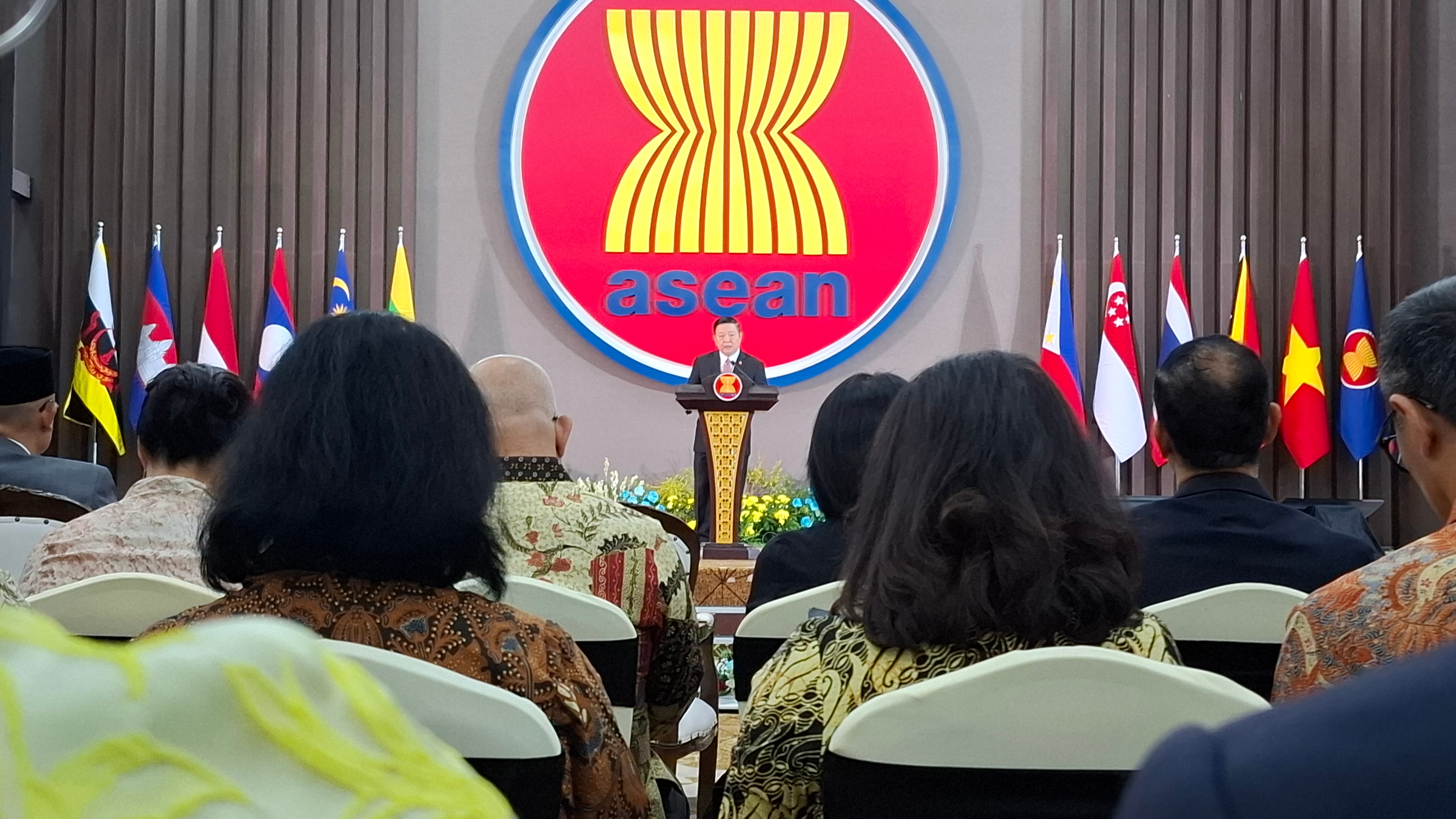
🎙️ Dr. Kao Kim Hourn — Secretary-General of ASEAN
Dr. Kao emphasised that while ASEAN has weathered financial crises and pandemics, its survival depends on remaining relevant to its massive youth population and on implementing the ASEAN Community Vision 2045.
“Whether ASEAN continues to thrive over the next sixty years will depend, in part, on whether this generation sees ASEAN not simply as an institution of governments, officials, and diplomats, but as something that is of value to them in that it creates opportunities in their everyday lives.” — Dr. Kao Kim Hourn
Key takeaways from Dr. Kao’s address:
A Family of 11: Officially welcomed Timor-Leste, noting that the community is stronger and more inclusive with its active participation.
Youth Empowerment: Called for expanded cross-border opportunities for young people to learn, work, and shape solutions in sustainability and entrepreneurship.
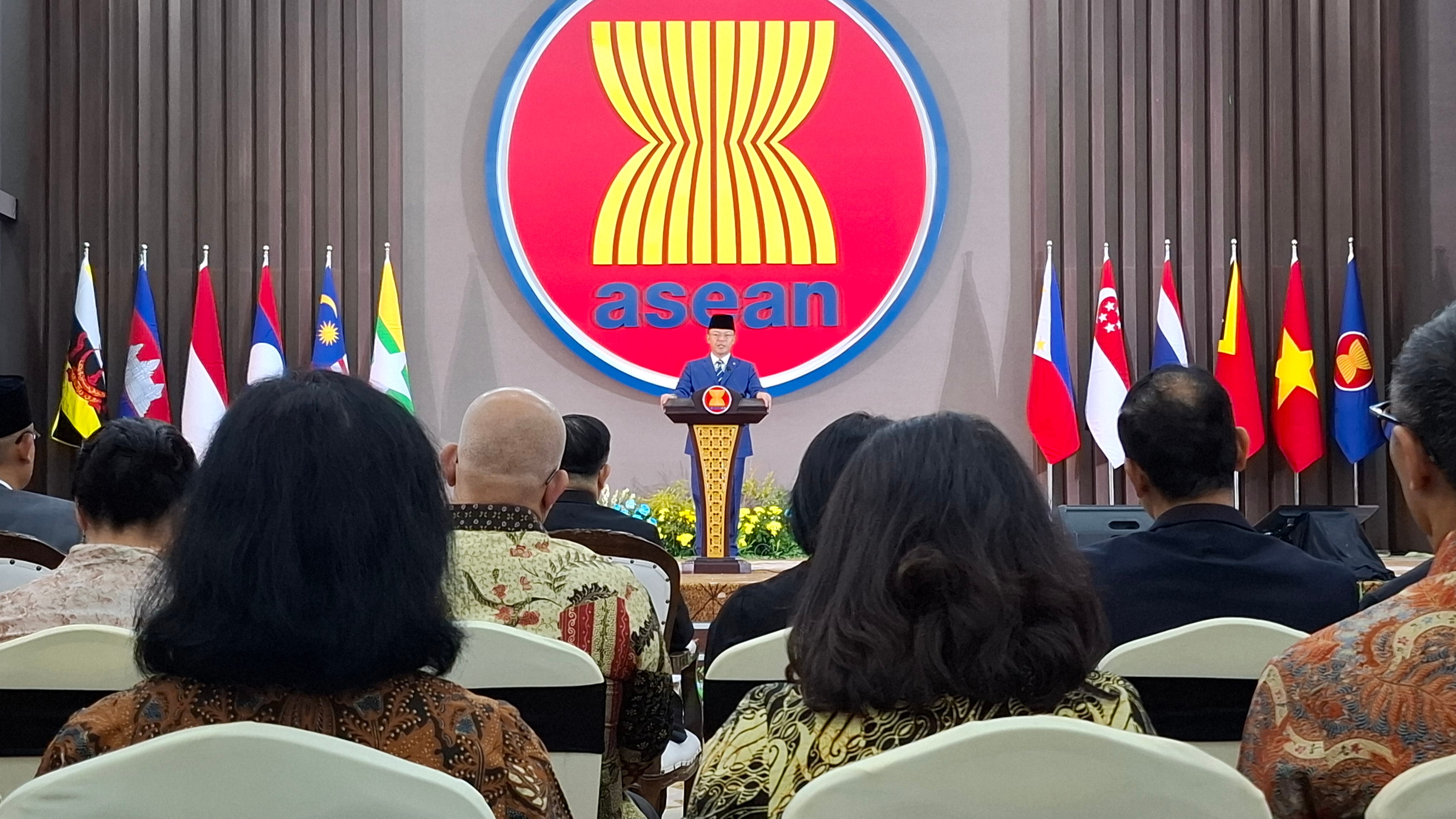
🎙️ Sugiono — Minister of Foreign Affairs, Republic of Indonesia
Foreign Minister Sugiono framed ASEAN as an enduring architectural anchor born out of conflict, whose primary modern function is to serve as the world’s premier “bridge builder.”
“In a world increasingly shaped by conflicts, strategic rivalry, and fragmentation, ASEAN has remained steady on its course, steady in its purpose, in its solidarity, and in advancing cooperation for the benefit of our peoples.” — Sugiono
Key strategic updates revealed:
The People’s Metric: Declared that farmers, youth, and migrant workers do not measure ASEAN’s success by signed agreements, but by their ability to put food on the table, find decent work, and live safely.
Strict Neutrality: Reaffirmed that ASEAN’s side is “the side of our people,” explicitly rejecting any alignment with great power rivalries.
🎙️ Ferdinand R. Marcos Jr. — President of the Philippines & ASEAN Chair
Delivering the Chair’s message, President Marcos Jr. highlighted swift, purpose-driven actions taken during the recent 48th ASEAN Summit in Cebu, focusing on immediate crisis management and long-term resilience.
“These priorities reflect ASEAN’s commitment to cooperation that protects lives, improves livelihoods, and upholds peace, prosperity, and people empowerment... this is why ASEAN centrality matters, it is how we chart our present and our future.” — Ferdinand R. Marcos Jr.
Key policy priorities outlined:
Emergency Response: Prioritised energy security, food security, and the safety of ASEAN nationals amidst the Middle East crisis.
Expanding the TAC: Celebrated the accession of four new high-contracting parties—Sweden, Poland, Romania, and Lithuania—bringing the total to 62 nations committed to regional peace.
🎙️ M. I. Derry Amman — Indonesia Permanent Representative to ASEAN
Ambassador Derry Amman closed the ceremonial addresses by focusing on the legal and diplomatic bedrock of the region: the 50-year-old Treaty of Amity and Cooperation (TAC).
“This 50th anniversary of the TAC must therefore be more than a celebration. It must be a moment of renewal to remind that the principles of the TAC must remain our compass as we work together in partnership and solidarity towards a peaceful, stable, and prosperous ASEAN region.” — M. I. Derry Amman
Actionable frameworks discussed:
Beyond Ceremonies: Warned that the TAC must remain a “living instrument,” where principles are actively applied rather than just verbally reaffirmed.
New Modalities of Engagement: Announced new guidelines that encourage non-ASEAN TAC signatories to explore practical, mutually beneficial cooperation.
🏁 The Bottom Line
The 59th ASEAN Day sent a clear signal to both its citizens and the international community: The era of relying solely on historical diplomatic achievements is giving way to a demand for tangible delivery.
Youth is the New Baseline: Policies must actively benefit the under-30 demographic to maintain institutional legitimacy over the next decades.
Centrality as a Shield: ASEAN will aggressively maintain its neutrality and centrality, using frameworks like the TAC to manage external geopolitical pressures.
Action Over Agreements: The ultimate test for Vision 2045 will be regional food/energy security and economic integration that reaches local communities and migrant workers on the ground.
📰 Need More Angle?
The ASEAN Secretariat, The Founding of ASEAN
EBSCO, Association of Southeast Asian Nations Is Formed
(JUN/NGO)